Marie Delphine LaLaurie: Abuse, Death, and Horror on Royal Street
Early Life and Social Position
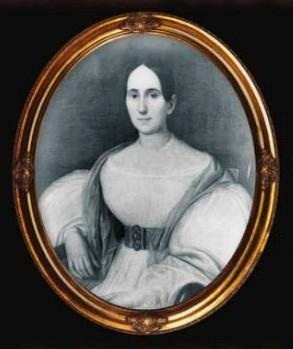
Marie Delphine Macarty LaLaurie was born on March 19, 1787, in New Orleans, then part of Spanish Louisiana. Commonly known as Madame LaLaurie, she became one of the most infamous slaveholders in American history. She is frequently described as a serial killer because numerous enslaved people died while under her control and because survivors discovered in her home showed evidence of prolonged imprisonment and severe physical abuse. However, the exact number of people she personally killed cannot be established from surviving records, and she was never arrested, tried, or convicted.
Delphine was born into the wealthy and politically influential Macarty family. She married three times and accumulated substantial property, money, and social standing. Her third husband was Leonard Louis Nicolas LaLaurie, a physician considerably younger than she was. In 1831, Delphine acquired property at the corner of Royal and Hospital streets in the French Quarter. A large residence, later associated with the address 1140 Royal Street, was completed for the family during the early 1830s.
The LaLauries entertained members of New Orleans society inside their elaborate home. Delphine presented herself publicly as a refined and respectable woman. Behind that appearance, however, troubling reports circulated about the condition of the enslaved men, women, and children forced to work in her household. Neighbors reportedly noticed that they appeared unusually thin, exhausted, frightened, and poorly treated.
Reports of Cruelty
Complaints about Delphine LaLaurie’s treatment of enslaved people existed before the incident that ultimately exposed conditions inside her home. According to accounts later collected by writer Harriet Martineau, a local attorney was once sent to warn LaLaurie that Louisiana law imposed at least limited restrictions on extreme cruelty toward enslaved people. No obvious evidence of abuse was reportedly found during that particular visit.
A more serious incident was said to have occurred when a young enslaved girl fled from LaLaurie, who was pursuing her with a whip. The terrified child reached the roof of the mansion and fell to her death in the courtyard below. Later versions named the girl Lia or Leah and gave her age as either eight or twelve. Her identity, age, and exact date of death cannot be independently verified, however, and the name Lia did not appear in the earliest known account of the incident.
The child’s body was reportedly buried secretly on the property. Authorities investigated the household, found the LaLauries responsible for unlawful cruelty, and ordered them to surrender nine enslaved people. Delphine allegedly arranged for relatives or associates to purchase them at auction and return them to her control. This allowed the abuse inside the Royal Street residence to continue beyond public view.
Documented Deaths in the Household
Church funeral registers document the deaths of twelve enslaved people associated with the Royal Street household between 1830 and 1834. The records generally do not state how they died, so it cannot be claimed with certainty that LaLaurie murdered every person listed. The unusually concentrated deaths, particularly among young people and children, remain an important part of the historical record surrounding the household.
- Bonne – An enslaved cook and laundress, approximately 30 years old, who died on February 7, 1833, in New Orleans. The official cause of her death was not recorded.
- Juliette – Bonne’s daughter, approximately 13 years old, who died on February 21, 1833, in New Orleans. Her cause of death was not recorded.
- Florence – Bonne’s daughter, approximately 10 years old, who died on February 16, 1831, in New Orleans. Her cause of death was not recorded.
- Jules – Bonne’s son, approximately six years old, who died on May 29, 1833, in New Orleans. His cause of death was not recorded.
- Leontine – Bonne’s youngest daughter, approximately two years old, who died on August 26, 1831, in New Orleans. Her cause of death was not recorded.
- Lia or Leah – A young enslaved girl who was reportedly killed after falling from the roof while fleeing LaLaurie. Her name appeared only in later accounts, and no reliable date of death has been established.
- Two unidentified survivors of the 1834 fire – A contemporary newspaper reported that two of the people rescued from the mansion later died from their injuries. Their names and exact dates of death were not preserved in the available account.
The names and verified death dates of the other enslaved people recorded as dying in the household are not consistently reproduced in accessible historical summaries. For that reason, they should not be identified without examination of the original church registers. The known records nevertheless show that Bonne and all four of her children died within a period of approximately two years while held in the LaLaurie household.
The Fire of April 10, 1834
On the morning of April 10, 1834, a fire began in the kitchen of the LaLaurie mansion. Firefighters, police officers, neighbors, and other bystanders entered the residence. In the kitchen, they found an elderly enslaved woman chained by the ankle to the stove. Contemporary reports placed her age at approximately seventy.
The cook reportedly admitted that she had started the fire. She explained that she feared being taken to an upper room in the house, because enslaved people brought there were never seen again. Her act appears to have been both an attempt to escape her suffering and a desperate effort to expose what was happening inside the building.
People responding to the fire attempted to inspect the slave quarters. Delphine and her husband refused to provide the keys. The rescuers eventually forced their way through the locked doors and discovered seven enslaved people imprisoned inside. Contemporary newspaper descriptions stated that the captives were emaciated, chained, wounded, and suspended or restrained in agonizing positions.
Judge Jean François Canonge was among those who entered the property. He described seeing a Black woman wearing an iron collar and an elderly woman with a deep wound to her head who was too weak to walk. Several captives had reportedly been confined for months. Their bodies bore evidence of starvation, beatings, restraint, and prolonged neglect.
Separating Documented Abuse from Later Legend
The treatment discovered in 1834 was undeniably brutal, but many of the most grotesque stories now associated with Madame LaLaurie appeared much later. Twentieth-century books and ghost-tour accounts claimed that victims had their eyes gouged out, limbs amputated, skin peeled away, intestines wrapped around their bodies, or bones broken and reset into unnatural shapes. These specific descriptions are not supported by the earliest newspaper reports or known eyewitness accounts.
The reliable historical evidence establishes that seven people were found chained, starved, wounded, and severely abused. It also supports reports of iron collars, extensive whipping, restrictive restraints, a serious head wound, and months of imprisonment. Later claims involving elaborate surgical experimentation or bodies deliberately transformed into grotesque shapes should be treated as folklore rather than verified fact.
Reports published shortly after the fire stated that two of the rescued captives later died. Newspapers also claimed that human remains were discovered when the yard and a covered well were searched. At least one of the bodies was said to be that of a child. The identities and exact death dates of those people remain unknown.
Public Outrage and Destruction of the Mansion
News of the discovery spread rapidly through New Orleans. The rescued captives were taken to the Cabildo, which served as the city hall and jail. Thousands of people reportedly went there to see the survivors and confirm the accounts of their suffering. Public horror soon turned into rage.
A large crowd gathered outside the LaLaurie residence. When authorities failed to arrest Delphine, members of the crowd attacked the property. Furniture, doors, windows, and interior fixtures were smashed. By the time officials restored order, little remained of the original house except portions of its walls.
The attack on the mansion should not be mistaken for a general rejection of slavery. New Orleans remained a major center of the slave economy, and many members of the crowd were themselves willing participants in that system. The reaction instead demonstrated that the conditions discovered in LaLaurie’s home were considered unusually extreme even within a society built upon the ownership and exploitation of human beings.
Escape from New Orleans
Delphine LaLaurie escaped while the city was descending into disorder. She reportedly left the mansion in a carriage, traveled toward Lake Pontchartrain, and boarded a vessel bound for Mobile, Alabama. From there, she traveled north and eventually crossed the Atlantic to France.
Her husband and other family members also left Louisiana. Delphine eventually settled in Paris. Although the abuse in her home had been exposed publicly and reported by newspapers across the country, she was never returned to New Orleans to face criminal proceedings. No murder trial was held, and no court established the exact number of her victims.
Death in France
Delphine LaLaurie spent the remainder of her life in France. Family correspondence indicates that she considered returning to New Orleans, but her children and relatives opposed the idea. She never publicly accepted responsibility for what had been found inside her home.
LaLaurie died in Paris on December 7, 1849, at the age of 62. An older memorial plate discovered in New Orleans gave the year of her death as 1842, but Paris death records support 1849. She was initially buried in Montmartre Cemetery, and her remains were later reportedly transported to New Orleans for reinterment in St. Louis Cemetery No. 1.
Historical Classification and Legacy
Marie Delphine LaLaurie is commonly included in lists of female serial killers, but the label requires qualification. Historical records document numerous deaths among the enslaved people she controlled, yet most of those records do not specify causes of death. The strongest surviving evidence proves repeated torture, unlawful confinement, starvation, physical assault, and the likely deaths of captives following prolonged abuse.
The absence of a trial left fundamental questions unanswered. The total number of people who died in the household is unknown. The identities of the seven captives rescued in 1834 were not reliably preserved in widely available accounts. The two survivors reportedly killed by their injuries were not named, and the remains allegedly recovered from the grounds were never conclusively identified.
Despite those uncertainties, the central facts are not merely legend. On April 10, 1834, rescuers entered the LaLaurie property and found seven enslaved people suffering from severe, long-term abuse. An elderly cook had been chained to a stove. Church records documented repeated deaths in the household, including the deaths of Bonne and all four of her children. LaLaurie fled before she could be prosecuted and lived freely in France until her death.
Her story remains one of the most disturbing examples of violence committed under American slavery. The horror of the case lies not only in the actions attributed to one wealthy woman, but also in the legal and social system that gave her control over the lives of other human beings. Although later folklore exaggerated many details, the documented suffering inside the Royal Street residence was severe enough to establish Madame LaLaurie’s lasting reputation as an abuser and suspected serial murderer.