Sean Paul Hanify: The Self-Described Serial Killer of Denver
Overview
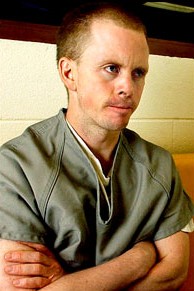
Sean Paul Hanify, born January 20, 1970, is an American convicted murderer who described himself as a serial killer and claimed responsibility for a much larger series of killings than authorities were ultimately able to prove. His known criminal history is centered primarily in Denver, Colorado, although Hanify also made claims involving killings in California and elsewhere. Police investigated a number of those statements after his arrest, but only two murders resulted in convictions: the deaths of Mark Warren Davis in 2000 and Edward Brown in 2002.
Hanify attracted considerable attention because of the unusually extensive confessions he made after his arrest. He spoke about killing multiple men over a period of years and described violence involving knives, blunt objects and attacks on vulnerable victims. Investigators examined several older unsolved homicides after hearing his claims. However, many of the stories could not be independently confirmed, making it important to distinguish between murders for which Hanify was convicted and killings that he merely claimed to have committed.
The Murder of Mark Warren Davis
Mark Warren Davis was a 44-year-old homeless man whose body was discovered near Cherry Creek in Denver in July 2000. Davis had suffered severe injuries and was found with a knife lodged in his neck. His body had been concealed beneath or among rocks near the creek area.
Hanify later admitted involvement in Davis's death. According to accounts of the case, he described attacking Davis with a rock and returning to the location afterward. Prosecutors eventually brought Hanify to trial for first-degree murder. In January 2007, a Denver jury convicted him of murdering Davis. The conviction was especially significant because it transformed one of Hanify's numerous murder claims into a crime established in court beyond a reasonable doubt.
The killing reflected several characteristics associated with Hanify's admitted violence: the victim was vulnerable, the attack involved extreme physical force, and the crime scene was in an area where the victim could remain unnoticed for a period of time. Davis's death also occurred more than two years before the murder that initially brought Hanify to the attention of homicide investigators.
The Murder of Edward Brown
Edward Brown, 59, was Hanify's roommate in Denver. Their relationship had a complicated history. Hanify had previously served time in prison after stealing Brown's VCR, yet after Hanify's release Brown eventually allowed him to live in his apartment at 810 East 12th Avenue.
Brown's murder was exceptionally violent. Evidence presented in reports about the case showed that Brown was beaten with a claw hammer, stabbed and severely mutilated. His body was then set on fire. Firefighters responding to a fire at Brown's apartment discovered his remains on August 6, 2002.
Hanify was arrested shortly afterward and confessed during lengthy police questioning. He claimed that the killing was connected to resentment over the prison sentence he had received following the earlier theft from Brown. Prosecutors maintained that Hanify understood what he was doing despite evidence that he suffered from mental illness. His defense argued that a severe psychiatric disorder rendered him legally insane at the time of the crime.
A Denver jury rejected the insanity defense and convicted Hanify of first-degree murder in Brown's death in 2005. The brutality of the crime, particularly the beating, stabbing, mutilation and attempt to burn the body, became one of the most frequently reported aspects of Hanify's case.
Confirmed Victims
- Mark Warren Davis, 44 — Date of death: July 24, 2000. Location: Cherry Creek area, Denver, Colorado. Davis was a homeless man found near the creek with serious traumatic injuries and a knife in his neck. Hanify was convicted of first-degree murder for his death in January 2007.
- Edward Brown, 59 — Recorded date of death/discovery: August 6, 2002. Location: Brown's apartment at 810 East 12th Avenue, Denver, Colorado. Brown was beaten with a claw hammer, stabbed, mutilated and his body was set on fire. Hanify was convicted of first-degree murder in the case in 2005.
Claims of Additional Murders
After his arrest, Hanify claimed that Davis and Brown represented only part of his history of violence. He told investigators and journalists that he had begun attacking people years earlier and suggested that his first attempted killing occurred around January 1989 near Fisherman's Wharf in San Francisco. He subsequently claimed that he committed a murder roughly a week later and another killing in San Francisco around 1991 or early 1992.
Hanify was also questioned in connection with several Denver homicides from 1992. Among the names associated with the investigation were James Holman, Robert Ferrell and Anthony Carr. Hanify made statements claiming responsibility for some of these deaths, but investigators were unable to establish sufficient evidence to charge and convict him in those cases. His claims therefore should not be treated as proven murders.
Robert Ferrell, 57, was found stabbed in his Denver apartment in September 1992. Hanify had reportedly been questioned about the case during the original investigation and later claimed that he was responsible. Anthony Carr, 33, was found stabbed in December 1992, his body reportedly concealed beneath a blanket near a Christmas tree. Hanify also claimed responsibility for Carr's killing. James Holman's death in Denver in February 1992 was another homicide about which investigators questioned Hanify.
Because Hanify's statements were inconsistent in places and often lacked evidence that only the actual killer would necessarily possess, authorities were unable to verify much of what he said. Contemporary reports described police examining the possibility that he was responsible for several Denver killings, including the deaths of gay men during the early 1990s. Hanify additionally spoke of possible victims in San Francisco and Utah. None of those claims resulted in murder convictions.
Confessions and Investigation
Hanify's willingness to discuss homicide made him an unusual investigative problem. Instead of attempting to distance himself from the idea of being a serial murderer, he publicly embraced the description. His statements prompted detectives to revisit cold cases and compare details from his accounts with crime-scene evidence.
Investigators nevertheless faced a basic problem: a confession alone does not establish that a person committed a particular murder. Detectives needed evidence connecting Hanify to each victim, and many of his alleged crimes occurred years before his arrest. In several cases, police could not corroborate his descriptions sufficiently to establish that he had actually been present or responsible.
As a result, accounts sometimes attribute anywhere from two to several victims to Hanify, depending on whether they count only legally established murders or include his own unverified claims. The most accurate description is that Hanify is a convicted double murderer and a self-described serial killer who claimed responsibility for additional deaths.
Trials, Mental Illness and Sentencing
Mental illness became a significant issue during Hanify's prosecution for Edward Brown's murder. His defense attorneys argued that he suffered from a severe psychotic disorder and should be found legally insane. Prosecutors acknowledged evidence of mental illness but argued that Hanify nevertheless knew that his actions were wrong and was capable of intentionally committing murder.
The jury agreed with prosecutors and convicted him of first-degree murder. Hanify was later separately tried and convicted for Mark Davis's killing. By 2007, he had received two consecutive life sentences for the murders. Additional sentences connected to other offenses, including arson and vehicle theft, were imposed concurrently.
Legacy of the Case
Sean Paul Hanify's case remains complicated because the image he created of himself as a prolific serial killer extends beyond what prosecutors were able to prove. His two confirmed murder convictions demonstrate a pattern of extremely serious violence, but claims concerning additional victims remain allegations rather than established facts.
The deaths of Mark Warren Davis and Edward Brown are therefore at the center of any factual account of Hanify's crimes. Both men were killed in Denver, both suffered severe violence, and Hanify was ultimately sentenced to life imprisonment for their murders. His later confessions led investigators into a much broader examination of unsolved killings, but no additional homicide convictions followed.