Marie "Mary" Clement: The Dubuque Family Poisonings
Background
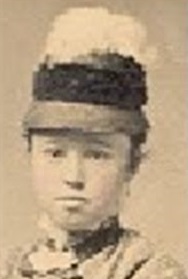
Marie Clément, better known in American records as Mary Clement, was a Luxembourg-born woman whose name became associated with a disturbing series of deaths inside her own family during the 1880s. She was born on February 16, 1863, in Harlange, Luxembourg, to Michel Clement and Margarite Deville Clement. Historical newspapers spelled her surname in numerous ways, including Kleman, Klemann, Klaman, Clayman, and Clemens, which has sometimes made accounts of the case difficult to follow.
The Clement family immigrated to the United States around 1871 and settled in Dubuque, Iowa. By 1880 they were living at 1533 Maple Street. Marie grew up with several sisters, including Catherine, Lena, and Annie. She was described in contemporary reports as a relatively young and physically frail woman who suffered from medical problems affecting the movement of her legs and feet.
Between 1880 and 1885, four members of Marie's immediate family died under circumstances that later attracted suspicion. At the time, however, the deaths were attributed to illnesses or other medical causes. It was only after Marie was accused of poisoning another branch of her family in Illinois that authorities and newspapers began looking backward at the deaths in Dubuque.
The Death of Annie Clement
The first suspicious death occurred while Marie was still a teenager. Her youngest sister, Annie Clement, died in Dubuque on August 1, 1880. Annie was only five years old, although contemporary accounts commonly described her as six because she was approaching her sixth birthday.
Dubuque death records attributed Annie's death to convulsions, which were believed at the time to have been caused by eating too much before going to bed. Nothing in the original record identified Marie as responsible. Years later, after the other deaths in the family and the Illinois poisoning case, Annie's sudden death became part of the suspected pattern surrounding Marie.
The Death of Margarite Clement
Nearly four years later, Marie's mother, Margarite Deville Clement, became seriously ill at the family home in Dubuque. Margarite died on July 24, 1884, at the age of 54.
Her official death record attributed the death to idiopathic tetanus after a short illness. Contemporary descriptions also referred to symptoms resembling lockjaw or severe gastrointestinal illness. The diagnosis was made decades before modern toxicology and medical testing could reliably distinguish many forms of poisoning from natural disease.
After Marie was later arrested, Margarite's death became especially significant because Marie was reported to have confessed that she had poisoned her mother. One account attributed to Marie suggested that she claimed she wanted to end her mother's suffering. Whether that explanation represented an actual motive, a confused statement, or something produced while Marie was emotionally unstable remained disputed.
The Death of Lena Clement
Only sixteen days after Margarite's death, another member of the household became gravely ill. Anne Marie Madelène "Lena" Clement, Marie's younger sister, suffered several days of illness accompanied by convulsions.
The Dubuque civil death register records Lena's death on August 9, 1884, when she was 13 years old. A surviving parish record appears to place her death one day earlier, but the civil register supports August 9 as the date generally used in accounts of the case.
Lena's recorded cause of death was described as nervous prostration and convulsions associated with what doctors called "malarial poisoning." Medical knowledge of malaria and toxic substances was considerably more limited in the 1880s, and the diagnosis was never established as evidence that an intentional poisoning had occurred.
Nevertheless, the close timing of Margarite and Lena's deaths later became one of the most suspicious elements of the Clement case. Contemporary newspaper reports following Marie's arrest specifically identified her mother and Lena as relatives whom she allegedly admitted poisoning.
The Death of Michel Clement
The final death in the immediate household was that of Marie's father, Michel Clement. He died in Dubuque on March 28, 1885, at the age of 49 following approximately five days of illness. His recorded cause of death was failure of heart action.
As with the earlier deaths, there was initially no criminal case. Michel was buried and Marie subsequently left Dubuque. According to later newspaper reports, however, she eventually claimed that she had caused his death as well.
Michel's death left Marie without either parent and helped set in motion the event that finally brought police attention to her. She traveled to the Chicago area and stayed with her surviving sister Catherine Clement Freres, Catherine's husband Michael Freres, and their young children.
The Freres Family Poisonings
In 1885, Marie moved into the home of Catherine and Michael Freres in the Rose Hill area of Chicago, Illinois. The household included their young children, Margaret and Michael F. Freres. It was there that suspicious illnesses began occurring almost immediately after meals prepared by Marie.
On June 8, 1885, Marie offered to prepare soup for the family. According to testimony later presented in court, Marie did not eat the soup herself. Catherine, Michael, and the children became violently ill after eating it, suffering symptoms that included vomiting and severe physical distress. They eventually recovered.
The illnesses did not end with the first incident. Marie prepared soup again, and members of the family once more became sick after eating it. The repeated pattern made Michael Freres suspicious, particularly because Marie appeared to avoid consuming the food that was making everyone else ill.
Michael reportedly discovered a grayish powder and noticed a similar substance remaining in the soup dishes. Samples were taken for examination. Physicians and chemists subsequently determined that the material contained poison, with arsenic identified in accounts of the investigation.
The discovery transformed what had appeared to be a household illness into a criminal investigation. Marie was arrested and accused of deliberately putting poison into food intended for her sister's family.
The Arsenic Evidence
The prosecution presented evidence concerning a package of rat poison containing arsenic. Marie acknowledged possessing rat poison but offered an unusual explanation, maintaining that she had purchased it for use as a treatment involving her feet. She denied intentionally adding it to the family's food.
Investigators also focused on her behavior during the meals. Witnesses said Marie prepared the soup but declined to eat it herself. The fact that several people consuming the same food became ill, combined with the discovery of poisonous material in the dishes, provided much stronger evidence than existed in connection with the earlier Dubuque deaths.
Unlike the four deaths in Iowa, the Freres poisonings resulted in survivors who could describe exactly what had happened. Catherine, Michael, and their children recovered, allowing Michael and Catherine to become important witnesses against Marie.
Confessions and Changing Stories
While being held in custody, Marie initially insisted that she was innocent. Her position then changed dramatically. Newspaper reports published in June 1885 stated that she confessed to poisoning the Freres family and also admitted causing deaths within her own family in Dubuque.
Reports attributed to Marie described admissions involving her mother, father, and at least one sister. Later accounts, including reports of a letter she allegedly wrote from prison, expanded the admissions to encompass the suspicious family deaths associated with her.
The confessions were controversial from the beginning. Marie was described as physically ill, emotionally unstable, prone to hysterical episodes, and at times confused. Shortly after one reported confession, she denied poisoning anyone and claimed either that she had never confessed or that she could not remember making the statements.
A physician who examined her reportedly did not consider her legally insane, although he believed she suffered from significant physical and emotional disorders. The uncertainty surrounding her mental state became an important part of how contemporary observers interpreted both her admissions and her crimes.
Trial and Conviction
Marie Clement went on trial in Chicago on July 17, 1885, for attempting to murder members of the Freres family. The prosecution relied on the illnesses following the meals, testimony from family members, the discovery of the suspicious powder, and chemical evidence demonstrating the presence of poison.
Marie testified in her own defense. She admitted preparing the soup but denied poisoning it. She maintained that the arsenic-containing rat poison had been obtained for another purpose and insisted she had no reason to kill her sister's family.
The jury rejected her explanation and found her guilty of attempted murder by poisoning. Despite the seriousness of the crime, Marie received an extraordinarily short sentence of one year in prison. Contemporary reporting indicated that jurors took her poor health and questionable mental condition into consideration when determining the punishment.
She was sent to the Illinois State Penitentiary at Joliet. Although newspapers discussed the possibility that she could eventually face prosecution in Iowa for the deaths of her relatives, no murder conviction followed.
Victims Associated With Marie Clement
- Annie Clement — Died August 1, 1880, in Dubuque, Iowa. Annie was Marie's youngest sister and was five years old, nearing six. Her official death record attributed her death to convulsions believed to have followed overeating. Her death was later considered suspicious in connection with Marie.
- Margarite Deville Clement — Died July 24, 1884, at the Clement home in Dubuque, Iowa, at age 54. She was Marie's mother. Her recorded cause of death was idiopathic tetanus after a brief illness. Marie was later reported to have admitted poisoning her.
- Anne Marie Madelène "Lena" Clement — Died August 9, 1884, in Dubuque, Iowa, at age 13. The civil death register records August 9, although a surviving church record gives August 8. Her illness included convulsions and was recorded as being connected to "malarial poisoning." She subsequently became one of the deaths attributed to Marie in accounts of the case.
- Michel Clement — Died March 28, 1885, in Dubuque, Iowa, at age 49. He was Marie's father. His official death record attributed his death to failure of heart action following several days of illness. Marie was later reported to have confessed to causing his death.
Survivors of the 1885 Poisoning
- Catherine "Katie" Clement Freres — Marie's sister. She became seriously ill after eating soup prepared by Marie at the Freres home in the Rose Hill area of Chicago in June 1885 but survived.
- Michael Freres — Catherine's husband. He became ill after eating the soup and helped uncover the suspected poisoning after noticing suspicious material associated with the food. He survived and became a central prosecution witness.
- Margaret Freres — The young daughter of Catherine and Michael. She was among the children in the household who became ill during the poisoning incidents and survived.
- Michael F. Freres — The young son of Catherine and Michael. He was also part of the household affected by the poisoned food and survived.
Were the Four Dubuque Deaths Proven Murders?
Marie Clement is commonly classified today as a serial poisoner with four victims, but an important distinction exists between that classification and what was actually proven in court. Marie was convicted of attempting to murder the Freres family. She was never convicted of murdering Annie, Margarite, Lena, or Michel Clement.
The four deaths occurred before modern forensic toxicology was available to investigators, and their original death records listed medical causes rather than homicide. The principal evidence connecting Marie to the deaths came from her reported confessions and the striking similarities between the earlier illnesses and the later proven poisoning episode.
Marie also withdrew or contradicted some of her statements. Because of that, the historical case contains genuine uncertainty. Describing the four relatives as victims attributed to or associated with Marie is more precise than suggesting that four murder convictions were obtained against her.
The Pattern of the Crimes
If Marie's reported confessions were truthful, her crimes followed an unusually intimate pattern. Rather than hunting strangers, she allegedly targeted people within her immediate family. The deaths occurred gradually, separated by enough time and accompanied by symptoms that physicians could interpret as disease.
Poison was particularly difficult to detect during the nineteenth century when symptoms such as vomiting, convulsions, weakness, gastrointestinal distress, and heart failure could be attributed to numerous illnesses. The Freres case was different because several members of one household became sick after eating the same meals and because physical evidence of poison remained available for chemical analysis.
That surviving evidence appears to have been what finally exposed Marie. Had Michael Freres not become suspicious and preserved the material found in the dishes, the illnesses might have been dismissed just as the earlier deaths had been.
Motive
No single convincing motive was established for the suspected murders. Contemporary reports sometimes suggested money, but Marie denied that financial gain explained her actions. In one reported confession she claimed that she first acted against her sick mother to end her suffering and then felt compelled to poison other relatives.
Her contradictory statements make it impossible to know how much weight should be given to those explanations. Mental illness was repeatedly discussed in nineteenth-century reporting about the case, yet at least one physician examining Marie did not consider her insane. The jury nevertheless appears to have viewed her physical and psychological condition as sufficiently significant to justify an unusually lenient sentence.
Life After Prison
Marie served her short prison sentence and eventually disappeared from public attention. Despite contemporary predictions that Iowa authorities might prosecute her for the Clement family deaths, no such murder trial produced a conviction.
She later lived in California and worked as a seamstress and domestic servant. Family recollections from decades afterward portrayed her very differently from the frightening figure described in 1885 newspapers. Some relatives remembered her affectionately as "Mamie," an eccentric but well-liked aunt who enjoyed elaborate hats and rarely discussed her past.
The contrast is one of the strangest elements of the Clement story. Members of the Freres family apparently continued to have contact with Marie long after she had been convicted of attempting to poison their household. She was ultimately buried among members of the extended family.
Death and Legacy
Marie "Mary" Clement died on July 9, 1944, at the age of 81. By then, nearly six decades had passed since the poisoning trial that briefly made her notorious.
Her case remains unusual because historical records establish two very different levels of certainty. The 1885 arsenic poisoning of the Freres family resulted in a criminal conviction and is firmly documented. The four earlier deaths in Dubuque are linked to Marie largely through reported confessions, suspicious circumstances, and later historical reconstruction rather than murder convictions or definitive nineteenth-century toxicological findings.
For that reason, Marie Clement is generally remembered as a nineteenth-century American serial poisoner responsible for four deaths, while the surviving records require a degree of caution. What can be stated with certainty is that four members of her immediate family died between August 1, 1880, and March 28, 1885; that Marie was subsequently caught in a poisoning case involving arsenic; that members of her sister's family survived; and that a jury convicted her of attempted murder on July 17, 1885. Her reported admissions transformed the earlier family tragedies into one of the more disturbing and mysterious poisoning cases of the era.