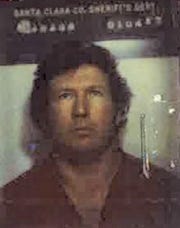
Larry Bright: The Peoria Serial Killer
A Fifteen-Month Killing Spree in Central Illinois
Larry Dean Bright was an American serial killer who murdered eight women in the Peoria, Illinois, area during a killing spree that stretched from July 2003 through October 2004. Bright, born July 8, 1966, became known as the "Bonecrusher" because of the method he used to destroy evidence after several of the murders. Four victims were left along isolated rural roads, while Bright burned the bodies of four others and disposed of their fragmented remains at different locations around Peoria County.
All eight of Bright's known victims were Black women. Several had struggled with drug addiction or were involved in sex work, circumstances Bright exploited when approaching women in Peoria. He frequently offered cocaine, alcohol, money, or a combination of them to persuade women to accompany him to a residence owned by his mother. After his second known killing, Bright later told investigators that his behavior changed from spontaneous violence to deliberately searching for women he intended to kill.
The Beginning of the Murders
Bright's first confirmed victim was Sabrina Payne, a 36-year-old woman who was last known to be alive on July 25, 2003. Bright was then living at a house on McClure Avenue in Peoria. He later told detectives that he picked Payne up on the south side of the city and brought her to the residence, where they consumed drugs and alcohol. Bright claimed he became enraged because he believed Payne was taking money from him. He killed her and placed her body in his vehicle.
Payne's body was discovered on July 27, 2003, in a cornfield south of Augustin Road near Mud Creek Bridge in Tremont Township, Tazewell County. Bright later directed detectives to the same location and described disposing of some of her clothing in a nearby creek. Although Bright confessed to strangling Payne, the original autopsy could not establish her precise medical cause of death with certainty.
The next known death occurred approximately six months later. Barbara Williams, 36, was last seen alive during the evening of February 4, 2004. Her body was discovered the following day along North Valley View Road near Edwards, Illinois. Williams had suffered injuries, and evidence suggested that her body had been transported to the roadside after her death. The forensic pathologist determined that cocaine toxicity was the cause of death rather than strangulation.
Bright subsequently admitted that he had supplied Williams with crack cocaine at his Starr Court residence. He claimed he believed she was attempting to take his money and said that he struck her in the throat before she began choking. Williams' death ultimately became the basis for Bright's drug-induced homicide conviction. Bright told investigators that after Williams died, he realized future encounters with women would be different. He described himself as deliberately "hunting" for additional victims.
Bright's Confirmed Victims
- Sabrina Payne, 36 - Last seen alive July 25, 2003; body discovered July 27, 2003, in a cornfield near Mud Creek Bridge in Tremont Township, Tazewell County. Bright confessed to killing Payne at his Peoria residence and transporting her body to the rural field. The original autopsy could not establish an exact cause of death.
- Barbara Williams, 36 - Last seen alive February 4, 2004; body discovered February 5, 2004, along the 4800 block of North Valley View Road near Edwards, Illinois. Her death was attributed to cocaine toxicity. Bright admitted supplying the cocaine and disposing of her body and later pleaded guilty to drug-induced homicide in her death.
- Laura Lollar, 33 - Disappeared during the summer of 2004 in Peoria. A friend reported her missing on August 22 after she had been out of contact for approximately three weeks, and a formal missing-person report followed. Her exact date of death could not be established. Bright confessed that he picked Lollar up in Peoria, strangled her at his Starr Court residence, burned her body, and disposed of the remains.
- Shirley Ann Trapp, 45 - Last seen in Peoria on August 26, 2004, and reported missing on August 28. Trapp required medication for diabetes, making her unexplained disappearance particularly alarming to her family. Bright admitted taking her to his Starr Court residence, striking and strangling her, then burning her body. Her exact date of death and the location of her identifiable remains were never conclusively established.
- Shaconda Thomas, 32 - Last known to have been seen by relatives during the final week of August 2004 and reported missing in October. Her precise date of death remains unknown. When detectives showed Bright a photograph of Thomas, he identified her as one of the women he had killed. He confessed to strangling Thomas and burning her body in an effort to destroy the evidence.
- Tamara Walls, 29 - Reported missing on September 22, 2004, after relatives had gone approximately three weeks without hearing from her. Her exact date of death is therefore uncertain. Bright confessed to picking Walls up near the Harrison Homes area of Peoria, taking her to Starr Court, strangling her, and burning her body. Investigators later recovered part of a human jaw at a disposal site on Willow Road in Norwood. Dental comparison identified the remains as belonging to Walls on August 2, 2005.
- Linda K. Neal, 40 - Body discovered September 25, 2004, along King Road near Hopedale in rural Tazewell County. The precise time of her death was not publicly established, but she had been killed shortly before her discovery. A ligature resembling a shoelace was around her neck. Bright confessed to taking Neal to his Starr Court residence and strangling her before transporting her body to the rural location. DNA evidence associated with Neal's death was later linked to Bright.
- Brenda Erving, 41 - Killed October 14, 2004, and discovered October 15, 2004, along a farm entrance road in Elmwood Township, Peoria County. Erving had suffered blunt-force injuries and strangulation. Bright admitted attacking her at his residence after she resisted him and then transporting her body into rural Peoria County. Erving was the final confirmed victim of Bright's killing spree.
Burning the Evidence
As Bright continued killing, his efforts to conceal the murders became increasingly elaborate. He admitted burning four of his victims: Laura Lollar, Shirley Ann Trapp, Shaconda Thomas, and Tamara Walls. Bright described building intense fires and maintaining them for extended periods before collecting ashes and bone fragments. He then transported portions of the remains away from his residence and scattered them at other locations.
The destruction of the bodies made identification extraordinarily difficult. Investigators eventually searched a number of sites identified by Bright and recovered small pieces of burned human bone. Some fragments were too badly damaged for DNA testing to determine whose remains they were. The recovery of Tamara Walls' jawbone was particularly important because a previous surgical procedure and dental evidence allowed investigators to identify it conclusively.
Linda Neal and Brenda Erving Bring Greater Attention
By September and October 2004, the pattern surrounding the deaths and disappearances was becoming increasingly difficult to dismiss. Linda Neal was found on September 25 along an isolated road near Hopedale. She had been strangled, and forensic evidence recovered during the investigation later provided an important physical connection to Bright.
Less than a month later, Brenda Erving was found in rural Peoria County. Bright later described Erving as a woman who fought intensely for her life. According to his confession, she resisted his attack and nearly escaped before he struck her in the head and ultimately strangled her. He transported her body away from Starr Court and left it near a farm entrance, where it was discovered the following day.
The accumulating deaths and disappearances caused authorities to form a task force involving Peoria-area law enforcement agencies. Investigators were dealing with a difficult series of cases involving women who often moved through the city's drug and sex-work communities, making conventional timelines and witness interviews difficult to establish. Families and members of Peoria's Black community also questioned whether the cases had received sufficient attention during the earlier stages of the investigation.
Vickie Bomar's Escape
The major break in the investigation came through Vickie Bomar, a woman who survived a violent encounter with Bright in 2004. Bomar said Bright approached her while she was working as a sex worker and persuaded her to accompany him to his property. Once there, she said he became violent, threatened her with a knife, sexually assaulted her, and attempted to control her movements.
Bomar managed to escape from Bright's property. She did not immediately report what had happened because she had outstanding warrants and feared being arrested herself. Months later, after being taken into custody on an unrelated matter, she told authorities about Bright. Investigators checked her story and discovered information that gave them reason to examine Bright more closely. Police also learned of other allegations that he had behaved violently toward women.
The Search of Starr Court
Investigators obtained authorization to search the property at 3418 West Starr Court in January 2005. Particular attention was given to disturbed sections of the yard and areas where fires had been burned. Detectives began uncovering ashes and small pieces of material that appeared to be bone. Forensic examination established that at least some of the fragments were human.
The discovery fundamentally changed the investigation. What had previously depended heavily on circumstantial evidence, missing-person reports, and the statements of surviving women now included physical evidence of human remains on property associated with Bright.
Bright was confronted by detectives and, on January 26, 2005, began describing the murders. He told investigators that he had killed eight women. His statements included details about where he had met the victims, where the killings occurred, how he had disposed of the bodies, and locations where remains could potentially be recovered. Investigators subsequently traveled with information provided by Bright to rural disposal sites throughout Peoria and Tazewell counties.
The Confession and Forensic Evidence
Bright's confession supplied investigators with explanations for cases that had previously appeared only loosely connected. Four women whose bodies had been found along rural roads were Sabrina Payne, Barbara Williams, Linda Neal, and Brenda Erving. Four other women - Laura Lollar, Shirley Trapp, Shaconda Thomas, and Tamara Walls - had disappeared without their bodies being recovered intact.
The confession was not the only evidence against him. In the Linda Neal investigation, biological evidence recovered from her body was compared with DNA obtained from Bright and linked him to the crime. Investigators also recovered human bone fragments from locations associated with his statements. Bright accurately described previously known disposal sites, and Tamara Walls was eventually identified through recovered skeletal remains and dental evidence.
Bright also attempted to plead guilty during early court appearances, although judges initially refused to accept those efforts while the legal proceedings and questions surrounding representation were still being addressed. Prosecutors were preparing a case in which Bright could have faced the death penalty under Illinois law as it existed at the time.
Guilty Plea and Sentence
On May 30, 2006, Bright entered a negotiated guilty plea that formally resolved the deaths of all eight women. He pleaded guilty to seven counts of first-degree murder and one count of drug-induced homicide. The drug-induced homicide charge concerned Barbara Williams, whose autopsy determined that cocaine toxicity had caused her death.
Bright received natural-life sentences for the seven first-degree murders and a 30-year sentence for the drug-induced homicide. The sentences were structured so that he would spend the remainder of his life in prison without the possibility of parole. In exchange for the plea, prosecutors did not seek the death penalty. Bright also waived his right to appeal as part of the agreement.
During the proceedings, Bright acknowledged responsibility for what he had done and expressed remorse, but the plea could not restore what had been taken from the victims' families. For relatives who had spent months wondering what happened to women such as Laura Lollar, Shirley Trapp, Shaconda Thomas, and Tamara Walls, the admissions at least answered the central question of who was responsible.
Eight Confirmed Victims
Investigators examined whether Bright could have been responsible for additional unsolved murders. His name was considered in connection with other cases because several women had been found dead around Peoria before his documented killing spree. One of the most prominent cases was the March 2001 murder of Wanda Jackson. After further investigation, however, the Peoria County Sheriff's Department publicly stated that Bright was not responsible for Jackson's death.
Bright also made statements at various times suggesting killings outside Illinois, but those claims were later withdrawn or could not be substantiated. No additional victim has been conclusively established beyond the eight women whose deaths were covered by his 2006 guilty plea. The confirmed record therefore remains Sabrina Payne, Barbara Williams, Laura Lollar, Shirley Ann Trapp, Shaconda Thomas, Tamara Walls, Linda K. Neal, and Brenda Erving.
The Legacy of the Peoria Murders
The Larry Bright case became significant not only because of the number and brutality of the murders but also because of questions surrounding how crimes against marginalized victims are investigated. The women Bright targeted were frequently described publicly in terms of addiction or sex work, yet those circumstances were precisely what made them vulnerable to a predator who believed their disappearances might receive less attention.
Behind the case statistics were eight individual women with families, children, partners, and people who noticed when they failed to return home. Relatives of the missing women repeatedly searched for them and reported their disappearances. Those families ultimately helped preserve the identities of victims whose killer had attempted to erase virtually every physical trace of them.
Bright's arrest ended a killing spree that had lasted approximately fifteen months. His confession, forensic evidence, the survival and statement of Vickie Bomar, and the work of investigators eventually brought the eight cases together. His May 2006 guilty pleas ensured that he would never again be released into the community. Larry Bright remains defined in the criminal record by the eight women he murdered and by one of the most disturbing serial murder investigations in modern Illinois history.