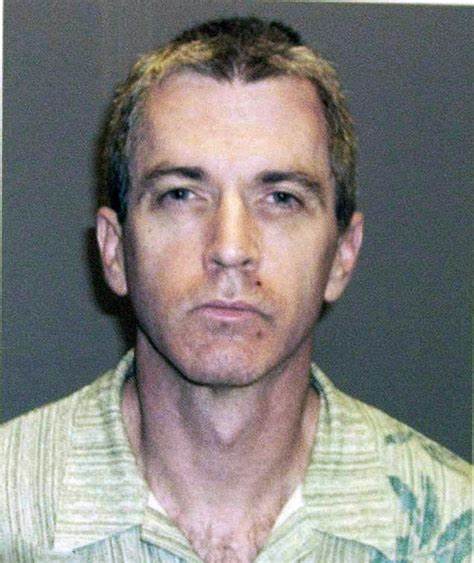
Anthony McKnight: The East Bay Serial Killer
Overview of the Case
Anthony McKnight was an American serial killer, rapist and kidnapper responsible for murdering five girls and young women in Northern California during a four-month period in 1985. His victims ranged from 13 to 24 years old and were found in isolated locations throughout Oakland, Berkeley, Richmond and other parts of the East Bay. Several of the women were sexually assaulted before being stabbed, beaten or otherwise killed.
At the time of the crimes, McKnight was serving in the United States Navy and was assigned to the Alameda Naval Air Station. He lived in the Oakland area with his wife and child and was described by neighbors as sociable and outgoing. Behind that public appearance, however, McKnight was committing a series of extremely violent attacks against women. Several women survived encounters with him and later helped investigators identify him.
McKnight was arrested in January 1986 for a series of sexual assaults and attempted murders, but investigators initially lacked the forensic evidence necessary to charge him with the five killings. He was convicted in 1987 of numerous crimes against surviving victims and received a 63-year prison sentence. More than a decade later, advances in DNA testing connected him to biological evidence preserved from the murder scenes. He was eventually convicted of all five murders in 2008 and sentenced to death.
Confirmed Murder Victims
- Betty Lynn Stuart, 22 — September 22, 1985 — Berkeley, California: Stuart was an Oakland resident and the mother of a young child. She was sexually assaulted and killed in a secluded location in Berkeley. Her throat had been cut. Biological evidence preserved from the crime later helped investigators connect McKnight to her murder.
- Diane Stone, 17 — September 29, 1985 — Oakland, California: Stone was found dead on the grounds of an Oakland elementary school. She had suffered fatal knife wounds to her neck. Her killing occurred only one week after the murder of Betty Stuart, demonstrating how rapidly McKnight was attacking victims during the opening stage of the series.
- Talita Dixon, 13 — October 8, 1985 — Oakland Hills, California: Talita disappeared after leaving her home to walk to school on October 5, 1985. Three days later, a jogger discovered her body near a secluded walking trail in an East Bay park in the Oakland Hills. She had been sexually assaulted and repeatedly stabbed. Talita was the youngest of McKnight’s confirmed victims.
- Monique Franchone Davis, 18 — December 9, 1985 — Richmond, California: Davis was found behind a warehouse in Richmond. She had been sexually assaulted and killed by repeated blows to the head with a blunt object. Her death showed that McKnight was not limited to one city and was leaving victims in isolated industrial areas throughout the East Bay.
- Beverly Ann Bryant, 24 — December 25, 1985 — Oakland, California: Bryant was found in an Oakland schoolyard on Christmas Day. She had been sexually assaulted and beaten to death. Her murder was the last of the five killings for which McKnight was eventually convicted.
The Pattern of Violence
The murders occurred between September and December 1985 and shared several important characteristics. McKnight targeted young females, transported or forced them into secluded areas and subjected many of them to sexual violence. The victims were abandoned in schoolyards, industrial districts, parks and other places where their bodies would not necessarily be noticed immediately. The attacks included stabbing, beating and cutting, suggesting that McKnight used whatever method allowed him to overpower and silence each victim.
At approximately the same time, women in Oakland and Emeryville were reporting assaults by a man who used similarly brutal methods. Several surviving victims were beaten, raped, stabbed or strangled and then left for dead. Some escaped after McKnight apparently believed that they had been fatally injured. Their survival provided police with descriptions of the attacker, his vehicle and portions of its license plate.
Investigators came to believe that the rapes, attempted murders and unsolved killings were connected. The attacker’s method of approaching women, moving them to isolated locations and using extreme violence was consistent across the cases. Police focused on McKnight after learning that he matched descriptions given by survivors and drove a vehicle resembling the one witnesses had described.
Identification and Arrest
McKnight was serving as an enlisted Navy sailor in the San Francisco Bay Area when investigators began examining him. He had been assigned to military installations including Alameda Naval Air Station and Treasure Island. His position allowed him to move throughout the East Bay without initially attracting suspicion.
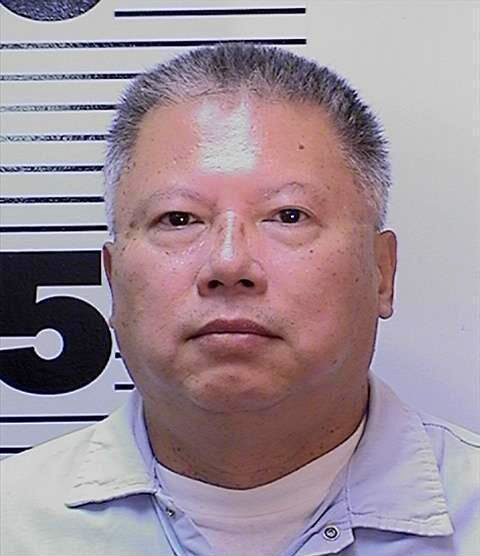
Police questioned McKnight in January 1986, but he denied responsibility for the attacks. At first, investigators did not believe they had enough evidence to hold him. Detectives later obtained a photograph of McKnight and presented it to several surviving victims. Multiple women identified him as the man who had assaulted them.
McKnight was arrested on January 24, 1986. At the time, authorities considered him a possible suspect in several rape-related homicides in and around Oakland. Although police believed his arrest brought the series of attacks to an end, the forensic technology available in the mid-1980s was not sufficient to conclusively connect him to the five murders.
Convictions for Attacks on Surviving Women
Prosecutors moved forward with charges involving women who had survived McKnight’s attacks. The cases included allegations of rape, kidnapping, attempted murder, mayhem, assault and forced sexual acts. Survivor testimony was especially important because the women could describe McKnight, identify him and explain the similar manner in which he had controlled and attacked them.
In 1987, McKnight was convicted of 11 felony counts arising from the violent attacks. He received a 63-year state prison sentence and was sent to the California prison system. Although the sentence removed him from the community, the families of the five murder victims were left without a conviction or a complete explanation of what had happened to their loved ones.
DNA Reopens the Murder Investigation
The murder cases remained open as forensic science continued to improve. Evidence collected from the victims had been preserved, allowing investigators to reexamine it with DNA technology that had not been widely available in 1985. During the 1990s, authorities obtained a biological sample from McKnight and compared his genetic profile with evidence from the unresolved murders.
The testing connected McKnight to the five victims. In June 1999, prosecutors charged him with five counts of murder with special circumstances. The charges alleged that several of the killings had occurred during the commission of rape or another sexual offense. The multiple-murder allegation also made McKnight eligible for the death penalty.
The DNA findings gave investigators the physical evidence they had lacked when McKnight was first arrested. The results also supported the long-standing belief that the murders and the attacks on the surviving women had been committed by the same person. The identification came approximately 14 years after the crimes.
Delays Before the Murder Trial
Despite the filing of charges in 1999, McKnight did not immediately go to trial. The case experienced repeated delays, changes of defense attorneys and numerous court appearances. The lengthy process was especially difficult for relatives who had already waited more than a decade for the murders to be connected to a suspect.
Talita Dixon’s mother, Marsha Dixon, became one of the family members who publicly discussed the emotional consequences of the delay. She remembered Talita as a humorous and playful child and described the pain of watching court dates repeatedly postponed. Relatives of Beverly Bryant and the other victims also called for the case to proceed so that a jury could evaluate the evidence.
The 2008 Murder Trial
McKnight’s murder trial finally began in Alameda County Superior Court in 2008. Prosecutors presented DNA evidence connecting him to the five crime scenes, along with evidence describing the circumstances in which the victims had been discovered. The prosecution argued that the killings were part of a continuing pattern of sexually motivated violence.
McKnight denied killing the victims and testified that he had never met them. His defense challenged the prosecution’s case, but jurors ultimately accepted the forensic evidence. On September 17, 2008, the jury convicted him of five counts of first-degree murder.
The jury also found five special-circumstance allegations to be true. Three involved murders committed during rape, one involved a murder committed during another sexual offense and one concerned the commission of multiple murders. These findings allowed prosecutors to seek a death sentence.
Death Sentence
During the penalty phase, prosecutors described McKnight as a remorseless and dangerous offender whose crimes had permanently devastated five families. Relatives and friends of the victims addressed the court and spoke about the lives that had been taken. Their statements emphasized that the victims were daughters, sisters, mothers and friends rather than merely names associated with an old criminal case.
On October 20, 2008, the jury recommended that McKnight receive the death penalty. Alameda County Superior Court Judge Jeffrey Horner formally sentenced him to death on November 17, 2008. McKnight was transferred to San Quentin State Prison, where California’s condemned male prisoners were then housed.
Death in Prison
McKnight remained on death row for nearly 11 years. He never admitted responsibility for the five murders and was not executed. On the evening of October 17, 2019, correctional officers found the 65-year-old McKnight unresponsive in his cell at San Quentin State Prison. He was pronounced dead shortly afterward.
His death ended the possibility of an execution, but it did not erase the importance of the investigation. The case demonstrated how evidence preserved from old crime scenes could be reconsidered when forensic technology improved. DNA testing transformed McKnight from a suspected killer already imprisoned for attacks on surviving women into a convicted serial murderer legally responsible for five deaths.
Legacy of the Case
Anthony McKnight’s crimes terrorized communities throughout the East Bay during the final months of 1985. His victims were young, and several were attacked in places associated with ordinary daily life, including a schoolyard, a walking trail and areas near local neighborhoods. The brutality of the crimes and the short period between them created fear that the killer would continue until he was identified.
The women who survived McKnight’s attacks played a major role in stopping him. Their descriptions and identifications allowed police to arrest him in 1986 and secure convictions that kept him incarcerated while the murder investigation continued. Without their testimony, he might have remained free long enough to attack additional victims.
The later DNA investigation provided the evidence needed to resolve the five murders in court. Betty Lynn Stuart, Diane Stone, Talita Dixon, Monique Franchone Davis and Beverly Ann Bryant were killed within approximately three months of one another, but their families waited more than two decades for a murder verdict. McKnight’s 2008 convictions finally established his responsibility for the series and brought a legal conclusion to one of the East Bay’s most disturbing serial murder cases.