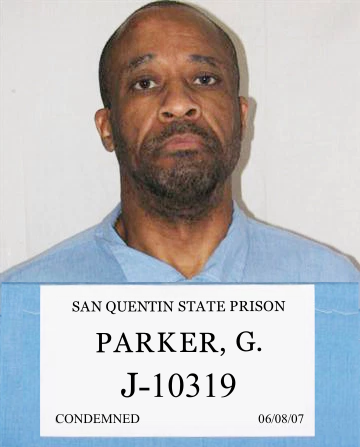
Gerald Parker: The “Bedroom Basher” Murders
Overview
Gerald Parker is an American serial killer and serial rapist responsible for a series of violent home-invasion attacks in Orange County, California. Between December 1978 and October 1979, Parker entered the apartments of women in Anaheim, Costa Mesa and Tustin, attacked them with blunt objects and sexually assaulted them. Five women were murdered, while a sixth woman survived with catastrophic injuries. Her full-term unborn daughter died because of the attack.
The crimes became associated with the names “Bedroom Basher” and “Bludgeon Killer” because Parker usually attacked women inside their bedrooms and repeatedly struck them in the head with pieces of lumber, a mallet or another heavy object. The murders remained unsolved for approximately 17 years. Parker was finally identified through DNA testing in 1996, while he was already imprisoned for unrelated offenses.
Background
Parker was born in 1955. During the period of the murders, he was serving as a staff sergeant in the United States Marine Corps and was stationed in Orange County. His military position allowed him to appear disciplined and respectable, while privately he was committing burglaries, rapes and murders in residential neighborhoods.
Parker often drove through apartment complexes at night searching for women who appeared to be alone. He watched residences through windows, waited for roommates or husbands to leave and then entered through an unlocked door or an accessible window. In several attacks, he carried a piece of wood or obtained a blunt object near the residence.
Once inside, Parker approached his victims while they were sleeping or unaware of his presence. He struck them with enough force to fracture their skulls and cause severe brain injuries. He then sexually assaulted the unconscious or dying women before leaving the residences. He generally did not steal property, later admitting that sexual violence rather than robbery was his primary purpose.
Confirmed Victims
- Sandra Kay Fry, 17 — December 1, 1978 — Anaheim, California: Fry had moved into an Anaheim apartment only a few days before her death. Parker entered through a bedroom window after watching her from outside. He approached her from behind and struck her several times with a two-by-four. Fry was found unresponsive across her bed and was transported to a hospital, where she was pronounced dead. She suffered skull fractures, cerebral lacerations and extensive hemorrhaging caused by blunt-force trauma. A fingerprint recovered from the entry window and DNA obtained from the crime scene were later matched to Parker.
- Kimberly Rawlins, 21 — April 1, 1979 — Costa Mesa, California: Rawlins was left alone in her apartment after her roommate and another woman went out for the evening. Parker had listened outside the apartment and waited until the others departed. He later entered through the unlocked front door while Rawlins was preparing for bed or sleeping. She was struck repeatedly in the head with a piece of wood. Rawlins was found shortly before 5:00 a.m., lying partly on and partly off her bed. Police detected a faint pulse and attempted to revive her, but she was pronounced dead at the scene. Her skull contained several major fractures, including one extending approximately nine inches across her head. DNA evidence eventually identified Parker as her attacker.
- Marolyn Carleton, 31 — September 15, 1979 — Costa Mesa, California: Carleton lived in an apartment with her nine-year-old son. Parker entered the residence during the night and attacked her in her bedroom. He struck her in the head several times, inflicting massive skull and brain injuries, and sexually assaulted her. Carleton’s son awoke after hearing his mother and discovered her severely injured. As Parker left through the darkened hallway, he encountered the child, who asked what was wrong with his mother. Parker moved past him and fled. Carleton died from the injuries inflicted during the attack.
- Chantal Green, unborn child — September 30, 1979 — Tustin, California: Chantal was the full-term unborn daughter of Dianna Green, who was nine months pregnant when Parker entered her apartment. Parker struck Dianna in the forehead with a board or similar blunt object and sexually assaulted her. The blow caused devastating brain trauma and disrupted the oxygenated blood reaching her uterus. Chantal lost vital signs several hours after the attack and was delivered stillborn. Her death was attributed to intrauterine oxygen deprivation caused by her mother’s traumatic injuries.
- Debora Kennedy, 24 — October 6, 1979 — Tustin, California: Kennedy was alone in the apartment she shared with her sister when Parker entered through a rear window. He found a mallet near the residence, approached Kennedy while she was resting near the television and struck her repeatedly in the head. He then sexually assaulted her. Kennedy’s sister returned the following evening and found the apartment door open. Kennedy was lying on a blood-soaked mattress in her bedroom. She had sustained extensive skull fractures and fatal brain hemorrhaging. DNA recovered from her body matched Parker and also connected her murder to other attacks in the series.
- Debra Lynn Senior, 17 — October 20, 1979 — Costa Mesa, California: Senior returned alone to her apartment after attending a party in Fountain Valley. Parker entered through a window and attacked her in the bedroom, striking her in the head with a two-by-four or similar object. Her roommate arrived home at approximately 2:30 a.m. and found the lights on and the stereo playing. Senior was lying on the bedroom floor with severe head injuries. Her clothing had been torn, and evidence showed that she had been sexually assaulted. DNA recovered from the scene later matched Parker and linked Senior’s murder to the killings of Kimberly Rawlins and Debora Kennedy.
The Attack on Dianna Green
Dianna Green was 20 years old and nine months pregnant when Parker attacked her in Tustin on September 30, 1979. She lived with her husband, Marine corporal Kevin Lee Green. Parker later claimed that he heard the couple arguing and watched Kevin leave the apartment. After waiting, Parker returned and entered through the unlocked front door.
Dianna was lying in the bedroom when Parker rushed toward her and struck her in the forehead with a board. The blow created a deep wound, fractured her skull and exposed brain tissue. Parker then raped her before leaving. Dianna was discovered unconscious and bleeding heavily. She remained in a coma for approximately 10 days and was hospitalized for about three weeks.
When Dianna regained consciousness, she suffered from total amnesia and initially could not recognize anyone. She had to relearn how to speak, spell and perform many ordinary tasks. Her recovery lasted for years, and she continued to experience communication and cognitive difficulties long after the attack.
The Wrongful Conviction of Kevin Green
Investigators initially focused on Dianna’s husband, Kevin Green. Because Dianna had no memory of the assault and the couple had reportedly argued before Kevin left the apartment, authorities treated him as the attacker. Kevin was convicted in 1980 of second-degree murder in the death of Chantal and of attempting to murder Dianna.
He was sentenced to 15 years to life in prison and remained incarcerated for approximately 16 years. Kevin repeatedly maintained that he was innocent. The case became one of the most consequential wrongful convictions connected to an American serial killer.
In 1996, DNA testing of evidence from Dianna’s sexual-assault examination produced a profile matching Gerald Parker. Parker subsequently confessed to entering the apartment, striking Dianna and raping her. Kevin’s convictions were vacated, the charges were dismissed and he was released from prison in June 1996.
Other Known Attacks
Parker committed additional violent crimes before and after the confirmed murders. In 1979, he raped a woman in an attack that prosecutors later introduced during the penalty phase of his murder trial. In February 1980, he assaulted and raped a 13-year-old girl in Tustin. His conviction for that crime resulted in his dismissal from the Marine Corps and a prison sentence.
Investigators also connected Parker through DNA to the July 19, 1979, sexual assault of 24-year-old Jane Pettengill. She survived the attack. Because the applicable statute of limitations had expired before Parker was identified, prosecutors could not file a rape charge in that case.
In 1984, Parker attacked David Feurtadot while the two men were incarcerated. Parker struck Feurtadot in the head with a heavy object, causing a deep wound that required stitches and a week of hospitalization. Parker pleaded guilty to assault with a deadly weapon.
The Cold-Case Investigation
The Orange County murders were initially investigated by separate police departments because the attacks occurred in Anaheim, Costa Mesa and Tustin. Detectives recognized similarities among several of the cases, including forced or covert entry into apartments, sexual assault and devastating head injuries inflicted with blunt objects.
Investigators developed theories about the offender and examined numerous suspects, but the technology available during the late 1970s could not identify the perpetrator from the biological evidence. Parker’s fingerprints were present at one crime scene, but they were not matched to him at the time.
The investigation remained open for years. During the 1990s, advances in forensic DNA testing allowed authorities to reexamine preserved evidence from the murders. DNA profiles obtained from several victims showed that the same man had committed multiple attacks.
In 1996, investigators compared the crime-scene evidence with a DNA sample provided by Parker while he was in state custody. The profiles matched. His fingerprint was also matched to the print recovered from the window used to enter Sandra Fry’s apartment.
Confession and Arrest
Parker was questioned in June 1996 while imprisoned on an unrelated parole violation. Detectives from the police departments responsible for the different homicide investigations confronted him with the DNA and fingerprint evidence.
Parker admitted entering the residences and described details that had not been publicly released. He explained how he watched some victims before entering, where he obtained the weapons and how he left the apartments. His descriptions corresponded closely with the crime scenes and witness accounts.
He confessed to the attack on Dianna Green and expressed concern that her husband had been imprisoned for a crime Parker committed. His confession, supported by DNA evidence, directly led to Kevin Green’s exoneration.
Parker was formally charged on June 21, 1996, with six murders: Sandra Fry, Kimberly Rawlins, Marolyn Carleton, Chantal Green, Debora Kennedy and Debra Senior. Although five adult women had been killed, Chantal’s death resulted in a sixth murder charge.
Trial and Conviction
Parker’s trial began in Orange County. Prosecutors presented DNA evidence, fingerprint evidence, his recorded confessions, autopsy findings and testimony from investigators, medical experts, surviving relatives and Dianna Green.
Parker did not seriously dispute that he was the attacker. His defense argued that alcohol and drug use had impaired his mental condition and prevented him from forming the intent required for first-degree murder. Prosecutors countered that Parker deliberately searched for isolated women, armed himself, entered their homes and used overwhelming force to incapacitate them before committing sexual assaults.
On October 20, 1998, the jury convicted Parker of six counts of first-degree murder. Jurors also found special circumstances involving multiple murders, burglary and murder committed during an attempted or completed rape.
During the penalty phase, prosecutors introduced evidence of Parker’s additional rapes, robberies and assaults. Parker testified and acknowledged responsibility for the crimes. He admitted that he understood his actions were wrong and stated that he likely would have continued killing women had he not been arrested.
The jury returned a death verdict in November 1998. On January 21, 1999, Parker was formally sentenced to death.
Appeals and Imprisonment
Parker’s death sentence resulted in an automatic appeal to the California Supreme Court. His attorneys challenged portions of the interrogation, jury selection, prosecution arguments and evidence introduced during the penalty phase.
On June 5, 2017, the California Supreme Court affirmed Parker’s convictions and death sentence. The majority concluded that the evidence against him, particularly the DNA evidence, fingerprint match and detailed admissions, supported the jury’s verdict.
Parker has remained incarcerated under a death sentence in California. His prosecution demonstrated how preserved biological evidence and advances in DNA analysis can solve crimes many years after traditional investigative methods have failed.
Legacy of the Case
Gerald Parker’s crimes devastated numerous families and left a lasting impact on Orange County. His victims were attacked in places where they should have been safest: their own homes. Several were teenagers or young adults at the beginning of their independent lives.
The case is also remembered for the wrongful conviction of Kevin Green. While Parker remained unidentified, Kevin lost approximately 16 years of his freedom for the attack on his wife and the death of their unborn daughter. The eventual DNA match both exposed Parker as the killer and corrected a profound miscarriage of justice.
The investigation became an important example of the value of retaining evidence from unsolved crimes. DNA technology linked murders committed in different cities, identified a serial offender and established the innocence of a man who had been imprisoned for nearly two decades.