Yusef Abdullah Rahman: The Riverhead Sniper
Background
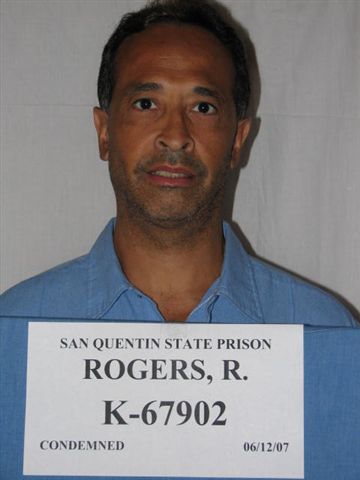
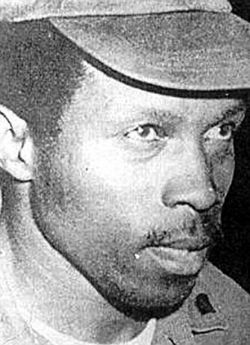
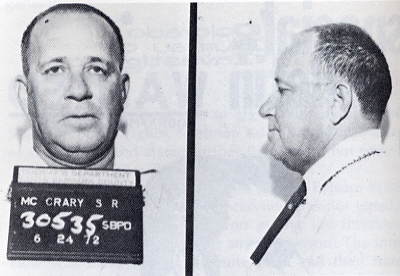
Yusef Abdullah Rahman, also known by the names Joseph Davis and Yussuf Amin, was an American gunman convicted of murders committed in Missouri and New York. Although he has sometimes been described as a serial killer, his known crimes also fit the pattern of a spree shooter because several of the attacks occurred on consecutive nights. Rahman became best known as the “Riverhead Sniper” after a series of apparently random shootings terrorized communities on eastern Long Island in December 1988.
Rahman was born in Brooklyn, New York, in 1969. His father, Bilal Abdullah Rahman, was killed during a violent confrontation at a Brooklyn mosque in February 1974, when Yusef was five years old. During his childhood, Rahman moved with his family to Missouri and spent time in an isolated religious community near Kansas City. According to accounts later presented about his upbringing, he was exposed at a young age to military training, survivalist beliefs and repeated discussions of armed conflict.
By his teenage years, Rahman had developed an intense fascination with guns, military clothing and combat exercises. He later told investigators that he had practiced mock military operations since he was six years old and had obtained his first handgun when he was approximately fourteen. Police would eventually describe him as a young man who imagined himself to be a commando carrying out missions against perceived enemies.
The Kansas City Shootings
Rahman lived in the Kansas City, Missouri, area under the name Joseph Davis. He reportedly occupied a crude encampment or shack in a wooded area and accumulated ammunition, military equipment and survivalist supplies. Kansas City investigators nicknamed him “Rambo” because of his appearance, living arrangements and obsession with combat tactics.
Between July 28 and August 3, 1987, five men were fatally shot in separate incidents in the Kansas City area. Investigators suspected that Rahman may have been involved in all five deaths, although he was prosecuted for only one of them. Police initially considered the possibility that the shootings were connected to Rahman’s stated hostility toward drug dealers, but the full circumstances surrounding the other Missouri killings were never conclusively established in court.
Rahman was formally accused of murdering 21-year-old Frederick C. Beard. Beard was found inside a vehicle after being shot repeatedly in what investigators described as an execution-style killing. A warrant was issued for Rahman, but he left Missouri before he could be arrested. He was placed on the Kansas City Police Department’s list of most-wanted fugitives, and the FBI issued a warrant charging him with unlawful flight to avoid prosecution.
After his later conviction in New York, Rahman was extradited to Missouri. He pleaded guilty to Beard’s murder and received a life sentence. That sentence was ordered to run concurrently with the lengthy prison term already imposed for the Long Island attacks.
Confirmed and Suspected Missouri Victims
- Frederick C. Beard, 21 — August 3, 1987 — Kansas City, Missouri: Beard was found shot multiple times while seated behind the steering wheel of a vehicle. Rahman was charged with the killing and later pleaded guilty to murder.
- Four unidentified or publicly unconfirmed men — July 28 through August 3, 1987 — Kansas City area, Missouri: Police investigated Rahman as a suspect in four additional fatal shootings committed during the same period. He was not convicted of those deaths, and reliable public accounts do not consistently identify all four victims by name.
Return to New York
Following the Missouri shootings, Rahman returned to New York. By 1988, he was living with relatives or family acquaintances in the Riverhead and Southampton area of Suffolk County. He worked for a time as a potato packer in Cutchogue and stored firearms in a garage on Old Quogue Road in Riverside.
People who knew Rahman described him as quiet, soft-spoken and deeply religious. He did not appear outwardly aggressive to many relatives, neighbors or coworkers. Privately, however, he continued to collect weapons, wear military-style clothing and imagine himself engaged in covert operations.
Rahman possessed a cut-down .22-caliber semiautomatic rifle, a sawed-off 12-gauge shotgun, a knife and military equipment that reportedly included a bullet-resistant vest. He traveled through the area by bicycle, carrying his weapons while searching for targets. In December 1988, he began a series of shootings that appeared to have no rational connection to the victims.
The Murder of Bernard Timothy Heaney
On the evening of December 5, 1988, Rahman entered a wooded area overlooking an automobile repair business on Flanders Road in Southampton. The shop was operated by 30-year-old Bernard Timothy “Timmy” Heaney, a husband and father of two daughters.
Rahman first shot Heaney’s dog. When Heaney came outside to investigate and assist the wounded animal, Rahman fired at him from concealment with the .22-caliber rifle. Heaney was struck and fell near the shop. Rahman later admitted that he continued firing because Heaney was still moving and making sounds.
After the murder, Rahman telephoned police and claimed that he had declared war on drug dealers and corrupt law-enforcement officers. Investigators later determined that Heaney had not been selected because of any connection to drugs or police corruption. Rahman acknowledged that the call was intended to confuse investigators and create a false motive.
The Consecutive Sniper Attacks
The killing of Heaney was followed by three shootings on consecutive nights. Rahman approached residences after dark, looked through windows or lured occupants toward doors and fired at them from outside. The victims did not share a common occupation, criminal history or personal connection that explained the attacks.
One victim was struck by a shotgun blast while sitting inside his home watching television. Another was shot after answering a knock at his door. A third man was hit in the jaw while seated inside a residence. All three survived, although they suffered serious and lasting injuries.
The shootings created widespread fear in Riverhead, Riverside, Flanders and Southampton. Residents avoided windows after dark, parents kept children indoors and heavily armed officers patrolled residential streets. Police helicopters searched neighborhoods while investigators attempted to determine whether the victims had been deliberately targeted.
Victims of the Riverhead Shootings
- Bernard Timothy “Timmy” Heaney, 30 — December 5, 1988 — Flanders Road, Southampton, New York: Heaney was shot repeatedly outside his automobile repair shop after going to help his wounded dog. He was the only person killed during the Long Island attacks.
- Theodore “Ted” Squires — December 6, 1988 — Riverhead, New York: Squires was shot through a window at his residence after responding to a knock at the door. He survived a gunshot wound to the shoulder.
- Richard Jensen, 34 — December 7, 1988 — Lincoln Street, Riverhead, New York: Jensen was watching television when a shotgun was fired through the window of his home. The blast severely damaged both hands and resulted in the loss of a finger from each hand.
- Donald Crump — December 8, 1988 — Flanders, Southampton, New York: Crump, who was acquainted with Rahman, was shot in the jaw with a .22-caliber bullet while sitting inside a home. He survived.
- Officer Larry Doscinski — December 31, 1988 — Southampton, New York: Rahman made a false report of a traffic accident and fired at Doscinski when the officer arrived. The bullet struck the police vehicle near the windshield, narrowly missing him.
The Attack on Officer Larry Doscinski
Several weeks after the four-night shooting spree, Rahman attempted another ambush. Shortly after midnight on December 31, 1988, a false traffic-accident report drew Southampton Town Police Officer Larry Doscinski to a location where Rahman was waiting.
Rahman fired at the officer’s patrol car. The bullet struck a metal pillar beside the windshield and narrowly missed Doscinski. Because the damage was not immediately noticed in the darkness, officers initially did not realize that the patrol car had been hit. Rahman later said that he staged the attack because public attention surrounding the earlier shootings had begun to fade.
Discovery of the Weapons
The investigation broke open on January 22, 1989, when a resident of Old Quogue Road found a sawed-off shotgun and a shortened .22-caliber rifle inside a vehicle stored on his property. The weapons were turned over to police.
Ballistics examinations connected the .22-caliber rifle to the murder of Heaney and the shooting of Donald Crump. The shotgun was linked to the attacks on the surviving Riverhead victims. Investigators traced the weapons to Rahman and began searching for him throughout Suffolk County and neighboring communities.
On January 28, 1989, a police officer spotted Rahman walking in Wyandanch. Rahman attempted to flee but was quickly captured. He did not offer significant resistance after officers caught him.
Confession and Claimed Motives
Following his arrest, Rahman gave investigators written and recorded statements describing the shootings. He admitted that he traveled by bicycle while armed and dressed in military-style clothing. He said that he had wanted to shoot someone for a considerable period before killing Heaney.
Rahman also admitted making telephone calls that falsely portrayed the shootings as attacks on drug dealers and dishonest police officers. Authorities found no evidence supporting that claim. The victims were largely selected at random, and the misleading calls appeared intended to redirect the investigation.
During later legal proceedings, Rahman presented a different explanation. He claimed that he belonged to a secret nine-member military unit that received coded orders and conducted government-authorized rescue missions. He gave the supposed members names such as “Blaster,” “Skyman,” “Frogman,” “Tunnelman” and “Arrowman.” Rahman claimed that the group had completed dozens of missions and saved thousands of hostages.
His defense attorney argued that these claims demonstrated paranoid schizophrenia and that Rahman did not understand the nature of his actions. Prosecutors countered that his efforts to hide the weapons, escape arrest and mislead police showed that he understood his conduct was criminal.
Trial and Conviction
Rahman went on trial in Suffolk County in October 1990. He pleaded not guilty by reason of insanity to charges arising from the murder of Heaney, the shootings of Squires, Jensen and Crump, and the attack on Officer Doscinski.
The jury heard evidence regarding Rahman’s military fantasies, mental condition, police statements and attempts to conceal his involvement. His defense maintained that he suffered from delusions and believed the victims were enemy guards or participants in an imaginary conspiracy. Prosecutors emphasized his detailed planning, choice of concealed firing positions and attempts to manufacture a false drug-related motive.
On October 24, 1990, the jury found Rahman guilty of depraved-indifference murder for Heaney’s death. He was also convicted of attempted murder, first-degree assault and reckless endangerment for the attacks on the surviving victims and the police officer.
Rahman received a sentence totaling 42 years to life in New York state prison. Afterward, he was returned to Missouri, where he pleaded guilty to the murder of Frederick C. Beard and received an additional life sentence. The Missouri term was ordered to run at the same time as his New York sentence.
Classification and Legacy
Rahman is often listed as a suspected serial killer because he committed two confirmed murders in different states more than a year apart and was investigated in connection with additional Kansas City killings. However, the consecutive Long Island attacks are more precisely described as a shooting spree. Only Heaney died during those attacks, while three civilians and one police officer survived.
The Riverhead shootings had a lasting effect on eastern Long Island. The apparently random selection of victims made residents believe that anyone near a window or outside after dark could be targeted. The discovery of Rahman’s weapons and his arrest ended weeks of fear, but survivors continued to live with severe physical injuries and the emotional consequences of the attacks.
Years after his convictions, Rahman expressed regret for the loss of life. He remained incarcerated under the combined New York and Missouri sentences. His crimes continue to be remembered as an unusual combination of random sniper violence, military delusions and calculated attempts to mislead investigators.