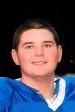
Theodore “Ted” Squires was a 39-year-old man at home in Riverhead, New York, on the night of December 7, 1988, when a small, ordinary sound—a knock at the kitchen door—turned the room into a trap. He noticed the outside light was off even though he’d left it on, and the unease hit him fast enough that he killed the light over the sink and started to move away from the window.
A shotgun blast smashed through from outside, tearing into his upper back and dropping him to the floor, suddenly unable to move his arms. In the stunned seconds that followed, he lay there while help was called and police swarmed the street, the same street where he’d joked earlier that day about how nobody ever gets shot in Riverhead.
He survived, but survival came with its own grim reminders. Squires spent about a week in the hospital, where doctors removed some of the pellets, leaving others behind because digging them out would cause more damage. Years later he would describe how the shot remained visible on X-rays, a private history stamped into his body that still startled people who didn’t know what they were seeing. The date December 7, 1988 is sometimes repeated online as though it marked the end of his life, but the accounts that trace what happened in Riverhead describe him as a wounded victim who lived through the attack and carried it with him.
Squires’s shooting was not an isolated burst of violence; it was one night in a run of attacks that made the town feel like it was being hunted. Two nights earlier, Bernard Timothy Heaney, 30, was shot and killed outside his auto-body shop in Flanders, hit multiple times as more shots rang from nearby woods. The next night, Richard Jensen sat watching television with his daughter when a shotgun blast shattered the living-room window; the buckshot mangled his hands and lodged in his head, but he lived. After Squires was shot the following evening, another man, Donald J. Crump, was struck in the jaw by a. 22-caliber bullet that came through a window while he watched TV with his mother in Riverside. With no clear motive and no suspect, Riverhead’s fear grew teeth: bedding and blankets went up over windows, holiday lights went dark, businesses emptied at night, and neighbors began to look at each other through the lens of suspicion.
Investigators believed the gunman had called police after the first killing, claiming he had declared war on drug dealers and crooked cops, a message that both taunted law enforcement and threatened to smear the victims as though they’d been chosen for a reason. The violence didn’t end neatly with the attacks on civilians; later in December, a Southampton police officer reported hearing a loud impact against his cruiser during a midnight shift, only to discover in daylight that a bullet had struck the metal strip alongside the windshield—an inch or two from penetrating the window. The shootings, the calls, and the creeping sense of being watched all pointed to someone who wanted the town to know he could reach anyone, even in their own living rooms.
The suspect authorities ultimately focused on was Yusef Abdullah Rahman, arrested on January 28, 1989, after the spree that left one man dead and others wounded. Contemporary reporting described charges that included second-degree murder, multiple counts of attempted murder, and reckless endangerment, and noted he was also wanted in Kansas City, Missouri. In Riverhead, a jury later found him guilty after a trial in which he pursued an insanity defense; local reporting places the verdict on October 24, 1990, and describes a sentence totaling 42 years to life in New York, running alongside a life sentence connected to a Kansas City murder. In the years after, the case remained a legal fixture as his convictions—murder, attempted murder, assault, and reckless endangerment—were upheld on appeal, cementing the official conclusion that Squires’s shooting was not a mystery left open to new suspects, but part of a prosecuted spree with Rahman as the convicted gunman.