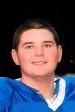
Richard Jensen, a White man in his 30s, was home in Riverhead, New York, on the evening of December 6, 1988, settling into the ordinary quiet of his Lincoln Street living room with his young daughter nearby. As the television played, he leaned back with his hands clasped behind his head—an easy, unguarded posture that made what happened next feel impossibly sudden. A shotgun blast tore through the front window, exploding glass across the room and driving buckshot into Jensen’s head.
In an instant, the comfort of a family room became a kill zone.
The injuries were savage and intimate. The force of the blast severed the middle fingers on both of Jensen’s hands, and pellets lodged in his head—yet, in a cruel twist of luck, the very position that made him vulnerable also helped save him. With his hands raised behind his head, the bones absorbed enough of the shot to keep the wounds from being fatal. In later years, when the story of that winter was retold, Jensen chose not to speak publicly about what had happened, as if the event had already taken enough from him without taking his privacy too.
Jensen’s shooting did not come out of nowhere; it came on the heels of another attack that had already shaken the area. The night before, Bernard Timothy Heaney was gunned down outside his auto-body shop in Flanders, and a caller claimed the violence was a “war” against drug dealers and crooked cops—an allegation that cast a shadow over the victims and pulled investigators into a maze of rumor and fear. With four shootings in four consecutive nights, police scrambled with no clear motive, building a multi-agency task force and flooding the streets with patrols while helicopters swept the darkness overhead. Even as investigators tried to sort truth from panic, there were reports of victims being pressed about drug connections that ultimately did not hold up, and Jensen—speaking from a hospital bed—pushed back against the idea that he wasn’t cooperating.
The man authorities ultimately blamed for the Riverhead spree was Yusef Abdullah Rahman. He was arrested on January 28, 1989, after the four-day burst of shootings that left one person dead and three injured and had Riverhead living through weeks of dread. In accounts of the case, Rahman was described as obsessed with guns and military-style fantasies, and investigators also linked him to violence far beyond Long Island—he faced a concurrent life sentence connected to a Kansas City murder, with reporting describing him as a suspect in a separate Missouri shooting spree as well.
The legal system’s answer came in the fall of 1990. After a two-week jury trial, Rahman was convicted on October 24, 1990—found guilty of depraved-indifference murder for Heaney’s death and guilty of attempted murder and first-degree assault for the shootings that wounded Jensen and two other men, along with reckless endangerment tied to a later attack on a police officer. His defense centered on mental competence, but the prosecution pointed to his own behavior after the shootings, including calls he admitted making—calls that jurors said helped cut through his claims of delusion. He received a sentence of 42 years to life in New York, running concurrently with a life sentence in Missouri, closing the courtroom chapter of a winter night that had begun with a family watching TV and ended with a window blown apart.