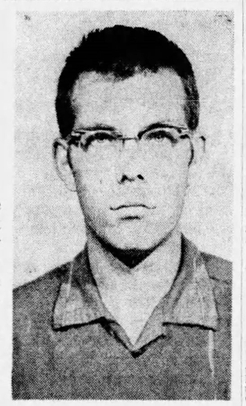
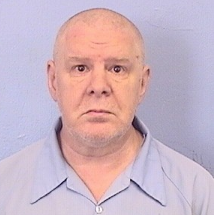
William Eugene Boyette: The 2017 Gulf Coast Killing Spree
Overview
William Eugene "Billy" Boyette Jr. was a 44-year-old Florida man responsible for a violent series of killings that left four women dead across northwest Florida and coastal Alabama in early 2017. Beginning on January 31 and ending on February 7, the crimes triggered an intensive multistate manhunt involving local sheriff's departments, state authorities, and the United States Marshals Service. Boyette traveled with Mary Barbara Craig Rice during much of the spree, using stolen vehicles and moving between communities as authorities attempted to locate them.
Boyette is sometimes described as a serial killer because he killed multiple victims during separate incidents and in different locations. However, because the four deaths occurred during an extremely compressed eight-day period with Boyette continuously fleeing authorities, the crimes are also commonly characterized as a killing spree. Whatever terminology is used, the case became one of the most alarming crime stories to emerge from the Florida Panhandle in 2017.
History of Violence Before the Murders
Boyette was well known to law enforcement before the 2017 killings. Contemporary court records and reporting described him as a habitual offender with criminal cases stretching back more than a decade. He had previously been accused of serious domestic violence against women, including allegations of beatings, threats, strangulation and stabbing. Some of the most serious cases against him did not result in convictions after alleged victims recanted statements, became unavailable to prosecutors, or could not be located.
One reported domestic violence incident involved a girlfriend who initially denied being attacked but later told investigators that Boyette had beaten her and repeatedly threatened to kill her. The case was ultimately dropped after she recanted. In another case, a woman contacted police and accused Boyette of stabbing and strangling her. Deputies reportedly found Boyette unconscious while holding a kitchen knife, but prosecution of that case also collapsed when the alleged victim disappeared while she was wanted on unrelated charges.
Boyette had served time for a probation violation and had reportedly been out of jail for only several months when the murders began. Law enforcement officials later emphasized that his lengthy history of violence made the search particularly dangerous. Authorities repeatedly warned the public not to approach him.
Alicia Greer and Jacqueline Moore - January 31, 2017
The killing spree began in Milton, Florida, a community in Santa Rosa County northeast of Pensacola. On January 31, 2017, 30-year-old Alicia Ann Greer and her friend, 39-year-old Jacqueline Jeanette Moore, were found shot to death inside a room at the Emerald Sands Inn on U.S. Highway 90.
Greer had been involved in an on-and-off relationship with Boyette, and reports surrounding the investigation described their relationship as abusive and volatile. According to members of Greer's family, Boyette had previously been violent toward her. This connection quickly placed him at the center of investigators' attention after Greer and Moore were discovered dead.
Moore did not appear to have the same personal relationship with Boyette. Investigators believed she was with Greer when the violence occurred. Motel guests reportedly heard several gunshots, and when the women were discovered, what initially appeared to be an isolated double homicide soon became the beginning of a much larger investigation.
Santa Rosa County authorities obtained murder warrants for Boyette, and his photograph and identifying information began circulating throughout the region. By then, however, he had already begun moving from place to place.
Peggy Broz - February 3, 2017
Three days after the Milton murders, violence crossed the state line into Alabama. Peggy Phillips Broz, 52, lived in Lillian, Alabama, in Baldwin County near the Florida border. She had worked for Baptist Hospital in Pensacola for approximately three decades.
Investigators determined that Broz was followed on February 3, 2017, from the Pensacola area toward her home in Lillian. She was subsequently shot and killed outside her residence. Her white 2003 Chrysler Concorde was taken from the property.
The theft of Broz's vehicle became an important part of the rapidly expanding manhunt. Investigators located a dark sport utility vehicle associated with Boyette abandoned near the area, while Broz's Chrysler was seen traveling away. Authorities now had three homicide victims in two states and believed Boyette was using the victims' vehicles to continue moving through the region.
Broz's stolen Chrysler was later found abandoned in Florida near the Interstate 10 corridor. Evidence recovered during the investigation helped authorities reconstruct Boyette and Rice's movements while they remained fugitives.
Mary Rice and the Expanding Manhunt
Mary Barbara Craig Rice, then 37, became increasingly important to investigators as the manhunt continued. Initially, authorities considered the possibility that she was endangered by Boyette. That assessment changed as investigators obtained surveillance recordings and other evidence suggesting that she was participating in Boyette's efforts to remain hidden.
Receipts and surveillance footage showed Rice shopping while Boyette remained outside. Investigators said she purchased ammunition along with camping supplies including a sleeping bag and hand warmers. Authorities later photographed Boyette and Rice with supplies in a wooded area through a game camera. Law enforcement officials argued that Rice had opportunities to seek help while away from Boyette but did not do so, and she was eventually designated a suspect rather than a possible hostage.
The fugitives appeared to be using wooded areas and temporary hiding places while repeatedly changing vehicles. Police agencies throughout northwest Florida and southern Alabama increased patrols, circulated photographs and warned residents to remain alert.
Kayla Crocker - February 6-7, 2017
On the morning of February 6, 2017, the violence reached Beulah, an unincorporated community in Escambia County west of Pensacola. Kayla Maylee Crocker, 28, was attacked inside her home. Her young son was inside the residence during the incident but was not physically injured.
Crocker was shot during the home invasion and left critically wounded. Her mother became concerned after Crocker failed to arrive at work and went to check on her. Crocker was discovered alive and was rushed to a hospital, but her injuries were extremely serious.
Boyette and Rice were accused of taking Crocker's white 2006 Chevrolet Cobalt after the attack. Surveillance evidence soon showed the fugitives using the stolen vehicle in the Pensacola area. They were recorded stopping at a gas station and later at a fast-food restaurant before once again disappearing.
Kayla Crocker was transported to Sacred Heart Hospital in Pensacola, where she died from her injuries on February 7, 2017. Her death brought the number of women killed during Boyette's spree to four.
Confirmed Victims
- Alicia Ann Greer, 30 - Died January 31, 2017. She was shot and killed at the Emerald Sands Inn in Milton, Santa Rosa County, Florida. Greer had been involved in a relationship with Boyette and was one of the two women discovered in the motel room.
- Jacqueline Jeanette Moore, 39 - Died January 31, 2017. Moore was shot and killed with Alicia Greer at the Emerald Sands Inn in Milton, Florida. She was a friend of Greer and was not known to have the same personal connection to Boyette.
- Peggy Phillips Broz, 52 - Died February 3, 2017. Broz was killed at her residence in Lillian, Baldwin County, Alabama, after investigators said she had been followed from the Pensacola area. Her 2003 Chrysler Concorde was stolen following the killing.
- Kayla Maylee Crocker, 28 - Shot February 6, 2017, during a home invasion in Beulah, Escambia County, Florida, and died February 7, 2017, at Sacred Heart Hospital in Pensacola. Her Chevrolet Cobalt was stolen after the attack. Her young son was inside the home but survived unharmed.
A Multistate Search
Following the attack on Crocker, authorities intensified an already enormous search operation. Additional uniformed deputies were placed on the streets in Escambia County, and investigators were reassigned from less urgent cases to work on locating Boyette and Rice. Similar precautions were being taken in neighboring jurisdictions.
Law enforcement officials made unusually strong public warnings because they believed Boyette was armed, desperate and willing to continue killing. Residents were advised to lock their doors, pay close attention to their surroundings and immediately report any possible sighting rather than trying to confront the fugitives.
Boyette was familiar with wooded areas in northwest Florida, making searches particularly difficult. Investigators feared he could hide in the forests while watching approaching officers. At the same time, the stolen vehicles allowed Boyette and Rice to move quickly between Florida, Alabama and eventually Georgia.
Discovery in West Point, Georgia
The search finally moved hundreds of miles away from the original murder scenes. Boyette and Rice traveled in Crocker's stolen Chevrolet Cobalt to West Point, Georgia, near the Alabama state line. They obtained a room at the West Point Motel.
On February 7, 2017, someone spotted the stolen Chevrolet and alerted authorities. Law enforcement officers converged on the motel, surrounded the room and established a perimeter. A SWAT team prepared for the possibility of an armed confrontation.
The standoff continued for several hours. Rice eventually emerged from the motel room and surrendered to officers. Shortly afterward, authorities heard a gunshot from inside the room.
Officers entered and found William Eugene Boyette dead from a self-inflicted gunshot wound. He was 44 years old. His death ended the eight-day sequence of murders and the massive search that had spread across several states.
The Case Against Mary Rice
Because Boyette died before he could be arrested and tried, much of the later criminal litigation focused on Mary Rice. Her defense maintained that she had been terrified of Boyette and had acted under threats and coercion. Prosecutors argued that the evidence showed something different: that Rice had provided assistance, purchased supplies and ammunition, traveled with Boyette and helped him remain ahead of police.
In September 2018, a Florida jury convicted Rice of first-degree murder in connection with the death of Kayla Crocker and of being an accessory after the fact in connection with the earlier killings of Alicia Greer and Jacqueline Moore. She received a life sentence for the murder conviction along with an additional prison sentence for the accessory conviction. Her Florida murder conviction and life sentence were later upheld on appeal.
Rice also faced prosecution connected to Peggy Broz's killing in Alabama, where authorities had previously obtained a capital murder warrant. Boyette's suicide meant that the surviving defendant became the only person prosecutors could bring into court to answer for her alleged role in the multistate crime spree.
Legacy of the Boyette Murders
The Boyette case left four families grieving while also raising questions about repeat domestic violence offenders and the difficulty prosecutors can face when frightened or vulnerable victims recant accusations or disappear before trial. Boyette had repeatedly come into contact with the criminal justice system before 2017, including serious allegations of violence against women, yet he was free when the final series of murders began.
The killings also demonstrated how quickly a local homicide investigation can develop into a regional emergency. Within eight days, investigators were dealing with murder scenes in Florida and Alabama, stolen vehicles, woodland searches, changing suspect locations and ultimately a motel standoff in Georgia.
Alicia Ann Greer, Jacqueline Jeanette Moore, Peggy Phillips Broz and Kayla Maylee Crocker were four separate women whose lives became connected only through Boyette's violence. Greer appears to have been personally targeted because of her relationship with Boyette, while the later victims were drawn into the spree as Boyette fled and sought transportation and places to hide. Their deaths between January 31 and February 7, 2017, transformed the search for one violent offender into a multistate manhunt.
William Eugene Boyette never faced a jury for the four killings. His suicide at the West Point Motel on February 7, 2017, brought the immediate threat to an end but denied the victims' families the opportunity to see him prosecuted. The subsequent case against Mary Rice provided the only courtroom examination of the conduct surrounding the spree and ensured that the events of those eight days remained the subject of criminal proceedings long after Boyette's death.