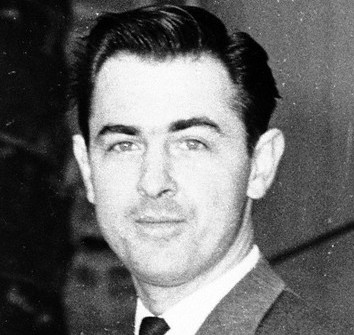
Jack Trawick: Alabama Serial Killer
Background and Early Criminal Behavior
Jack Harrison Trawick was born on February 18, 1947, in Birmingham, Alabama. He grew up in the Birmingham area, attended Shades Valley High School and graduated in 1966. Although he later married and maintained periods of employment, Trawick developed a long history of disturbing criminal conduct directed primarily at women.
Years before he was identified as a murderer, Trawick committed burglaries and other offenses involving women’s homes. He later admitted that he sometimes entered residences not simply to steal, but to frighten and psychologically torment the occupants. He cut women’s undergarments, disturbed personal belongings and reportedly left threatening messages written in lipstick on mirrors. These acts demonstrated the combination of sexual fixation, intimidation and violence that eventually characterized his murders.
The Murder of Betty Jo Richards
On July 16, 1972, 17-year-old Betty Jo Richards was attacked in the Quinton area of Alabama. Witnesses reportedly saw a young woman being chased toward an alley before Richards was discovered suffering from numerous stab wounds. She died from her injuries.
A different man was initially arrested during the investigation but was released without being prosecuted. Richards’ murder remained unresolved for approximately two decades. After Trawick came under investigation for murders committed in 1992, he confessed that he had encountered Richards while driving in the Birmingham area, forced her toward an isolated location at knifepoint and stabbed her repeatedly.
Trawick was not brought to trial for Richards’ death. Nevertheless, his confession and knowledge of the crime caused authorities to identify him as her killer. The case revealed that his homicidal behavior apparently began at least 20 years before the murders that ultimately resulted in his convictions.
The Murder of Frances Aileen Pruitt
On June 17, 1992, Trawick encountered 26-year-old Frances Aileen Pruitt, commonly known as Aileen Pruitt, in Birmingham. Pruitt was experiencing serious personal difficulties and had become involved in prostitution while struggling with cocaine addiction. Trawick picked her up and drove with her to a secluded dirt road behind Hill Crest Hospital.
Once the vehicle stopped, Trawick attacked Pruitt with a knife. He cut her throat and inflicted dozens of wounds across her body. Investigators determined that she had sustained approximately 57 stab and cutting injuries. Her body was abandoned near the roadway and was discovered by a hospital security guard two days later.
Pruitt’s estranged husband was initially accused of killing her. Trawick’s eventual confession changed the direction of the case and resulted in the charges against her husband being dismissed. During a recorded statement, Trawick described the killing in detail and acknowledged that he had looked through Pruitt’s belongings afterward. He claimed that seeing a photograph of her young son caused him to feel a degree of remorse, although the extreme violence of the attack demonstrated deliberate and sustained brutality.
In October 1995, a jury convicted Trawick of Pruitt’s murder. Because the charge did not carry the same capital specification used in the Stephanie Gach case, he received life imprisonment without the possibility of parole.
The Abduction and Murder of Stephanie Gach
On October 9, 1992, 21-year-old college student Stephanie Alexis Gach visited a shopping mall in the Birmingham area. Trawick noticed her and followed her vehicle when she left. He continued following Gach until she reached the parking lot of her apartment complex.
As Gach walked from her car toward her apartment, Trawick approached in a white Toyota van. He threatened her with what appeared to be a firearm, although the weapon was later described as a toy gun, and forced her into the van. He restrained and gagged her before driving to an isolated area.
Trawick subjected Gach to a prolonged and violent assault. He struck her in the head with a hammer, strangled her and stabbed her through the chest, penetrating her heart. He then threw her body down an embankment and discarded items from her wallet. Gach’s body was found on October 10, 1992, the day after she was abducted.
After returning home, Trawick attempted to remove evidence from his van. Investigators later used forensic testing to locate traces of blood despite his efforts to clean the vehicle. Fibers and other physical evidence also helped connect the van to Gach and the location where her body was abandoned.
Investigation and Confession
The investigation into Stephanie Gach’s death led detectives to examine Trawick because of his background, his vehicle and his pattern of offenses against women. During a series of interviews, he initially gave evasive or incomplete statements. He eventually admitted responsibility and supplied information about the abduction and murder that was consistent with the physical evidence.
Trawick’s arrest opened a much broader investigation into unsolved murders in Alabama and in other places where he had lived or traveled. He confessed to killing Aileen Pruitt and Betty Jo Richards and made additional claims involving unidentified women. Detectives were required to distinguish between admissions supported by evidence and statements that may have been exaggerations intended to increase his notoriety.
He claimed that in 1978 he strangled a female hitchhiker while traveling in Oregon. He also said he killed a woman aboard or near a ferry traveling through waters between Prince Rupert, British Columbia, and Ketchikan, Alaska, then threw her overboard. Authorities investigated these accounts, but the women were not conclusively identified and the claims did not result in additional murder convictions.
Trawick later circulated writings in which he claimed responsibility for still more killings. Some alleged victims were identified by names such as Virginia Bryant, Michelle Thomas, Susan Hill and a woman known only as Kim. He also described an unnamed mother and daughter. These accounts were never adequately corroborated, and some of the names may have been fictitious. Consequently, they should be treated as unverified claims rather than confirmed victims.
Known and Claimed Victims
- Betty Jo Richards — Died July 16, 1972, at age 17. She was repeatedly stabbed in or near an alley in the Quinton, Alabama, area. Trawick confessed approximately 20 years later but was not tried for her murder.
- Frances Aileen Pruitt — Murdered June 17, 1992, at age 26 in Birmingham, Alabama. Trawick cut her throat, stabbed and mutilated her, then left her body near a dirt road behind Hill Crest Hospital. He was convicted of her murder in 1995.
- Stephanie Alexis Gach — Murdered October 9, 1992, at age 21 in the Birmingham, Alabama, area. Trawick followed her home from a shopping mall, abducted her from her apartment parking lot, beat, strangled and fatally stabbed her. He was convicted of capital murder in 1994.
- Unidentified Oregon hitchhiker — Trawick claimed that he strangled a female hitchhiker in Oregon during 1978. The confession was not conclusively connected to an identified victim.
- Unidentified ferry victim — Trawick claimed that he strangled a woman in 1978 while traveling through waters between Prince Rupert, British Columbia, and Ketchikan, Alaska, and threw her overboard. The claim remained unverified.
- Additional claimed victims — Trawick made uncorroborated statements about women he called Virginia Bryant, Michelle Thomas, Susan Hill and Kim, as well as an unidentified mother and daughter. No reliable dates of death or confirmed locations could be established for these alleged victims.
Trial for the Murder of Stephanie Gach
Trawick was indicted for capital murder because Stephanie Gach was killed during a kidnapping. His trial began in Jefferson County in March 1994. Prosecutors presented his confession, forensic evidence from his van and testimony establishing how he followed, abducted and murdered Gach.
On March 23, 1994, the jury found Trawick guilty of capital murder. The jury recommended the death penalty, and on May 5, 1994, Circuit Judge James Hard formally sentenced him to death. Trawick later wrote to the judge and threatened to kill a prison employee if he were allowed to live within the general prison population rather than being sentenced to death.
State and federal courts reviewed Trawick’s conviction and sentence for years. The Alabama Court of Criminal Appeals and the Alabama Supreme Court upheld the judgment, and subsequent federal challenges were unsuccessful.
Prison Writings and Treatment of the Victims’ Families
While imprisoned on Alabama’s death row, Trawick wrote graphic accounts of murder and produced disturbing artwork depicting violence against women. Some of his letters and drawings were distributed by people outside the prison and published on the internet. Rather than expressing meaningful remorse, he frequently described the crimes in a boastful and taunting manner.
His writings caused additional pain for the families of Stephanie Gach and his other victims. In material discussing Gach’s murder, he addressed or referred to her relatives and portrayed the killing as an achievement. Family members publicly objected to the distribution of his writings and to attempts to sell his artwork.
The controversy contributed to efforts in Alabama to prevent convicted murderers and rapists from profiting from works based on their crimes. Although officials could inspect his outgoing mail for security concerns, constitutional protections made it difficult to completely prevent outside parties from publishing material he had written.
Execution
After approximately 15 years on death row, Jack Trawick was executed by lethal injection at Holman Correctional Facility in Atmore, Alabama. The execution was carried out on June 11, 2009, for the kidnapping and murder of Stephanie Gach.
Relatives of Stephanie Gach and Aileen Pruitt attended the execution. Shortly before he died, Trawick apologized to the victims’ families, although his final expression of regret stood in sharp contrast to the threatening and celebratory writings he had produced during his incarceration. He was pronounced dead at 6:17 p.m. at the age of 62.
Number of Victims and Legacy
Jack Trawick was convicted of murdering Stephanie Gach and Aileen Pruitt. He also confessed to killing Betty Jo Richards, and authorities accepted him as responsible for her death even though the case was never prosecuted. These three women constitute his most firmly established victims.
His statements concerning killings in Oregon, Alaska and Alabama raised the possibility that he murdered additional women between the 1970s and 1992. Estimates associated with his case have ranged from five victims to more than a dozen. However, the absence of identified victims, physical evidence or independently verified details prevents those additional claims from being treated as established murders.
Trawick’s case is remembered not only for the extreme violence of his crimes but also for the way he continued victimizing the families through his prison writings. His history of stalking, burglary, intimidation and sexualized violence demonstrated an escalating pattern that culminated in abduction and murder. The confirmed crimes left three families dealing with losses that extended across decades, while his unsupported confessions left investigators with unanswered questions about whether other victims were ever found or identified.