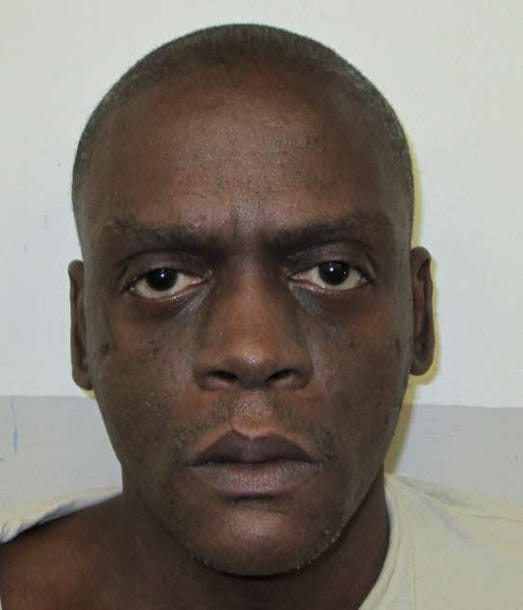
Donald Broadnax: The Work Release Killer
Overview
Donald Broadnax is an Alabama inmate on death row, convicted of a brutal double murder that exposed a terrifying flaw in the state's justice system. His criminal history began in 1977 when, as a teenager, he shot a friend to death in Birmingham. For this, he received a 99-year prison sentence. By 1992, however, he had earned a place in a work-release program, a step meant to reintegrate him into society. It was from this position of trust that he committed his most heinous crimes.
On April 25, 1996, while employed as a painter in Alexander City, Broadnax murdered his wife, Hector Jan Stamps Broadnax, and her four-year-old grandson, DeAngelo Marquez Stamps. The act was born of rage over a recent parole denial. He beat his wife to death at his workplace, placed her body in the trunk of her car, and drove to Birmingham with her young grandson still alive in the backseat. There, in the same neighborhood as his first murder, he beat the child to death and left both bodies in the abandoned car. The discovery of his bloody uniform by fellow inmates led to his capture. A jury convicted him on four counts of capital murder, and he was sentenced to death. He remains incarcerated at Holman Correctional Facility.
Early Life and First Murder
Donald Broadnax was born in Birmingham, Alabama, on January 1, 1961. Details of his early childhood are sparse, but testimony from his sister, Dorothy McKinstry, during his capital trial painted a bleak picture. She stated that he "didn't have a childhood," lacked normal social contact, and never learned how to behave around others. At one point, around the age of 15, Broadnax was having such significant problems in school and his community that he was sent to live with McKinstry's family in Michigan for a year, where he was placed in special education classes.
His criminal life began at age 16. In the early hours of August 20, 1977, Broadnax was in the Elyton Village public housing community in Birmingham when he got into an argument with a friend, 19-year-old Gregory Manson. The dispute escalated with shocking violence. Broadnax produced a handgun and fired six shots, felling Manson. As his friend lay on the ground, Broadnax reloaded the weapon and fired three more bullets into his body before fleeing. He was arrested three months later and charged with first-degree murder. In 1978, he was convicted of the lesser charge of second-degree murder and sentenced to 99 years in prison.
A Cycle of Incarceration and Release
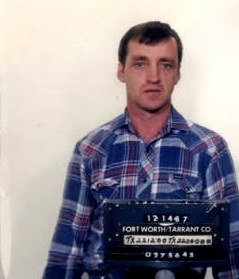
Despite the severity of his crime and the length of his sentence, Donald Broadnax was granted parole in 1986. He returned to Birmingham, but his freedom was short-lived. He quickly became associated with a notorious local drug dealer named Raymond "Godfather" Mims and took up residence in one of Mims's houses. Within two years, a police raid on the property led to Broadnax's arrest when several guns were seized. As a convicted felon, possessing firearms was a direct violation of his parole terms, and he was sent back to prison to continue serving his 99-year sentence.
After four more years behind bars, Broadnax sought another path to freedom. In November 1992, he applied for and was accepted into a work-release program. He was transferred to the Alexander City Work Release Center and began working as a painter for a local company, Wellborn Forest Products. By all accounts, he was a good employee, later described by his employer as mild-mannered and nice. While in the program, Broadnax met and, in 1994, married Hector Jan Stamps, a 42-year-old woman from the nearby town of Sylacauga.
The 1996 Murders
The fragile facade of Broadnax's rehabilitation shattered on April 25, 1996. Prosecutors would later argue that the motive was his building rage and frustration over his wife's perceived failure to adequately assist in his efforts to gain full parole. A parole denial on April 15, just ten days earlier, appeared to be the final trigger. A coworker would later testify that in the days leading up to the murders, Broadnax had spoken of killing his wife, Jan.
That evening, after 6:00 p.m., Jan visited Broadnax at Wellborn Forest Products to bring him dinner. She was not alone; with her was her four-year-old grandson, DeAngelo Marquez Stamps. Jan left DeAngelo secured in his child safety seat in the backseat of her white Dodge Aries and went inside the facility. There, in a brutal assault, Broadnax beat her to death with a piece of lumber.
He then placed her body in the trunk of her car. A fellow inmate and coworker, Johnny Baker, testified that he saw Broadnax driving Jan's car at the workplace that evening. Broadnax stopped to talk with him, and Baker saw a child in the backseat. He was "pretty sure," he testified, that the child was alive at the time.
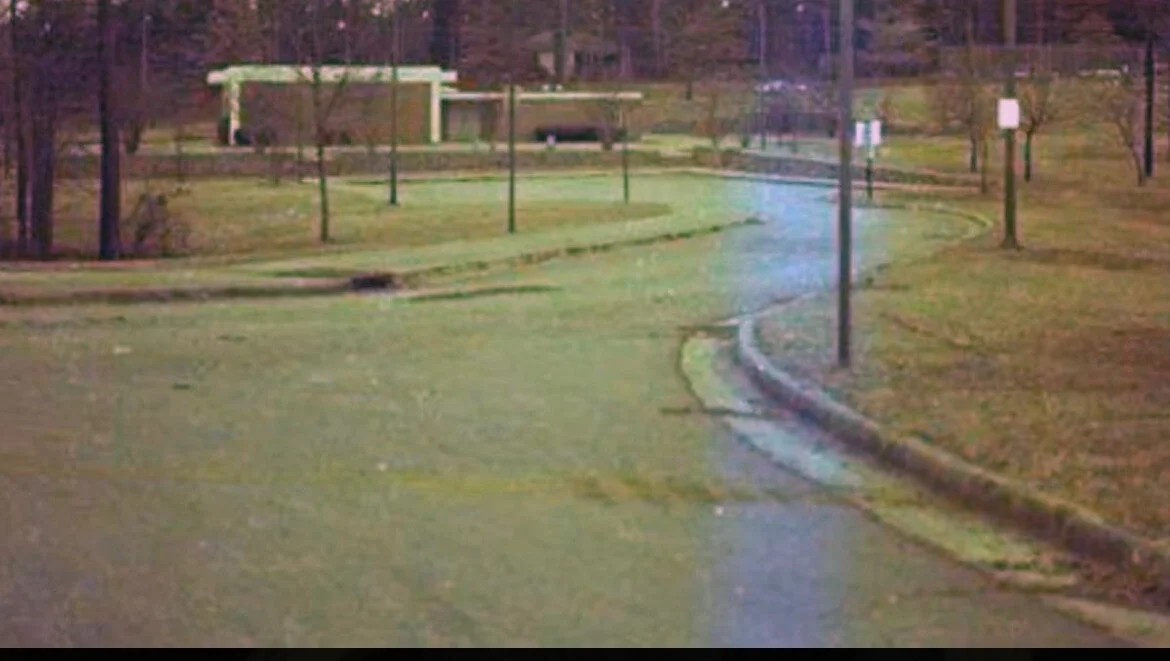
With his wife's body in the trunk and his step-grandson in the car, Broadnax drove from Alexander City to Birmingham, a journey of over an hour. He headed for an isolated area near Elyton Village, the very place where he had murdered Gregory Manson nearly two decades before. There, he took four-year-old DeAngelo from the car and beat him to death. He put the boy's small body in the trunk with his grandmother and abandoned the car in front of a vacant house that was known locally as a "crack-house."
The Victims
- Gregory Manson, 19 — August 20, 1977, in Birmingham, Alabama. A friend of his teenage killer, Manson was shot nine times following a late-night argument in the Elyton Village housing community.
- Hector Jan Stamps Broadnax, 42 — April 25, 1996, in Alexander City, Alabama. Known to friends and family as Jan, she was a resident of Sylacauga who married Broadnax in 1994 while he was in a work-release program. She was murdered by her husband at his job site.
- DeAngelo Marquez Stamps, 4 — April 25, 1996, in Birmingham, Alabama. DeAngelo was Jan's grandson. He was with his grandmother on a visit to bring food to Broadnax when he was taken and murdered.
Investigation and Capture
After abandoning the car in Birmingham, Donald Broadnax hitched a ride back to the Work Release Center in Alexander City. He arrived late, around 10:45 p.m., surprising a security guard, Mark Chastain, who was securing the building for the night. Chastain's wife, Kathy, saw a man matching Broadnax's description get out of a light-colored truck and run into the building. When confronted, Broadnax claimed the work-release van had just dropped him off.
Back in his bunk, Broadnax tried to hide his work uniform and Red Wing boots, which were stained with blood. His efforts were futile. Two other inmates, Lawrence Hardnette and James Smith, discovered the bloody items stuffed under their bunks and immediately reported them to the guards. Broadnax was quickly detained.
Meanwhile, in Birmingham, residents Robert Williams and his wife noticed a car parked in front of the vacant house across the street around 8:50 p.m. When police responded to a call, they found blood on the bumper and on the ground behind the car. Paramedics were called to open the locked trunk, where they made the horrific discovery of the bodies of Jan and DeAngelo. A forensic pathologist, Dr. Robert Brissie, later confirmed both had died from blunt-force trauma consistent with being beaten by a piece of lumber, like the one found with them in the trunk. DNA analysis of the bloodstains on Broadnax's recovered uniform matched both Jan and DeAngelo. Investigators also found one of Jan's earrings on the grounds of Wellborn Forest Products, which matched another found in her car.
Trial and Sentence
In October 1996, a Jefferson County grand jury indicted Donald Broadnax on four separate counts of capital murder: murder of two or more persons in a single course of conduct; murder by a defendant with a prior murder conviction within the last 20 years; murder committed during a first-degree kidnapping; and the murder of a victim under the age of 14.
At his trial in June 1997, the state laid out its timeline: between 6:30 p.m. and 10:30 p.m. on April 25, Broadnax killed Jan in Alexander City, drove with DeAngelo to Birmingham, killed DeAngelo, abandoned the car, and got a ride back to the work-release center. Prosecutors presented the testimony of his coworkers, the security guard, and the residents who saw the car. They also introduced Broadnax's initial statements to police, where he claimed Jan and DeAngelo left his workplace around 8:20 p.m. and that he had remained there all night, even making a phone call to his brother around 9:00 p.m. Telephone records showed no such call was ever made.
Broadnax's defense attorneys, William Brower and Darryl Bender, called no witnesses. They argued the state's case was purely circumstantial, questioned the credibility of the inmate witnesses, and suggested that the timeline was implausible. They also argued that anyone at the work-release center could have accessed Broadnax's clothing.
On June 6, 1997, after deliberating for less than two hours, the jury found Donald Broadnax guilty on all four counts of capital murder. During the penalty phase, which began immediately, the state rested on the evidence from the trial. The defense presented only the testimony of Broadnax's sister, Dorothy McKinstry, about his difficult childhood. The jury, by a unanimous 12-0 vote, recommended a sentence of death. On September 12, 1997, the trial court formally imposed the death sentence. Upon hearing the verdict, victims' family members expressed relief, while Broadnax and his own family wept.
Appeals and Imprisonment
Donald Broadnax has spent the subsequent decades on death row at Holman Correctional Facility in Atmore, Alabama, exhausting a lengthy appeals process. His initial appeal to the Alabama Court of Criminal Appeals resulted in a temporary victory when the court ordered a new sentencing hearing due to improper jury instructions. However, on rehearing, the court withdrew that opinion. After ordering the trial court to correct factual errors in its sentencing order, the appeals court affirmed the death sentence in December 2000.
Broadnax continued to file appeals in state and federal courts, primarily arguing ineffective assistance of counsel. His claims included that his trial lawyers failed to investigate his alibi—that he was at the work-release center between 9:00 and 10:00 p.m. and could not have been in Birmingham. These petitions were consistently denied. The Alabama Court of Criminal Appeals upheld the sentence again in 2012, and the United States Supreme Court denied a petition for review in June 2013. His federal habeas corpus petition was denied, and that denial was affirmed by the Eleventh Circuit Court of Appeals in May 2021. As of early 2025, Donald Broadnax remains on death row.