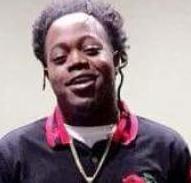
On a spring day in 1996, four-year-old DeAngelo Marquez Stamps, a young Male child, accompanied his grandmother on a visit that ended in an unimaginable tragedy. The events of that day would reveal a brutal double murder, severing a family and exposing the profound failures of the justice system. DeAngelo and his grandmother, Hector Jan Stamps Broadnax, became the final victims of serial killer Donald Broadnax, a man who should have been behind bars.
DeAngelo’s grandmother, a
42-year-old resident of Sylacauga, Alabama, known to friends and family as Jan, had married Donald Broadnax in 1994. At the time, Broadnax was an inmate serving a 99-year sentence for a 1977 murder, but he had been transferred to a work-release program in Alexander City in 1992. On the evening of April 25, 1996, Jan drove to Wellborn Forest Products, Broadnax's job site, to bring him food. With her was her grandson, DeAngelo, who waited in the car, likely unaware of the violence about to unfold.
Inside the factory, Broadnax brutally beat his wife to death with a plank. He then placed her body in the trunk of her own car and drove away from the factory with his step-grandson, DeAngelo, still inside the vehicle. The state’s theory was that Broadnax drove the hour-and-a-half journey to Birmingham, to the Elyton Village public housing community where he had grown up. There, he murdered DeAngelo, beating the four-year-old boy to death before placing his small body in the trunk alongside his grandmother.
The car was discovered in Birmingham around 8:50 p.m. that same night. Inside the locked trunk, authorities made the horrific discovery of the bodies of Jan and DeAngelo. The investigation quickly led back to Donald Broadnax. Inmates at the work-release center found his bloody uniform and boots, which he had attempted to hide. An earring belonging to Jan was found on the grounds of the factory where she was killed, matching another found inside her car. Though Broadnax denied any involvement, claiming he last saw his wife and her grandson when they left his workplace, he was arrested and charged with two counts of capital murder.
Prosecutors argued that Broadnax's motive was rage toward his wife. He believed she was not doing enough to help him get paroled from his previous murder sentence and may have been planning to divorce him after discovering the true nature of his conviction. His crime was made capital for several reasons: it involved the murder of two or more people, it was committed during a kidnapping, DeAngelo was under the age of 14, and Broadnax had a prior murder conviction within the last 20 years.
On June 6, 1997, a jury found Donald Broadnax guilty on all four counts of capital murder. The verdict brought relief to the victims' family members who were present in the courtroom. That September, following the jury's unanimous recommendation, a judge sentenced Broadnax to death. Over the subsequent decades, Broadnax filed numerous appeals. While one appeal resulted in a resentencing hearing due to incorrect jury instructions, his death sentence was ultimately upheld by the Alabama Court of Criminal Appeals in December 2000 and reaffirmed in subsequent rulings. Donald Broadnax remains on death row at the Holman Correctional Facility in Atmore, Alabama.