James Gilbert Jenkins: The Murderer Who Claimed Eighteen Victims
Early Life and Introduction to Crime
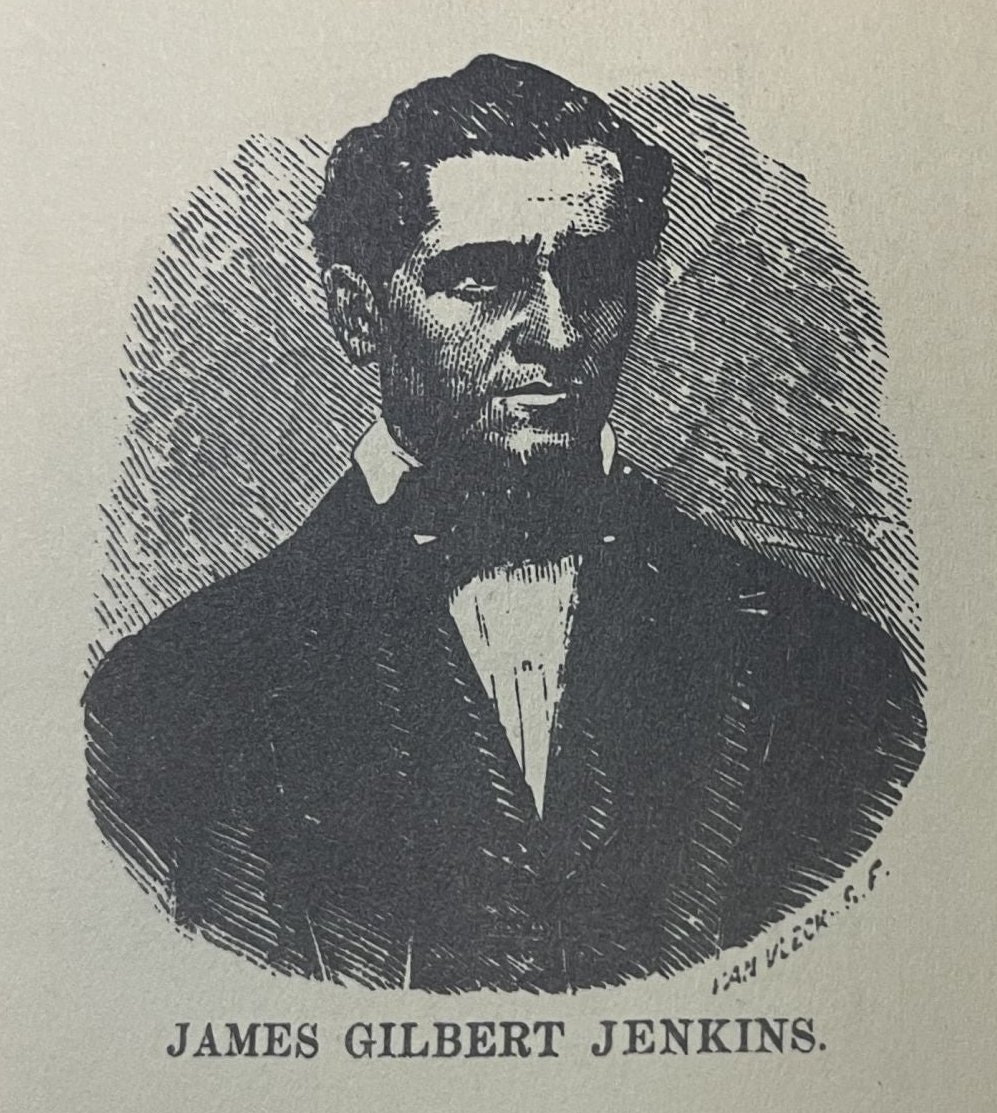
James Gilbert Jenkins was an American outlaw, highway robber, horse thief, and self-confessed serial killer whose criminal activities occurred during the violent and unsettled years preceding and during the American Civil War. Historical records differ regarding his exact birth year and birthplace, but he was reportedly born around 1834 or 1835 in North Carolina and spent part of his childhood in Gentry County, Missouri.
According to the autobiographical account published shortly before his execution, Jenkins was approximately nine years old when his father placed him in the care of a man named John Forbes. Forbes reportedly promised to educate the boy while employing him to care for and race horses. Instead, Forbes was allegedly a thief and highwayman who introduced Jenkins to criminal behavior. Jenkins later portrayed this experience as the beginning of a life characterized by resentment, alcohol abuse, theft, robbery, and murder.
Jenkins traveled extensively and claimed to have committed crimes in Missouri, Illinois, Indiana, Virginia, Arkansas, Tennessee, Texas, New Mexico, Nebraska, Iowa, and California. His offenses reportedly included stealing horses, robbing travelers, breaking into homes, and killing people who resisted him or whose deaths served his immediate interests. Many of these events occurred in isolated frontier areas where reliable records were limited and law enforcement was poorly organized.
Claims of Eighteen Murders
While awaiting execution in Napa County, California, Jenkins gave an account of his life to Napa County Sheriff C. H. Allen. His statements were recorded and arranged for publication by R. E. Wood in a 56-page pamphlet titled
Life and Confessions of James Gilbert Jenkins, the Murderer of Eighteen Men. The work was published in Napa City in 1864.
Jenkins claimed responsibility for killing eighteen men: eight white men and ten Native American men. He described a criminal life that stretched across several states and territories, but most of the alleged victims were not identified by name. Exact dates and locations for the majority of these killings cannot be independently verified. Because the principal account came from Jenkins himself, historians must distinguish between the murder for which he was convicted and the additional deaths he claimed in his confession.
His alleged killings appear to have been opportunistic rather than part of a single organized pattern. Jenkins reportedly killed during robberies, personal disputes, frontier encounters, and efforts to avoid identification or capture. Firearms were his principal weapons. His account presented violence as a routine part of his travels, with victims frequently chosen because they possessed money, horses, weapons, or other property he wanted.
The Murder of Patrick O'Brien
The best-documented murder associated with Jenkins was the killing of Patrick O'Brien, a 46-year-old rancher in Napa County, California. Jenkins had been living or working near the O'Brien household and became involved in a relationship with O'Brien's wife. Contemporary accounts and later descriptions of the case indicated that Mrs. O'Brien encouraged Jenkins to eliminate her husband, allegedly promising him access to the ranch and a continued relationship with her or her daughter.
On January 20, 1864, Jenkins accompanied Patrick O'Brien away from the ranch. During the journey, Jenkins shot O'Brien and attempted to conceal the crime by burying his body in a wooded or isolated area. The killing was planned to make O'Brien disappear while allowing Jenkins and Mrs. O'Brien to benefit from his property.
The concealment was unsuccessful. Suspicion developed after O'Brien vanished, and investigators discovered evidence linking Jenkins to the disappearance. O'Brien's remains were eventually located, and Jenkins was arrested. The evidence surrounding this murder was considerably stronger than the evidence supporting Jenkins's claims about his other victims.
Known and Alleged Victims
- Patrick O'Brien, age 46 — January 20, 1864 — Napa County, California: O'Brien was shot by Jenkins after being taken to an isolated location. Jenkins attempted to conceal the body by burying it. This was the murder for which Jenkins was convicted and sentenced to death.
- Seven unidentified white men — Dates unknown, reportedly during the 1850s and early 1860s — Various locations: Jenkins claimed that he killed seven additional white men during his travels through several states and western territories. Their names, exact dates of death, and precise locations have not been reliably established.
- Ten unidentified Native American men — Dates unknown, reportedly during the 1850s and early 1860s — Various western locations: Jenkins confessed to killing ten Native American men. Surviving accounts do not provide verified names or individual dates of death, and the circumstances were described almost entirely through Jenkins's own narrative.
Arrest, Trial, and Conviction
Jenkins was arrested in 1864 following the investigation into Patrick O'Brien's disappearance and death. Prosecutors presented the case as a calculated murder motivated by Jenkins's relationship with O'Brien's wife and his expectation that he could take control of O'Brien's property and household.
Jenkins was convicted of O'Brien's murder and sentenced to death by hanging. Although his published confession described eighteen killings, the death sentence rested on the proven murder of Patrick O'Brien rather than on the many additional, largely unverified crimes Jenkins claimed to have committed.
While imprisoned, Jenkins reportedly accepted responsibility for much of his criminal behavior. He blamed his early exposure to crime, accumulated bitterness, and heavy drinking for shaping his violent character, but he also acknowledged that he had repeatedly chosen to continue committing robberies and murders. His confession was marketed partly as a warning about the consequences of criminality and alcohol abuse, a common feature of nineteenth-century execution pamphlets.
Confession and Questions of Reliability
Jenkins's confession remains the principal source for the claim that he murdered eighteen people. Such execution narratives were often produced for public sale and could combine genuine testimony with exaggeration, moral commentary, and sensational details intended to attract readers. Jenkins may have accurately described some previously unknown crimes, but the absence of names, dates, official reports, and identifiable burial locations prevents most of his claims from being independently confirmed.
The unnamed Native American victims are especially difficult to document. Violence against Indigenous people in frontier regions was frequently ignored, poorly recorded, or treated differently from the murders of white settlers. It is therefore possible that some of Jenkins's claims referred to actual deaths that never produced surviving legal records. It is equally possible that he exaggerated his total to enhance his reputation as a dangerous outlaw.
For this reason, Jenkins is most accurately described as a convicted murderer and self-confessed serial killer. Patrick O'Brien is his only clearly identified and judicially established victim. The remaining seventeen claimed victims should be treated as alleged or suspected victims rather than confirmed cases.
Execution
James Gilbert Jenkins was executed by hanging in Napa, California, on March 18, 1864. Before the execution, his hands and feet were restrained and he reportedly addressed those assembled, expressing a willingness to die and hoping that his fate would discourage others from following a similar path.
The trap was opened shortly after three o'clock in the afternoon. Contemporary descriptions stated that Jenkins remained suspended until officials determined that his heart had stopped. His body was then lowered and placed in a coffin. He was approximately 29 or 30 years old.
Historical Legacy
James Gilbert Jenkins occupies an unusual place in American criminal history. Unlike later serial killers whose crimes were reconstructed through police files, forensic evidence, and detailed victim records, Jenkins is known primarily through a nineteenth-century confession produced while he awaited execution. His story reflects the lawlessness of frontier travel, the weakness of interstate law enforcement, and the difficulty of documenting crimes committed against isolated and marginalized victims.
His confirmed murder of Patrick O'Brien demonstrated planning, manipulation, personal motive, and an attempt to conceal the victim's body. His wider claim of eighteen murders suggests a long pattern of lethal violence, but the lack of independently verified information prevents a definitive accounting of his crimes. The surviving evidence supports describing Jenkins as a convicted killer who may have murdered many more people than the single victim established in court.