Ivan Jerome Hill: The 60 Freeway Killer
Background
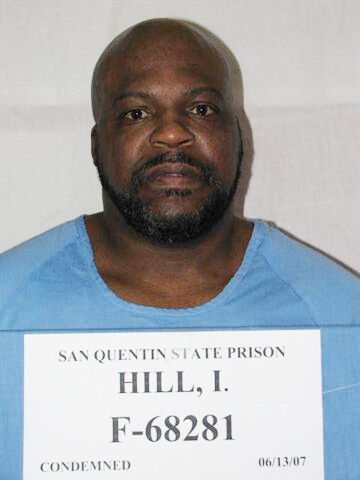
Ivan Jerome Hill was born on March 30, 1961, in Los Angeles, California. He became known as the “60 Freeway Killer” because several of his victims were found in communities near California State Route 60, which runs east from Los Angeles through the San Gabriel Valley and the Pomona Valley. Hill was convicted of murdering six women during a concentrated series of killings in 1993 and 1994. He later pleaded guilty to murdering two additional women in 1986 and 1987.
Hill’s crimes were also discussed in connection with the “Southside Slayer,” a name used by investigators and the news media for several men who independently murdered women in and around South Los Angeles. Hill was not responsible for every crime associated with that name. His confirmed murder convictions involved eight women whose bodies were found in Los Angeles and San Bernardino counties.
Early Criminal History
Hill had a serious criminal history before the serial murders for which he became notorious. On January 23, 1979, when Hill was seventeen, he participated with Venson Lane Myers in the robbery of a liquor store in Glendora, California. During the robbery, Myers shot and killed store employee Thomas Leavell and seriously wounded another employee, Keith Hunt. Hill cooperated with investigators and was convicted for his role in the crime.
Hill was released after serving time but continued to commit offenses, including theft and robbery. He returned to prison in 1994 after being convicted in an unrelated robbery case. While he was incarcerated, authorities collected a biological sample from him. That sample eventually allowed investigators to connect him to a series of unsolved murders through DNA evidence.
Pattern of the Murders
Hill targeted adult women in Southern California. Several of the victims had experienced poverty, substance-use problems, prostitution arrests, or other difficulties that made them especially vulnerable. These circumstances sometimes delayed public attention to their deaths, but relatives described the women as mothers, daughters, partners, students, workers, and caregivers whose lives extended far beyond their criminal records.
Strangulation was the consistent cause or method associated with the eight murders. Some victims were bound, gagged, or restrained with cloth, rope, shoelaces, tape, or similar materials. Their bodies were abandoned in parks, parking areas, industrial districts, or other relatively isolated places. The discovery sites were spread through communities including San Dimas, Pomona, Chino, the City of Industry, and Ontario.
Confirmed Victims
- Lorna Patricia Reed, 35 — February 11, 1986 — Frank G. Bonelli Regional Park, San Dimas, California: Reed was strangled, and her body was left in an isolated part of the regional park. Her death was initially investigated as one of numerous killings of women occurring in the Los Angeles area during that period. DNA evidence later connected Hill to the crime. On May 15, 2009, Hill pleaded guilty to murdering Reed.
- Rhonda Jackson — January 26, 1987 — Palomares Park, Pomona, California: Jackson’s nude body was discovered inside a dumpster at the park. She had been strangled. Evidence preserved from the investigation, including material associated with her fingernails, was eventually compared with Hill’s DNA. Hill pleaded guilty to Jackson’s murder on May 15, 2009.
- Betty Sue Harris, 37 — November 1, 1993 — Diamond Bar, California: Harris was found strangled behind an industrial building. She had grown up in Pomona and had attended Chaffey College. Reports concerning her life indicated that she was suffering from cancer and was attempting to rebuild her relationship with her family. Her killing was the first in the closely spaced series of six murders for which Hill was tried in 2006.
- Roxanne Brooks Bates, also identified as Roxanne Brown, 31 — November 5, 1993 — Chino, California: Bates was a Montclair resident whose body was found in Chino. She had been strangled with a cord or a piece of cloth. Bates had a history of prostitution-related arrests, a fact that investigators considered while examining how Hill encountered some of his victims. DNA evidence was used to connect Hill to her murder.
- Helen Ruth Hill, also identified in some records as Helen Rudd, 36 — November 14, 1993 — City of Industry, California: Helen Hill, who was not related to Ivan Hill, was found in the parking area of an industrial complex. Her hands had been bound behind her back, tape had been placed over her mouth, and she had been strangled with pieces of cloth. She lived in the West Covina area and was remembered as a mother who also helped care for her elderly mother.
- Donna L. Goldsmith, 35 — November 16, 1993 — Pomona, California: Goldsmith’s body was found in an industrial area. Investigators recovered several items used to restrain or strangle her, including rope, shoelaces, and black fabric. A strip of duct tape bearing a lipstick mark was also located nearby. Goldsmith was a wife and mother of three who had previously worked as a medical technician before addiction and personal difficulties disrupted her life.
- Cheryl Sayers, 34 — December 30, 1993 — Ganesha Park, Pomona, California: Sayers was discovered in the park with her neck, wrists, and ankles bound. She had been strangled. Her death occurred approximately six weeks after the murders of Helen Hill and Donna Goldsmith, continuing the pattern of victims being restrained, killed, and abandoned in outdoor or secluded locations near the Route 60 corridor.
- Debra Denise Brown, also reported as Deborah Denise Brown, 33 — January 12, 1994 — San Antonio Park, Ontario, California: Brown’s body was found in the park with blue fabric around her neck. She had been strangled. Shortly after leaving her body, the killer made taunting telephone calls to law-enforcement authorities, announcing that he had killed again and warning that police needed to catch him before another woman died. These calls were later presented during Hill’s trial.
DNA Identification and Arrest
The murders remained unsolved for years even though investigators suspected that several were connected. Biological evidence had been preserved from the victims and crime scenes. While Hill was serving his robbery sentence, his DNA profile was entered into a law-enforcement database. In 2003, investigators reported that his profile matched evidence associated with multiple murders from 1993 and 1994.
The DNA results gave detectives the connection they had been missing. Hill had already been imprisoned for nearly a decade and was approaching the end of his sentence when the murder cases were filed against him. In November 2003, prosecutors charged him with six counts of first-degree murder involving Harris, Bates, Helen Hill, Goldsmith, Sayers, and Brown.
Trial and Conviction
Hill’s murder trial began in October 2006. Prosecutors presented DNA evidence, crime-scene evidence, testimony about the victims, and recordings of the killer’s telephone calls. The prosecution argued that the repeated use of strangulation, the bindings placed on several victims, the locations where their bodies were abandoned, and the biological evidence demonstrated that Hill was responsible for the series.
On November 17, 2006, the jury convicted Hill of murdering all six women named in the case. During the penalty phase, prosecutors also introduced evidence concerning the earlier murders of Lorna Reed and Rhonda Jackson. Hill’s defense presented testimony about his troubled childhood, including severe violence within his family, but the jury concluded that the aggravating evidence justified capital punishment.
On January 2, 2007, the jury recommended a death sentence. On March 21, 2007, the trial judge formally sentenced Hill to death for the six murders. Hill later resolved the two remaining cases by pleading guilty on May 15, 2009, to the murders of Reed and Jackson. He received additional sentences of life imprisonment without the possibility of parole for those crimes.
Significance of the Case
The Ivan Hill investigation demonstrated how preserved biological evidence and expanding DNA databases could solve murders many years after the crimes occurred. Hill was already in prison for an unrelated offense when the evidence identified him. Without the DNA comparison, he might have completed his robbery sentence without being prosecuted for the killings.
The case also highlighted the danger of overlooking crimes against vulnerable women. Several victims had criminal records or histories of prostitution and addiction, but those facts did not lessen the seriousness of their murders. The eventual prosecution established a detailed record of eight individual lives and connected crimes that had previously appeared to be separate, unresolved homicides.
Ivan Jerome Hill was ultimately held criminally responsible for eight strangulation murders committed between February 1986 and January 1994. The locations of the killings and body-disposal sites created the association with the 60 Freeway, but the defining evidence against him was the combination of DNA matches, repeated methods, preserved physical evidence, and the circumstances linking the victims’ deaths.