Robert Earnest Rozier: Murders Committed for the Nation of Yahweh
From Professional Football to a Violent Religious Movement
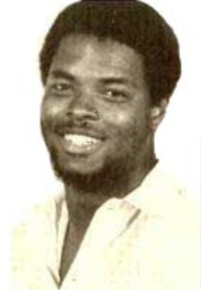
Robert Earnest Rozier Jr. was born on July 28, 1955, in Anchorage, Alaska, and was raised primarily in California. Before becoming a convicted murderer, he was a talented athlete who played defensive end at the University of California, Berkeley. The St. Louis Cardinals selected him in the ninth round of the 1979 National Football League draft. Rozier appeared in six regular-season games for the Cardinals and later spent time with teams in the Canadian Football League and briefly joined the Oakland Raiders.
His professional football career was short and unstable. After leaving the sport, Rozier experienced financial and legal problems and eventually became involved with the Nation of Yahweh, a Miami-based religious movement led by Hulon Mitchell Jr., who called himself Yahweh ben Yahweh. The organization presented itself publicly as a spiritual and economic movement for Black empowerment, but prosecutors later described an inner circle that used intimidation, beatings, arson and murder to punish opponents and enforce the leader’s authority.
Rozier met Yahweh ben Yahweh during the early 1980s and became deeply committed to the organization. He surrendered his possessions, separated himself from much of his former life and adopted the religious name Neariah Israel. His size, athletic background and willingness to obey orders made him valuable to a secret group within the Nation of Yahweh known as the Brotherhood. Members of this group were sometimes referred to as “death angels.”
The Brotherhood and Its Initiation Murders
According to testimony later given in federal court, the Brotherhood was expected to carry out violent assignments for Yahweh ben Yahweh. These assignments included retaliatory attacks against former members, neighborhood residents and people who challenged the organization. The group also targeted white victims because Yahweh ben Yahweh repeatedly taught that white people were enemies who should be destroyed.
Rozier testified that a man seeking full acceptance into the Brotherhood was expected to kill a white person and return with physical proof of the murder. An ear, finger, head or another body part could be presented as evidence that the order had been completed. The killings were therefore not simply spontaneous acts of personal violence. They were portrayed within the organization as demonstrations of loyalty and obedience.
In April 1986, Rozier was directed to kill a white man as his initiation. He wandered through the Coconut Grove area of Miami until he encountered an intoxicated man named Glendell Fowler. Rozier followed Fowler into an apartment and confronted him while carrying a Japanese-style knife. He told Fowler that he was an angel sent by Yahweh and stabbed him to death.
During the attack, Rozier discovered a second man, Kurt Doerr, inside the apartment. Rather than leave a witness, Rozier stabbed Doerr to death as well. He considered decapitating the victims and bringing their heads back to Yahweh ben Yahweh, but reportedly decided that carrying the heads would attract police attention. The exact day of the double homicide is not consistently identified in available court accounts, but the killings occurred in April 1986 in Coconut Grove, Miami, Florida.
Known Victims Connected Directly to Rozier
- Glendell Fowler — April 1986, Coconut Grove, Miami, Florida: Fowler was followed into an apartment by Rozier and fatally stabbed as part of Rozier’s initiation into the Brotherhood. Available federal court records identify the killing as occurring in April 1986 but do not consistently provide an exact day.
- Kurt Doerr — April 1986, Coconut Grove, Miami, Florida: Doerr was inside the same apartment as Fowler. Rozier stabbed him to death after discovering him during the first attack. Court records place his death in April 1986 without consistently specifying the exact date.
- Raymond Kelly — September 5, 1986, Coral Gables area of Miami-Dade County, Florida: Kelly, 61, was found unconscious or asleep in a parked vehicle near a bar. Rozier and another Brotherhood member stabbed him and removed an ear as proof of the killing. When they lost the severed ear, they reportedly returned to the body and removed the other one.
- Cecil Branch — September 20, 1986, Miami-Dade County, Florida: Branch, 45, was attacked inside his home as retaliation for an earlier dispute involving members of the Nation of Yahweh. He was bound, gagged with strips of bedding and stabbed more than two dozen times. One of his ears was severed. Investigators found a fingerprint belonging to Rozier on the frame of Branch’s front door.
- Anthony Brown — October 31, 1986, Opa-locka, Florida: Brown, 28, opposed the Nation of Yahweh’s forceful takeover of an occupied apartment complex. He and Rudolph Broussard were shot at close range. Witness accounts indicated that Brown pleaded for his life before he was shot repeatedly in the head.
- Rudolph “Rudy” Broussard — October 31, 1986, Opa-locka, Florida: Broussard, 37, was killed alongside Anthony Brown after the two men resisted the organization’s efforts to control their apartment complex. He was shot in the head at close range. Rozier and another Brotherhood member were identified as the men ordered to carry out the killings.
The Murder of Raymond Kelly
On September 5, 1986, Yahweh ben Yahweh ordered Rozier and fellow member Carl Douglas Perry to kill white victims. The two men traveled through southern Miami-Dade County looking for someone vulnerable. They eventually encountered 61-year-old Raymond Kelly, who was unconscious or asleep inside a vehicle parked near a bar.
Kelly was attacked while incapable of defending himself. Rozier and Perry stabbed him and cut off one of his ears, intending to present it as evidence of their obedience. After leaving the scene, they realized that they had lost the severed ear. Rather than abandon the mission, they returned to Kelly’s body and removed his remaining ear. The mutilation reflected the Brotherhood’s practice of demanding physical proof that a killing had been completed.
The Retaliatory Killing of Cecil Branch
Fifteen days after Kelly’s death, Rozier participated in the murder of Cecil Branch. Branch had reportedly confronted or interfered with Nation of Yahweh members, making him a target for retaliation. Rozier and several other members went to Branch’s home on September 20, 1986.
Branch was restrained and gagged with strips torn from bed sheets. He was stabbed approximately 25 times and one of his ears was cut off. His body was found lying face down inside the residence. The attack was deliberate, prolonged and intended to punish him for challenging the organization.
Physical evidence connected Rozier to the crime scene. Investigators recovered a latent fingerprint from the frame of Branch’s front door and matched it to Rozier. This evidence became particularly important because it supported the testimony describing his direct participation in the killing.
The Opa-locka Apartment Murders
In October 1986, the Nation of Yahweh acquired a five-building apartment complex in Opa-locka, Florida. Although members claimed that they intended to improve the property and remove criminal activity, residents described an aggressive attempt to force people from their homes. Tensions increased as Yahweh members entered the complex, confronted tenants and attempted to establish control.
Anthony Brown and Rudolph Broussard resisted the group’s actions. According to evidence presented in the later federal prosecution, Yahweh ben Yahweh ordered Rozier and Carl Douglas Perry to kill the two men because they had stood against the organization. On October 31, 1986, Brown and Broussard were shot in the head at close range.
Brown was reportedly shot several times after begging the gunman not to kill him. Police arrested Rozier, who was then publicly known as Neariah Israel, and charged him with first-degree murder in connection with one of the two deaths. Investigators initially declined to specify which victim was named in that particular charge. The double homicide ultimately exposed Rozier’s connection to the violent inner workings of the Nation of Yahweh.
Arrest and Break with the Nation of Yahweh
After his arrest, Rozier initially remained loyal to the organization. Nation of Yahweh leaders supported him, arranged legal representation and publicly defended him. His behavior during the early investigation reflected how completely he had adopted the group’s ideology. He reportedly made bizarre claims about his age and said that he could not remember his life before his religious conversion.
The relationship eventually deteriorated. Rozier became dissatisfied with his legal representation and demanded a different attorney. When the organization refused to meet his demands, he was excommunicated. Once separated from the group and facing the possibility of the death penalty or life imprisonment, he began cooperating with investigators.
Confession and Cooperation with Prosecutors
Rozier provided Miami-Dade investigators and federal authorities with an extensive description of the Nation of Yahweh’s hierarchy, teachings and violent operations. He explained how the Brotherhood was organized, how murder assignments were delivered and why members removed body parts from victims. His information connected numerous killings, attempted killings, beatings and acts of arson to people associated with the movement.
Federal court findings stated that Rozier murdered six people at Yahweh ben Yahweh’s direction: Glendell Fowler, Kurt Doerr, Raymond Kelly, Cecil Branch, Anthony Brown and Rudolph Broussard. Some later summaries have described him as confessing to four murders or pleading guilty in cases involving four victims. The difference comes from the distinction between the full number of killings attributed to him in testimony and the specific state murder charges resolved through his plea agreement.
In March 1988, Rozier entered an agreement under which he accepted a 22-year prison sentence for four murders. In return, he became a major prosecution witness. His cooperation allowed authorities to construct a large racketeering case alleging that murders and other violent crimes had been committed to expand the Nation of Yahweh’s power, punish opposition and strengthen Yahweh ben Yahweh’s control over his followers.
The Federal Nation of Yahweh Prosecution
By 1990, federal authorities had assembled a racketeering and murder-conspiracy case against Yahweh ben Yahweh and several followers. Prosecutors alleged that the organization operated as a criminal enterprise whose members committed murder, attempted murder, extortion and arson. Rozier’s testimony was central because he had attended secret Brotherhood meetings and had personally carried out multiple orders to kill.
Defense attorneys attacked Rozier’s character and argued that he had fabricated or exaggerated information to avoid execution. They emphasized his criminal history and the favorable sentence he received. Nevertheless, investigators maintained that important parts of his account were supported by physical evidence, police reports and statements from other witnesses.
Yahweh ben Yahweh and several associates were convicted in 1992 of conspiracy under the Racketeer Influenced and Corrupt Organizations Act. The jury did not convict Yahweh ben Yahweh of personally committing the individual murders, but concluded that he had participated in the broader criminal conspiracy. He received an 18-year federal sentence.
Witness Protection and Release
Because of the danger associated with testifying against the Nation of Yahweh, Rozier was placed in the Federal Witness Protection Program. He served his sentence outside Florida under a protected identity. After approximately ten years in custody, he was paroled in 1996 and began living under the name Robert Rameses.
Rozier settled in California, operated an automobile-detailing business and worked in website design. He presented himself as a changed man and publicly expressed remorse for the murders. For a brief period, it appeared that he had successfully built a new life while concealing his identity and criminal history from many of the people around him.
The Attilio Cicala Allegation
Rozier was also accused of involvement in the July 1984 murder of Attilio Cicala, a homeless man killed in Essex County, New Jersey. Prosecutors alleged that Cicala’s death was connected to preparations for a visit by Yahweh ben Yahweh and may have been intended as a sacrificial killing.
In March 1999, an Essex County grand jury indicted Rozier and John Armstrong for Cicala’s murder. Rozier denied being the killer, and his attorney maintained that he had only witnessed the crime and had previously given authorities information about it. The case weakened because one important witness had died, another had been deported and a third was considered unreliable.
New Jersey prosecutors dismissed the murder charge in September 2000 because they lacked sufficient credible evidence to obtain a conviction. Cicala is therefore considered an alleged or suspected victim connected to Rozier, not one of the six people whom federal court records identified as having been murdered by him.
Return to Prison Under California’s Three-Strikes Law
Rozier’s protected life collapsed after he was arrested in California in February 1999 for passing bad checks. Authorities determined that he had written 27 checks without sufficient funds. The total financial loss was relatively limited compared with his earlier crimes, but his murder convictions made the case far more serious under California’s three-strikes sentencing law.
In January 2001, Rozier was sentenced to 25 years to life in prison. The sentence was imposed under his witness-protection identity, Robert Rameses. It was not a new sentence for murder but resulted from the financial offenses being treated as a third-strike felony because of his prior convictions.
Legacy of the Case
Robert Earnest Rozier’s crimes were unusual because they combined serial murder with religious manipulation and organized criminal violence. His victims were selected for different reasons. Fowler and Doerr were killed to complete an initiation. Kelly was attacked as a randomly selected racial target. Branch was murdered in retaliation. Brown and Broussard were killed because they resisted the Nation of Yahweh’s efforts to control their homes.
Rozier was both a perpetrator and the witness who helped reveal the organization behind the killings. His cooperation gave prosecutors an inside account of how Yahweh ben Yahweh transformed extreme teachings into direct orders for violence. At the same time, his decision to testify did not erase his own responsibility for stalking, stabbing, shooting and mutilating victims who had little or no opportunity to defend themselves.
His journey from celebrated athlete to devoted cult enforcer remains one of the most disturbing aspects of the case. Rozier possessed opportunities that many aspiring athletes never receive, including a place at a major university and a position in professional football. Within a few years, however, he had abandoned that life and become a willing participant in a series of calculated murders carried out in the name of obedience, racial hatred and loyalty to a controlling leader.