Crime Solvers Central
298 Cases Solved. Advancing justice for missing persons, unsolved homicides, unidentified and unclaimed remains.
⚠️ Warning: Viewer Discretion Advised ⚠️ The following section contains detailed information about serial killers, their crimes, and case details. Some content may be disturbing or graphic.

Description

See any errors? Let us know!
Summary based on 4 sources

Michel Peiry: The “Sadist of Romont”


Background

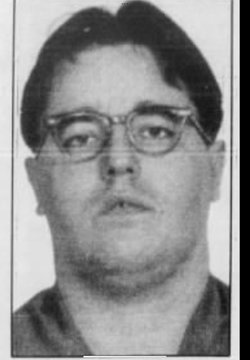
Michel Peiry is a Swiss serial killer whose crimes occurred between 1981 and 1987 in Switzerland and several other countries. Born on February 28, 1959, he became known in the European press as the “Sadist of Romont,” a reference to the Swiss town where he spent much of his childhood. Peiry was ultimately convicted of four murders and two attempted murders, although he confessed at different times to additional killings in France, Italy, the United States and the former Yugoslavia. Because he repeatedly confessed, retracted his statements and later changed his account, the precise number of people he murdered remains disputed. Authorities and journalists have attributed approximately ten or eleven possible killings to him, while his judicially established crimes involved a smaller number of victims.

Selection of Victims

Peiry generally targeted teenagers and young adults traveling alone. Many of his victims were hitchhikers who accepted a ride from him without realizing that they were entering the vehicle of a violent predator. He frequently traveled throughout Switzerland and neighboring countries, which allowed him to approach victims far from his home and complicated efforts to connect the crimes. After gaining a victim’s trust, Peiry drove to an isolated location. His victims were restrained, sexually assaulted and subjected to prolonged violence. Those who were killed were often beaten, strangled or otherwise fatally injured. Peiry then attempted to destroy evidence by burning their bodies or abandoning them in remote areas. The destruction of the bodies, the international range of his travels and his inconsistent confessions made it difficult to determine how many murders he actually committed. In several cases, investigators had only Peiry’s statements and no recovered remains or independently confirmed identity.

Known, Admitted and Attributed Victims

  • Sylvestre – September 1, 1981 – United States: Peiry said that he encountered a young Canadian identified only as Sylvestre while traveling in the United States. Sylvestre disappeared and his body was never conclusively recovered. Peiry confessed to killing him, retracted the confession and later again accepted responsibility. The precise location of the alleged murder has not been consistently documented.
  • Frédéric – February 4, 1984 – Annecy region, Haute-Savoie, France: Frédéric was a young man killed after encountering Peiry in southeastern France. Peiry admitted responsibility for the murder. Public accounts generally identify February 4, 1984, as the date of the killing, although relatively few personal details about Frédéric have been released.
  • Anne-Laure or Anne-Fleur – June 1985 – Saintes-Maries-de-la-Mer, Camargue, France: Peiry claimed that he killed a young woman in southern France. He was unable to provide a consistent name, referring to her as either Anne-Laure or Anne-Fleur. She is believed to have been his only female victim. No exact day of death has been reliably established, and her identity and Peiry’s account were never fully verified.
  • Cédric – May 7, 1986 – Valais, Switzerland: Cédric was a young Swiss victim whose remains were discovered in an isolated area of Valais, reported in different accounts as Albinen or the Arbignon area. His body had been burned, consistent with Peiry’s efforts to conceal evidence. May 7, 1986, is generally recorded as the date of the murder.
  • Silvio – July 1986 – Rijeka region, former Yugoslavia, now Croatia: Peiry confessed to killing a young man named Silvio while traveling near Rijeka. He later retracted the confession. No exact date of death has been publicly confirmed, and the absence of conclusive physical evidence left the case uncertain.
  • Fabio Vanetti – Night of August 14–15, 1986 – Canton of Ticino, Switzerland: Fabio Vanetti, sometimes identified in reports only as Fabio V., was a young hitchhiker encountered by Peiry in southern Switzerland. Peiry took him to an isolated location, assaulted him and killed him. The crime occurred during the night spanning August 14 and August 15, 1986. The case became one of the murders directly associated with Peiry’s established pattern.
  • Vincent Puippe – March 1987 – Orsières, Valais, Switzerland: Vincent Puippe’s burned body was found in a gravel pit near Orsières. He had been sexually assaulted and murdered. The discovery occurred in March 1987, but available accounts do not establish a reliable exact date of death. The burning of his remains closely matched Peiry’s known method of attempting to eliminate evidence.
  • Unidentified young Frenchman – April 16, 1987 – Como region, Italy: Peiry confessed to murdering a young French man near Como in northern Italy. He later withdrew the confession. The victim’s full identity has not been consistently published, and the killing was not supported by the same degree of evidence as the murders prosecuted in Switzerland.


Surviving Victims

  • Yves Ath – November 1986 – Neuchâtel or La Chaux-de-Fonds region, Switzerland: Yves Ath survived an attack by Peiry after being restrained, sexually assaulted and nearly killed. His survival provided evidence that Peiry did not always succeed in murdering those he attacked. The exact day of the assault has not been reliably published.
  • Thomas – April 24, 1987 – Near Sottens, Canton of Vaud, Switzerland: Thomas was a 16-year-old hitchhiker traveling from Lausanne toward his family’s home. Peiry offered him a ride and drove through the Echallens and Moudon areas before attacking him. Thomas was beaten, restrained and subjected to sexual violence. Peiry left him in or near a river, apparently believing he was dead. Thomas regained consciousness, walked approximately two kilometers and reached Sottens, where he received assistance. His description of Peiry, the vehicle and the circumstances of the attack was crucial to the investigation.


The Investigation

The attack on Thomas brought Peiry’s series of crimes to an end. Because Thomas survived, investigators obtained a firsthand account of the assailant, his automobile and his conduct. Police were able to circulate a description and focus their attention on Peiry. Peiry was arrested on May 1, 1987, while participating in Swiss military service at Schangnau in the Canton of Bern. Investigators then examined his movements across Europe and compared them with murders, disappearances and assaults involving young travelers. During questioning, Peiry admitted numerous crimes, including killings outside Switzerland. However, he frequently changed his statements. He would confess to a murder, retract the confession and sometimes later acknowledge it again. His shifting accounts created serious evidentiary problems, particularly in cases where no body had been located or the victim had not been positively identified.

Confessions and Disputed Cases

Peiry’s confessions suggested a geographic range extending through Switzerland, France, Italy, Croatia and the United States. Some investigators believed he may have committed approximately ten or eleven murders. Only a limited number could be proved through physical evidence, victim identification and connections to his movements. He was also examined as a possible suspect in unresolved French cases, including disappearances involving children and young men. Investigators considered similarities between Peiry’s crimes and cases associated with the missing youths of the Isère region and the disappearances of military conscripts around Mourmelon and Valdahon. No conclusive evidence established Peiry’s responsibility for those additional disappearances. Similarities in victim type or method were not enough to prove involvement, and some of the cases were more closely associated with other suspects, including French serial killer Pierre Chanal.

Trial and Conviction

Peiry was tried in Switzerland in 1989. The proceedings involved four murders, an attempted murder and an additional unsuccessful murder offense. Evidence included his confessions, the surviving victims’ testimony, information about his travels and forensic connections to the recovered bodies. On October 30, 1989, the Tribunal of Entremont sentenced Michel Peiry to life imprisonment. Some later summaries give October 31 as the formal date associated with the conviction, but contemporary reporting identifies October 30, 1989, as the day the life sentence was imposed. The court considered Peiry an exceptionally dangerous sexual and violent offender. The murders involved planning, the calculated exploitation of isolated hitchhikers and repeated efforts to destroy the victims’ remains. His ability to appear socially ordinary while committing serious crimes across several jurisdictions intensified public fear.

Imprisonment and Requests for Release

Peiry remained incarcerated after his conviction. He sought conditional release in 2002 and again in 2009, but authorities rejected both requests. Reviews of his case continued to emphasize the severity of his crimes and concerns that he remained dangerous. His imprisonment became part of a wider Swiss debate about the handling of violent and sexual offenders. The case was frequently mentioned during discussions concerning lifelong detention and the circumstances under which prisoners convicted of extreme violence should ever receive temporary leave or conditional release. In 2026, Swiss authorities again refused to permit Peiry escorted leave from prison. The continuing restrictions reflected official assessments of the risk associated with allowing him outside a secure institution.

Legacy of the Case

Michel Peiry’s crimes remain among the most notorious serial murder cases in modern Swiss history. The case demonstrated the vulnerability of hitchhikers traveling alone and the investigative difficulties created when a killer crosses national borders. The true extent of Peiry’s crimes may never be known. His deliberate burning of bodies eliminated evidence, while his contradictory confessions prevented authorities from confidently separating genuine admissions from false or exaggerated claims. Several victims remain known only by first names, and others were never conclusively identified. What was established showed a repeated and deliberate pattern. Peiry sought isolated young people, used transportation as a means of gaining control and committed sexual and homicidal violence in secluded locations. The survival of Thomas on April 24, 1987, finally provided investigators with the information needed to identify and arrest him, ending a series of attacks that had crossed multiple countries over nearly six years.

Victims

See any mistakes? Let us know!
Confirmed Victims: (9)
  • Sylvestre , Date of Death: September 1, 1981
  • Fr�d�ric , Date of Death: February 4, 1984
  • Anne-Laure , Date of Death: June 1985
  • C�dric , Date of Death: May 7, 1986
  • Silvio , Date of Death: July 1986
  • Fabio V , Date of Death: 1986
  • Yves Ath , Date of Death: November 1986
  • Vincent , Date of Death: March 1987
  • Michel , Date of Death: April 24, 1987