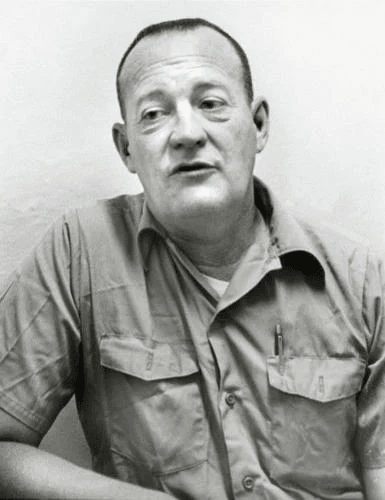
Howard Arthur Allen
Howard Arthur Allen was an American serial killer and repeat violent offender whose crimes centered on elderly residents of Indianapolis, Indiana. Born on February 10, 1949, in Indianapolis, Allen accumulated a criminal history involving robbery, burglary, assault, arson and homicide. He is generally associated with three deaths: Opal Cooper in 1974, Laverne Hale in 1987 and Ernestine Griffin in 1987. The cases were separated by more than a decade because Allen spent much of the intervening period in prison for Cooper's death.
Allen's crimes were notable for the vulnerability of the people he targeted. His victims were elderly, and several were attacked inside their own homes, places where they should have been safe. Robbery was an important element in a number of the offenses attributed to him, but the level of violence inflicted on his victims went far beyond what was necessary to steal property.
The 1974 Killing of Opal Cooper
Allen's first known homicide occurred in Indianapolis in August 1974. His victim was 85-year-old Opal Inez Cooper. Available victim records give Cooper's date of death as August 19, 1974, while many summaries of Allen's crimes identify the date only as August 1974.
Allen entered Cooper's home during a robbery and severely beat the elderly woman. Cooper died as a result of the attack. Allen was arrested and prosecuted, but rather than being convicted of murder, he was convicted on the reduced charge of voluntary manslaughter. He received a prison term of approximately two to twenty-one years.
The conviction removed Allen from the community for more than a decade. He was eventually paroled in January 1985 and returned to Indianapolis. After his release he found employment, including work at an Indianapolis car wash. Within a little more than two years, elderly residents of the city again became the targets of a series of violent home invasions.
The 1987 Attacks on Elderly Residents
On May 18, 1987, a 73-year-old Indianapolis woman was attacked inside her home. The woman was choked and beaten but survived. Allen was subsequently connected to the assault and was convicted of burglary and felony battery. The May 18 survivor is sometimes confused in later accounts with Laverne Hale, but they were separate victims.
Two days later, on May 20, 1987, 87-year-old Laverne Hale was assaulted in her Indianapolis home. Hale was badly injured and survived for several days before dying on May 29, 1987. Some abbreviated accounts incorrectly give May 18 or May 20 as her date of death; May 20 was the date of the attack, while May 29 was the date she died from her injuries.
Hale lived near Allen, reportedly in a residence behind his own home. Her assault resembled the other attacks on elderly Indianapolis residents occurring during the same period. Allen became a suspect in Hale's killing, and the case has subsequently been included among the three deaths generally attributed to him. Unlike the Cooper manslaughter conviction and the later Griffin murder conviction, however, the Hale case should be distinguished as a homicide attributed to Allen rather than a separate murder conviction obtained against him.
The violence continued. On June 2, 1987, the home of an elderly Indianapolis man was burglarized. The resident was not home, but the intruder ransacked the property and set the house on fire. Investigators ultimately connected Allen to the burglary and arson. Police were increasingly seeing a pattern of crimes involving elderly people and their homes.
The Murder of Ernestine Griffin
The strongest and most thoroughly documented murder case against Allen involved Ernestine Griffin, an elderly woman who lived alone on the north side of Indianapolis near 57th Street and Keystone Avenue. Griffin's murder occurred on July 14, 1987. Records differ slightly concerning her age: Indiana death-row records listed her as 73, while an Indiana Supreme Court opinion described her as 74.
The circumstances leading to Griffin's death began with Allen's interest in an automobile owned by Griffin's neighbor and longtime friend, dentist Dr. Victor Seaman. Allen had visited Griffin on July 13 asking questions about the vehicle. Because Griffin could not provide the information he wanted, Allen wrote his name and telephone number on a piece of paper so that the information could be passed to Seaman.
At approximately 10:25 a.m. on July 14, Allen returned to Griffin's home. Griffin telephoned Seaman and put Allen on the telephone so the two men could discuss the car. A short time later Griffin called again because Allen had remained in her home even though she could not answer his questions. Seaman told Allen to stop bothering Griffin and leave.
Concerned about Griffin, Seaman attempted to telephone her again, but her line remained busy. When he eventually went to her home at approximately 12:45 p.m., he found the front door open and discovered Griffin dead on the living-room floor. She had suffered both a serious head injury and a stab wound to her chest.
The scene immediately gave detectives several important leads. The paper containing Allen's name and telephone number remained in Griffin's kitchen. Investigators also learned from Seaman that the man who had been inside the house said that he worked at the nearby Bluko Car Wash.
Detectives went to the car wash that afternoon and found Allen. He voluntarily accompanied officers to police headquarters and initially denied that he had been shopping for a car. As investigators continued examining Griffin's home, they found the paper bearing Allen's identifying information. At approximately 8:45 p.m. on July 14, police formally placed Allen under arrest.
This court-documented arrest time is important because some later summaries of Allen's criminal history give August 4, 1987, as his arrest date. The official appellate account of the Griffin investigation establishes that he was formally arrested on the evening of July 14, only hours after Griffin was found dead.
During subsequent questioning, Allen eventually admitted that he had gone to Griffin's home while looking into the automobile and admitted striking Griffin in the face, although he denied killing her. Additional evidence was damaging. Griffin's camera was located at the car wash after investigators learned that Allen had given it to a coworker to keep in a locker. Griffin's wallet was later discovered on a nearby roof without money inside it. Investigators also found blood on Allen's clothing that was consistent with Griffin's blood type rather than his own.
Known and Attributed Victims
- Opal Inez Cooper, 85 — Died August 19, 1974, in Indianapolis, Indiana. Cooper was attacked and beaten during a robbery of her home. Allen was convicted of voluntary manslaughter for her death and sentenced to a term of approximately two to twenty-one years in prison.
- Laverne Hale, 87 — Attacked May 20, 1987, in her Indianapolis, Indiana, home and died from her injuries on May 29, 1987. Allen became a suspect because of the similarities to the other attacks on elderly residents and Hale's proximity to his residence. Her death is commonly included among the three homicides attributed to Allen, although it did not result in a separate murder conviction against him.
- Ernestine Griffin, 73 or 74 — Murdered July 14, 1987, at her home on the north side of Indianapolis, Indiana. Griffin suffered a fatal stab wound and blunt-force head trauma during a robbery. Allen was convicted of murder, felony murder and robbery in connection with her death.
Additional Victims and Suspected Crimes
Allen's known criminal activity in 1987 extended beyond the three deaths associated with his name. The unnamed 73-year-old woman attacked on May 18 survived after being choked and beaten inside her residence. Allen was convicted in connection with that attack, receiving lengthy sentences for burglary and felony battery, with his prior criminal history contributing to the punishment imposed.
Allen was also associated with the June 2 burglary and arson at the home of an elderly man who fortunately was absent at the time. As detectives examined Allen's background and compared reports from across Indianapolis, authorities reportedly considered him a suspect in as many as eleven additional burglaries or assaults involving elderly residents. The available record does not establish that all eleven incidents were conclusively proven to have been committed by Allen, and they should not be counted as additional confirmed murders.
Trial for Ernestine Griffin's Murder
Allen was prosecuted in Marion County for the murder and robbery of Ernestine Griffin. The prosecution's case combined the evidence discovered in Griffin's house, Allen's presence there shortly before her death, his own statements, the recovery of Griffin's camera at his workplace and physical evidence associated with his clothing.
On June 11, 1988, the jury found Allen guilty of murder, felony murder and robbery. The penalty phase followed, and on June 13 the jury recommended the death penalty. Some secondary accounts describe June 11 as the date Allen was sentenced to death, but that date was the murder verdict. The trial judge formally imposed the death sentence on August 30, 1988.
Allen also received substantial prison sentences associated with his other offenses. By the time the Griffin case concluded, he had already been convicted of serious offenses stemming from the 1987 attacks and had been sentenced to decades of imprisonment.
Appeals and Removal from Death Row
Allen's death sentence produced years of state and federal litigation. His attorneys argued, among other issues, that his intellectual functioning made him constitutionally ineligible for execution. Evidence examined during the litigation included low childhood intelligence-test scores, his history in special-education programs and evidence concerning his ability to function independently.
After the United States Supreme Court ruled that executing intellectually disabled defendants violated the Constitution, Allen continued challenging his sentence. A federal court eventually conducted further proceedings concerning his intellectual disability claim and concluded that he met Indiana's applicable definition.
On July 3, 2012, a federal court vacated Allen's death sentence and ordered Indiana to resentence him to a punishment other than death. His murder conviction itself remained intact. Indiana prison records later reflected a 60-year sentence for the Griffin murder, imposed as part of the resentencing proceedings in 2013.
Death in Prison
Allen remained incarcerated at the Wabash Valley Correctional Facility in Indiana. He never returned to civilian life. Howard Arthur Allen died in prison on June 5, 2020, at the age of 71.
Legacy of the Case
Howard Arthur Allen's history spans two distinct periods of lethal violence: the 1974 killing of Opal Cooper and the renewed series of attacks after his 1985 parole. The pattern repeatedly brought him into the homes of elderly people, often during robberies or burglaries. His criminal record demonstrates that the Griffin murder was not an isolated act but occurred against a background of violence against vulnerable older residents.
The case also contains several frequently repeated date errors. The most reliable chronology places Cooper's death on August 19, 1974; the attack on Laverne Hale on May 20, 1987, followed by her death on May 29; and Ernestine Griffin's murder on July 14, 1987. Court records further establish that Allen was formally arrested for the Griffin investigation on the evening of July 14, 1987, and that his formal death sentence was imposed on August 30, 1988.
Allen is consequently associated with three elderly homicide victims, but the legal outcomes were not identical. He was convicted of voluntary manslaughter for killing Opal Cooper and convicted of murder for killing Ernestine Griffin. Laverne Hale's death has long been attributed to him in accounts of his crimes, although the available record does not show a separate murder conviction for Hale. Distinguishing those legal outcomes provides a more accurate picture of the crimes for which Howard Arthur Allen was proven responsible and those that investigators attributed to him.