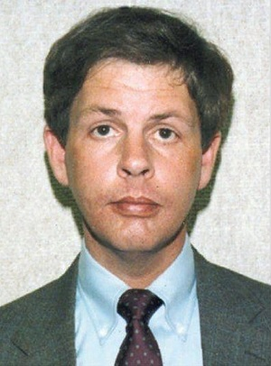
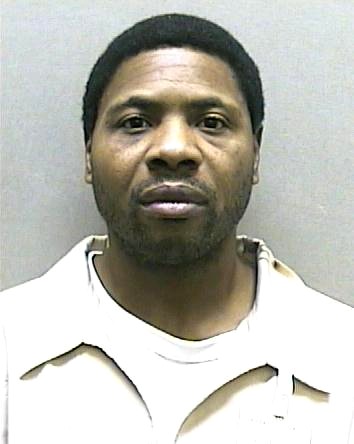
Francis Marion Snow: The Butcher of Stephenville
Background and Classification
Francis Marion Snow was born in Texas on June 6, 1881. He became known as the “Butcher of Stephenville” after committing a notorious triple murder in rural Erath County, Texas, in 1925. Snow was convicted of killing three members of his household during a single violent episode. He later claimed responsibility for additional killings, causing some accounts to describe him as a suspected serial killer. However, only the murders of his wife, mother-in-law and stepson were conclusively established and prosecuted.
Snow was 44 years old when the confirmed murders occurred. He lived with his wife, Maggie Mae Snow, Maggie’s elderly mother, Samantha Ann Olds, and Maggie’s teenage son, Bernard “Bernie” Connally, on a farm near Selden, a small community south of Stephenville. Snow had married Maggie only a short time before the killings. Contemporary descriptions portrayed the household as isolated, financially strained and marked by frequent disagreements.
The Murders of November 27, 1925
On November 27, 1925, an argument reportedly began after livestock entered or damaged a cotton field on the family property. Snow blamed Maggie for allowing the animals to get loose. What began as a domestic dispute rapidly escalated into lethal violence. Snow attacked Maggie with a heavy wooden object, killing her on the farm.
Snow next turned on Maggie’s mother, Samantha Ann Olds. Samantha was elderly and was described in historical accounts as having serious difficulties with her hearing and eyesight. She may not have fully understood what had happened to her daughter or recognized the danger confronting her. Snow killed her with an axe or another heavy implement.
Bernard Connally, commonly called Bernie, was away from the property when his mother and grandmother were killed. He had reportedly traveled toward Stephenville with a load of wood. Snow went looking for him and persuaded him to return by claiming that Maggie was ill and needed him at home. After Bernie arrived at or near the farm, Snow shot him with a Winchester rifle. Accounts commonly state that Bernie was shot twice in the back.
Snow then attempted to conceal all three murders. He burned the remains of Maggie Snow and Samantha Olds in a fireplace or stove on the property. Their bodies were reduced to ashes and small bone fragments. He transported Bernie’s body away from the farm, removed the young man’s head and concealed the head inside a sack in the cellar of an abandoned farmhouse. The rest of Bernie’s body was left at another isolated location near Cedar Point in Erath County.
Confirmed Victims
- Maggie Mae Olds Snow, approximately 42 years old — November 27, 1925 — near Selden, Erath County, Texas: Maggie was Snow’s wife. She was killed during an argument on the family farm. Snow subsequently attempted to destroy her remains by burning them in the home’s fireplace or stove.
- Samantha Ann Jones Olds, 75 years old — November 27, 1925 — near Selden, Erath County, Texas: Samantha was Maggie’s mother and Snow’s mother-in-law. Born on October 31, 1850, she was killed shortly after her daughter. Her remains were also burned on the property.
- Bernard D. “Bernie” Connally, 18 years old — November 27, 1925 — near Selden, Erath County, Texas: Born on January 1, 1907, Bernie was Maggie’s son and Snow’s stepson. Snow brought him back to the farm under the false claim that his mother was sick, then shot him. His remains were transported and concealed at separate locations in Erath County.
Discovery of Bernard Connally’s Head
The investigation began on December 9, 1925, when a young trapper named Jesse Elvis Riggs entered an abandoned farmhouse while setting traps. Riggs and his companion, Ben Aycock, discovered a bloodstained sack in the cellar. Inside the sack was the severed head of a young man.
Investigators determined that the abandoned farmhouse was only a disposal location because there was not enough blood present to indicate that the victim had been killed there. The isolated building was one of several abandoned structures in the area, but it was reportedly the only one with a cellar. This suggested that the person responsible knew the countryside and had deliberately selected the location.
Authorities initially could not identify the victim. The head was placed on public display at a Stephenville funeral home or morgue, a disturbing but not unheard-of identification practice during that period. Thousands of people reportedly viewed it before the young man was recognized as Bernard Connally. Once Bernie was identified, investigators began searching for his mother, grandmother and stepfather.
Snow’s False Explanation
When questioned, Snow claimed that Maggie, Samantha and Bernie had left the area to visit Waco. His explanation immediately created suspicion. The family had apparently departed without telling neighbors, leaving property and personal belongings behind. Snow also gave inconsistent statements about when they had supposedly left and how they had traveled.
Erath County Sheriff David Medicus Hassler and Texas Ranger Stewart Stanley questioned Snow and examined the family property. Investigators found blood evidence in Snow’s wagon and recovered a Winchester rifle associated with Bernie’s shooting. They also discovered an axe bearing what appeared to be dried blood.
The most incriminating evidence came from the fireplace and surrounding ash. Investigators recovered burned bone fragments and other material indicating that human remains had been destroyed there. The discoveries contradicted Snow’s story that his family members had voluntarily traveled to Waco.
Confession and Recovery of the Remains
Snow was taken into custody and moved away from Stephenville because officials feared that an angry crowd might attempt to lynch him. On December 11, 1925, he confessed to killing Bernie Connally. Snow accompanied law-enforcement officers to the location where he had abandoned the remainder of the young man’s body.
While standing near Bernie’s remains, Snow also admitted killing Maggie and Samantha. He described the argument with his wife, the attacks on the two women and his efforts to burn their bodies. He further explained how he had located Bernie, persuaded him to return and then shot him.
The confession was supported by the physical evidence found at the farm, including the rifle, blood in the wagon, the axe and the burned bone fragments. Snow signed a written confession in the presence of witnesses. That document later became one of the strongest pieces of evidence presented against him.
Trial and Conviction
Snow’s murder trial began in January 1926. His defense attempted to portray him as mentally incapable of understanding his actions, but the insanity argument was unsuccessful. Prosecutors relied on Snow’s confession, the recovered weapons, the evidence in his wagon and the human remains discovered among the ashes.
Snow was prosecuted for the confirmed family murders, although reports differ regarding which victim’s death formed the principal count presented to the jury. The evidence established that the three victims disappeared together, that Bernie’s remains were found in locations identified by Snow and that Maggie and Samantha had been burned inside the farmhouse.
The jury found Snow guilty of murder with malice and sentenced him to death. His attorneys pursued appeals, but the conviction and sentence were upheld. Snow was transferred to the Texas State Penitentiary at Huntsville to await execution.
Claims of Additional Murders
While imprisoned, Snow reportedly claimed that he had killed other people before and after the Erath County murders. These statements are the principal reason he has sometimes been classified as a suspected serial killer rather than solely as a family annihilator or mass murderer. The additional claims were never proven in court, and reliable details about the alleged victims remain limited.
- Gene Graves — date and precise location uncertain: Snow reportedly claimed that he killed a fellow prisoner named Gene Graves after Graves taunted or antagonized him. Available accounts do not provide a consistently verified death date, and the alleged killing was not prosecuted as one of Snow’s confirmed murders.
- Unidentified man — date uncertain — Palo Pinto County, Texas: Snow allegedly confessed to killing a man somewhere in Palo Pinto County. The victim’s identity, the exact location and the date of the supposed murder have not been reliably established.
- Unidentified man — date uncertain — San Saba County, Texas: Snow also reportedly claimed responsibility for killing a man in San Saba County. No verified name or exact date is consistently connected to this allegation.
- Unidentified decapitation victim — reportedly 1912 — Mineral Wells, Texas: Snow was suspected of involvement in the killing and decapitation of an unidentified person in or near Mineral Wells. He reportedly refused to give a clear confession concerning that case, and his responsibility was never established.
Because the identities and dates associated with these additional claims cannot be conclusively verified, they should be regarded as allegations rather than confirmed additions to Snow’s victim count. His established number of victims remains three. Claims placing the total as high as seven depend upon uncorroborated confessions and suspicions.
Execution
Francis Marion Snow was executed in the electric chair at the Huntsville Unit in Texas on August 12, 1927. He was 46 years old. His reported final statement was defiant and showed little remorse for the murders that had destroyed his household and shocked the surrounding community.
Snow was buried in the prison cemetery now known as Captain Joe Byrd Cemetery in Huntsville. The execution closed the criminal case against him, but questions concerning his unverified confessions remained unresolved. No dependable evidence has conclusively connected him to the unidentified deaths in Palo Pinto County, San Saba County or Mineral Wells.
Legacy of the Snow Murders
The Snow murders became one of the most infamous criminal cases in the early history of Erath County. The discovery of Bernie Connally’s head, the public effort to identify him and the recovery of burned human remains from the family home gave the case a particularly disturbing reputation. Newspapers across Texas reported on the investigation, confession, trial and execution.
Francis Marion Snow is most accurately described as a convicted triple murderer and family annihilator who was suspected of additional killings. His claims of other victims created the possibility that his violence extended beyond the events of November 27, 1925, but those allegations were never verified to the same standard as the murders of Maggie Snow, Samantha Olds and Bernard Connally.
The confirmed victims all died on the same day at or near the family farm outside Selden. Snow attempted to erase the evidence through fire, dismemberment and the concealment of remains in remote locations. Instead, the discovery in the abandoned cellar led investigators back to the Snow household and exposed the complete destruction of three generations of one family.