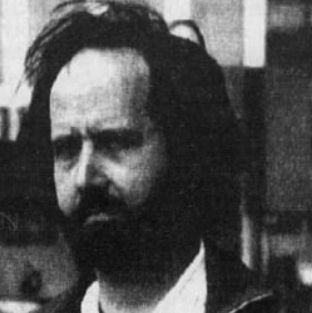
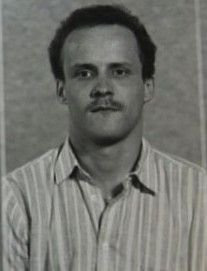
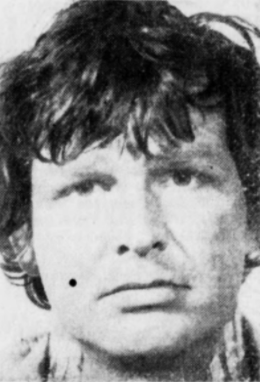
Allan Patterson Newman: Serial Killer and Armed Robber
Early Life and History of Violence
Allan Patterson Newman was born on February 22, 1951, in Wheaton, Maryland. Before becoming a serial killer, he attended Virginia Tech but did not earn a degree and later supported himself through work that included house painting and insurance-claim adjusting. His documented history of instability and violence began years before the murders for which he became notorious.
In 1978, following the end of a romantic relationship, Newman attempted suicide by shooting himself in the head and chest with a .22-caliber handgun. He survived. Several years later, another former girlfriend became the focus of increasingly obsessive behavior. Newman reportedly watched her movements and followed her after their relationship ended.
On March 21, 1982, Newman secretly entered the woman’s home while she was away with another man. He armed himself with two butcher knives and hid beneath a bed. When the couple returned and discovered him, Newman attacked. He attempted to choke his former girlfriend and repeatedly stabbed her companion in the back, face and chest. Both victims survived. Newman fled but was later arrested and charged with numerous offenses, including attempted murder. Through a plea agreement, he pleaded guilty to two battery charges and received probation, psychiatric counseling and a restraining order.
The Beginning of the Crime Spree
Newman’s most destructive criminal period began in February 1991. His crimes were not limited to murder. They included shootings, automobile thefts, carjackings and approximately a dozen bank robberies committed across Maryland, Virginia and the surrounding region. Stolen vehicles were frequently used as transportation to and from robberies and then abandoned in an effort to prevent investigators from tracing them back to him.
On February 20, 1991, Newman stole a 1987 Nissan Sentra in Rockville, Maryland. During the theft, he shot the vehicle’s owner in the arm. The victim survived. The following day, a man using the stolen automobile robbed a bank in the Fairfax, Virginia, area. The incident demonstrated a pattern Newman would continue to follow: acquire a vehicle through violence or theft, use it while committing another crime and then dispose of it.
The Silver Spring Double Murder
On November 13, 1991, Newman attempted to break into an automobile dealership in Silver Spring, Maryland. Two maintenance workers, José Escobar and Maura Portillo, encountered him at the property. Rather than abandon the burglary and flee, Newman drew a .357 Magnum revolver and shot both workers to death.
The killings appeared to have been committed to eliminate witnesses who had interrupted the break-in. Escobar and Portillo had no known prior connection to Newman. Their deaths marked the first confirmed murders in his series and demonstrated his willingness to use lethal force whenever another person threatened to interfere with his crimes.
The Murder of José Ramos
On January 15, 1992, Newman encountered 31-year-old José Ramos in a parking area outside the apartment building where Newman lived in Wheaton, Maryland. Newman shot and killed Ramos during a robbery. The location placed the crime dangerously close to Newman’s own residence, suggesting that his confidence and recklessness were increasing.
Ramos was another victim who appears to have been selected because Newman wanted property or transportation rather than because of a personal dispute. The killing later became important to investigators after ballistic evidence and the circumstances of Newman’s other crimes helped establish connections between the separate attacks.
The Murder of Dr. Shahin Hashtroudi
On February 24, 1992, Newman searched for another vehicle to steal. He encountered 45-year-old Dr. Shahin Hashtroudi as she was leaving her office in Bethesda, Maryland. Hashtroudi was an Iranian-born mathematics professor associated with George Washington University.
Newman shot Hashtroudi once in the head and left her mortally wounded before stealing her white 1987 Toyota Camry. The vehicle was not merely the object of the crime. Newman later used it while committing a bank robbery at Central Fidelity Bank in Chantilly, Virginia, on March 5, 1992. He abandoned the Camry several days later.
The murder of Hashtroudi became a critical part of the case against Newman. After his eventual arrest, firearms examiners linked evidence from her shooting to the .357 Magnum revolver found in Newman’s possession. That forensic connection allowed detectives to examine the other killings as part of one continuing series.
Confirmed Victims
- José Escobar, age 30 — Shot and killed on November 13, 1991, after encountering Newman during an attempted burglary at an automobile dealership in Silver Spring, Maryland.
- Maura Portillo, age 39 — Shot and killed with Escobar on November 13, 1991, at the automobile dealership in Silver Spring, Maryland.
- José Ramos, age 31 — Shot and killed during a robbery on January 15, 1992, in a parking area outside Newman’s apartment building in Wheaton, Maryland.
- Dr. Shahin Hashtroudi, age 45 — Shot while leaving her office and killed on February 24, 1992, in Bethesda, Maryland. Newman stole her Toyota Camry and later used it during a Virginia bank robbery.
Additional Robberies and Carjackings
Newman continued committing armed crimes after the four murders. On April 9, 1992, he carjacked a man in Falls Church, Virginia. The following day, the stolen vehicle was used as an escape car following a robbery at the Citizens Bank of Maryland in Bethesda. By repeatedly crossing jurisdictional boundaries, Newman complicated the investigation and forced local, state and federal agencies to compare information from what initially appeared to be unrelated cases.
Newman’s robberies were often carefully connected to his vehicle thefts, but the violence used to obtain those vehicles made the crimes especially dangerous. Motorists and bystanders could become targets with little warning. His victims were generally selected because they possessed something he wanted or because they happened to encounter him while he was committing another offense.
The Final Carjacking
On October 9, 1992, Newman approached two teenage girls in Woodlawn, Maryland, and demanded a black 1983 Honda Civic belonging to the mother of one of the girls. He concealed his face and threatened them with a handgun. Before he could leave the area without resistance, off-duty Baltimore police officer Thomas J. Fenwick encountered him.
Newman and Fenwick exchanged gunfire. Newman escaped in the stolen Honda, beginning a pursuit that moved through multiple jurisdictions and across state lines. Police agencies coordinated their efforts as Newman drove through Maryland and into West Virginia. During the chase, he exchanged additional gunfire with law-enforcement officers.
Capture at Harpers Ferry
The pursuit ended after Newman crashed the stolen car against a curb in Harpers Ferry, West Virginia. Armed officers surrounded him, but Newman refused to surrender immediately. A tense standoff followed for approximately 45 minutes. Newman threatened to shoot himself and made statements suggesting that he expected the confrontation to end with his death.
Officers continued speaking with him rather than rushing the vehicle. During the negotiations, Newman asked authorities to telephone his mother. The conversation helped police confirm his identity. He eventually placed his weapon down and surrendered without being killed. His arrest brought an end to a crime spree that had continued for nearly two years.
The Investigation and Ballistic Evidence
After Newman’s capture, investigators from Maryland, Virginia and federal agencies began comparing his gun, vehicles and known movements with evidence collected in unsolved murders, robberies and carjackings. A search of his Wheaton apartment produced clothing, newspapers, painting equipment, bags and other materials that detectives examined for possible connections to the offenses.
Firearms specialists tested the .357 Magnum revolver Newman had carried during his final confrontation. Ballistic analysis connected the weapon to the murder of Dr. Shahin Hashtroudi. Investigators then linked Newman to the killings of José Escobar, Maura Portillo and José Ramos. The physical evidence, combined with the pattern of stolen vehicles and robberies, gave prosecutors a strong case.
Newman was also investigated in connection with other killings, including the deaths of Baltimore businessman J. Schuyler Alland and Wheaton resident Reynaldo Patdu. Those murders were not ultimately attributed to Newman. Other perpetrators were later identified in Alland’s case, and Newman was prosecuted only for the four murders investigators could establish that he had committed.
Convictions and Sentencing
Facing the possibility of capital punishment, Newman reached an agreement with prosecutors. He pleaded guilty to the four murders and to additional offenses involving attempted murder and the use of a handgun during violent crimes. In exchange for his guilty pleas, prosecutors withdrew their pursuit of the death penalty.
Newman received multiple life sentences without the possibility of parole, along with an additional 100 years for five counts involving the use of a handgun during crimes of violence. The punishment ensured that he would never be released. He was incarcerated at the Jessup Correctional Institution in Maryland.
Death in Prison
On October 7, 2000, Allan Patterson Newman was found unconscious inside his cell at the Jessup Correctional Institution. Medical personnel attempted to revive him but were unsuccessful. Newman was pronounced dead at the age of 49.
Officials investigated the circumstances and questioned his cellmate, but no conclusive cause of death was publicly established. Newman died after serving only a portion of the life sentences imposed for the murders of José Escobar, Maura Portillo, José Ramos and Dr. Shahin Hashtroudi.
Overview of the Case
Allan Patterson Newman’s crimes combined serial murder with a continuing pattern of armed robbery, automobile theft and carjacking. His four known victims were not linked by a personal relationship or a single occupation. They were people who crossed his path while he was attempting to steal property, obtain transportation or avoid being identified.
The investigation showed how crimes committed in different cities and states can remain disconnected until firearms evidence, stolen vehicles and offender behavior are compared. Newman’s use of the same powerful revolver and his repeated dependence on violently obtained cars eventually allowed detectives to reconstruct his movements. His arrest after the Harpers Ferry standoff ended a series of attacks in which ordinary encounters with workers, motorists and professionals became fatal because Newman viewed human life as an obstacle to his criminal objectives.