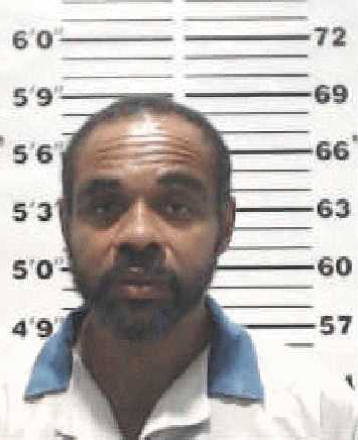
Thomas Lee Dillon: The Ohio Outdoorsman Killer
Overview
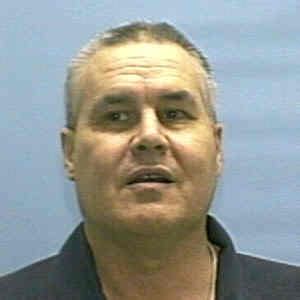
Thomas Lee Dillon was an American serial killer who murdered five men in rural Ohio between April 1, 1989, and April 5, 1992. Sometimes called the Ohio Outdoorsman Killer or the Roadside Sniper, Dillon selected strangers who were engaged in ordinary outdoor activities such as jogging, hunting and fishing. His victims had no known personal connection to him, and investigators found no conventional motive such as robbery, revenge or a dispute. The apparent randomness of the attacks, combined with Dillon's tendency to strike in isolated locations and leave little evidence behind, made the killings unusually difficult for authorities in several Ohio counties to connect and investigate.
Background
Thomas Lee Dillon was born on July 9, 1950, in Canton, Ohio, and later lived in Magnolia. He was married, had a son and worked for many years as a draftsman for the Canton Water Department. To many people who encountered him through his family or employment, he did not immediately appear to be a man capable of a series of murders. Away from that conventional life, however, investigators eventually learned of a disturbing pattern of behavior involving firearms, vandalism, the shooting of animals and the setting of fires. Authorities came to believe that his fascination with shooting and destruction had existed well before his confirmed murders of human victims.
The Beginning of the Murders
Dillon's first confirmed murder occurred on April 1, 1989, in Tuscarawas County. Donald Welling, a 35-year-old resident of Strasburg, Ohio, was walking or jogging along Tuscarawas County Road 94 when he was shot and killed. Welling was simply going about an ordinary activity near his community and had no known relationship with Dillon. With no obvious personal motive connecting the victim to his killer, the investigation offered authorities few immediate clues that Welling's death was the beginning of a serial murder case.
The Murder of Jamie Paxton
More than a year and a half later, Dillon killed 21-year-old Jamie Paxton of Bannock, Ohio. On November 10, 1990, Paxton went deer hunting in Belmont County. He was killed by rifle fire while alone in a rural area. Investigators again confronted a homicide in which the victim appeared to have been selected simply because he was available and isolated. There was no evidence that Paxton and Dillon knew each other before the murder.
Paxton's death became especially important to the investigation because Dillon later wrote anonymously about the killing. In November 1991, approximately a year after the murder, a typewritten communication was sent to The Times Leader and was also directed toward investigators and Paxton's family. The writer identified himself as Paxton's murderer and provided information indicating intimate knowledge of the crime. Dillon described Paxton as a stranger and portrayed the murder as the result of an overwhelming desire to kill rather than any grievance against the young man. The letter supplied investigators with valuable behavioral information and reinforced the possibility that they were dealing with a killer who deliberately sought out random victims.
The Murder of Kevin Loring
Only 18 days after Paxton was killed, another hunter died under suspicious circumstances. On November 28, 1990, Kevin Loring, 30, of Duxbury, Massachusetts, was deer hunting in Muskingum County, Ohio, when he was fatally shot. Loring had traveled to Ohio and was hunting in a rural area when he encountered Dillon. His death was initially treated as a possible hunting accident, an understandable possibility in an area where hunters carrying firearms were common. As investigators later began comparing unexplained shootings of outdoorsmen, however, Loring's death was reconsidered and connected to the developing series.
The Murder of Claude Hawkins
After another lengthy gap, Dillon struck again on March 14, 1992. Claude Hawkins, 48, of Mansfield, Ohio, was fishing near Wills Creek Dam in Coshocton County when he was shot and killed. Hawkins was alone and engaged in a peaceful recreational activity, fitting the increasingly recognizable pattern of an offender seeking isolated outdoorsmen rather than victims with whom he had a personal connection.
The Hawkins investigation proved particularly important because the killing occurred on federal property. Federal authorities, including the FBI, became involved alongside local investigators and the Ohio Department of Natural Resources. Law-enforcement officers began comparing the Hawkins case with the earlier unexplained shootings in surrounding counties. Similarities emerged: the victims were strangers to their attacker, were outdoors in relatively isolated places and were killed by gunfire without an apparent robbery or other conventional motive. The review helped bring the previously separate investigations together into the search for a single offender.
The Murder of Gary Bradley
On April 5, 1992, less than a month after Hawkins was killed, Dillon murdered his fifth confirmed victim. Gary Bradley, 44, of Williamstown, West Virginia, was fishing near Caldwell in Noble County, Ohio, when he was shot to death. Like Hawkins, Bradley had gone to a quiet rural location to fish. His killing strengthened investigators' belief that the deaths of the outdoorsmen were connected and that the murderer was moving among several southeastern and eastern Ohio counties in search of opportunities to attack strangers.
Confirmed Victims
- Donald Welling, 35 — Killed April 1, 1989, while walking or jogging on Tuscarawas County Road 94 in Tuscarawas County, Ohio. Welling was from Strasburg, Ohio.
- Jamie Paxton, 21 — Killed November 10, 1990, while deer hunting in Belmont County, Ohio. Paxton was from Bannock, Ohio.
- Kevin Loring, 30 — Killed November 28, 1990, while deer hunting in Muskingum County, Ohio. Loring was from Duxbury, Massachusetts.
- Claude Hawkins, 48 — Killed March 14, 1992, while fishing near Wills Creek Dam in Coshocton County, Ohio. Hawkins was from Mansfield, Ohio.
- Gary Bradley, 44 — Killed April 5, 1992, while fishing near Caldwell in Noble County, Ohio. Bradley was from Williamstown, West Virginia.
A Killer Without a Personal Connection to His Victims
One of the defining features of Dillon's crimes was the absence of a traditional relationship between offender and victim. Investigators could not solve the murders by searching through the victims' families, acquaintances, employers or personal disputes because Dillon was essentially a stranger passing through their lives. The men had been selected because they happened to be alone in places where Dillon could approach, shoot and escape. This lack of connection severely complicated the early investigations and allowed individual killings in different counties to appear unrelated.
Dillon also displayed awareness of the evidence that gunfire could leave behind. Investigators examining the scenes repeatedly found little physical evidence capable of identifying the shooter. The isolated locations further reduced the chances of witnesses observing the attacks or recording useful descriptions of the killer and his vehicle. Individually, a shooting involving a hunter or fisherman could initially resemble an isolated crime or even an accident. Only by sharing information across jurisdictions did investigators begin recognizing the larger pattern.
The Investigation Closes In
As the cases were compared, authorities formed a multi-agency investigation involving local departments, wildlife officers and the FBI. Behavioral information from Dillon's anonymous letter concerning Jamie Paxton also contributed to the developing picture of the offender. Investigators were searching for someone comfortable with firearms, familiar with rural roads, capable of traveling considerable distances and apparently fascinated by killing without a personal motive.
A major break came when Richard Fry, an acquaintance of Dillon's from earlier in life, contacted authorities after publicity surrounding the investigation. Fry knew of behavior that caused him to suspect Dillon, including Dillon's interest in firearms and acts of destructive shooting. The information gave investigators a specific individual to examine. Dillon was subsequently placed under intensive surveillance as authorities attempted to determine whether the apparently ordinary draftsman from Magnolia could be the man responsible for a series of killings across rural Ohio.
Firearms Evidence and Arrest
Dillon had already attracted law-enforcement attention over firearms violations involving an illegal silencer. Investigators eventually documented additional firearm activity despite restrictions placed upon him. On November 27, 1992, Dillon was arrested on a federal firearms charge after purchasing a handgun. His arrest gave authorities an opportunity to pursue the growing evidence connecting him to the unsolved murders.
Investigators appealed for information from people who had bought or sold firearms involving Dillon. That effort led authorities to a Swedish Mauser rifle Dillon had previously sold. Ballistics examination linked the rifle to the murders of Gary Bradley and Claude Hawkins. Combined with the behavioral evidence, witness information, surveillance and other investigative findings, the recovered weapon transformed Dillon from a suspicious figure into the central suspect in the serial shootings.
Confession, Guilty Pleas and Sentence
Dillon was eventually charged in connection with the murders. After initially entering not-guilty pleas to some of the charges, he ultimately admitted responsibility for all five confirmed killings as prosecutors and defense attorneys negotiated an agreement that removed the death penalty from consideration. On July 12, 1993, in Noble County Common Pleas Court, Dillon pleaded guilty to five counts of aggravated murder.
He received five consecutive life sentences, effectively requiring 165 years before parole eligibility. The punishment ensured that Dillon would remain imprisoned for the remainder of his natural life. His admissions finally gave the families of Donald Welling, Jamie Paxton, Kevin Loring, Claude Hawkins and Gary Bradley an answer to the central question that had haunted the investigations: the men had not been killed because of anything they had done or because of any hidden connection among them. They had been chosen by a stranger who deliberately traveled through rural areas looking for opportunities to kill.
Other Destructive Crimes
The murder investigation also exposed a broader pattern of destructive conduct attributed to Dillon. He admitted involvement in numerous deliberately set fires and acts of vandalism in eastern Ohio. Authorities also investigated his repeated shooting of animals. These behaviors became important in retrospect because they demonstrated that Dillon's violence and fascination with firearms extended far beyond the five murders for which he was convicted. Investigators believed that some of these earlier acts helped explain why acquaintances who knew about Dillon's unusual behavior eventually became suspicious when descriptions of the unidentified outdoorsman killer were publicized.
Possible Connection to the Death of John Joseph Harvat
Investigators also considered Dillon in connection with crimes outside his five confirmed Ohio murders. One was the November 28, 1984, shooting death of John Joseph Harvat at a hunting camp in Wetmore Township, McKean County, Pennsylvania. Dillon was identified as a possible suspect because of similarities to later shootings of outdoorsmen. He was never convicted or charged with Harvat's death, however, and the case should therefore be distinguished from the five Ohio murders to which Dillon pleaded guilty.
- John Joseph Harvat — Killed November 28, 1984, at a hunting camp in Wetmore Township, McKean County, Pennsylvania. Dillon was investigated as a possible suspect but was never charged or convicted in Harvat's death.
The Michigan Hunter Murders
Decades after Dillon's conviction, his name became important in another pair of unsolved hunter murders. Doug Estes and Jim Bennett were found shot to death on November 17, 1990, in the Fulton State Game Area in Kalamazoo County, Michigan. The date was only seven days after Jamie Paxton's murder in Ohio and eleven days before Kevin Loring's death. Another man, Jeff Titus, was eventually convicted of murdering Estes and Bennett in 2002 and spent approximately two decades in prison.
Later investigation uncovered a previously undisclosed law-enforcement file identifying Dillon as an alternate suspect. The material included reports that witnesses had identified Dillon as a man seen near the area of the Michigan killings and information concerning a vehicle resembling one associated with his family. Investigators also discovered evidence concerning firearms Dillon had reportedly borrowed around the date of the murders. The evidence concerning Dillon became significant enough that Titus's convictions were overturned in 2023 and he was released. The charges against Titus were later dismissed. Dillon, however, died before the matter could be resolved and was never charged with killing Estes or Bennett. His involvement therefore remains a suspicion rather than an established fact.
- Doug Estes — Killed November 17, 1990, in the Fulton State Game Area in Kalamazoo County, Michigan. Dillon became a significant alternate suspect but was never charged with the murder.
- Jim Bennett — Killed November 17, 1990, in the Fulton State Game Area in Kalamazoo County, Michigan. Dillon became a significant alternate suspect but was never charged with the murder.
Death in Prison
Dillon spent the remainder of his life in the Ohio prison system. He was eventually hospitalized while incarcerated and died on October 21, 2011, at the prison medical facility in Columbus, Ohio. He was 61 years old. His death ended any possibility that investigators could question him further about unresolved shootings that had been considered potentially connected to his travels and methods.
Legacy of the Case
The Thomas Lee Dillon investigation demonstrated the enormous difficulty created when a serial killer chooses complete strangers in multiple jurisdictions. His five confirmed victims lived in different places and were killed across five Ohio counties over approximately three years. The men were united not by a relationship with one another but by their vulnerability while alone outdoors. Until investigators began pooling their information, there was little to show that the death of a jogger in Tuscarawas County, hunters in Belmont and Muskingum counties and fishermen in Coshocton and Noble counties were the work of the same offender.
Dillon's eventual identification depended on cooperation among investigators, behavioral analysis, information from someone who knew him, surveillance and the recovery of a firearm that could be connected to the killings. His guilty pleas established his responsibility for five murders beyond dispute. Questions surrounding other deaths, particularly the 1990 Michigan hunter murders, have continued long after his conviction and death. Whatever may ultimately be determined about those additional cases, the confirmed record establishes Thomas Lee Dillon as a serial murderer who transformed isolated roads, hunting areas and fishing spots in rural Ohio into the scenes of five deliberate and apparently random killings.