John Martini: A Multistate Killer Driven by Money and Deception
Background and Criminal History
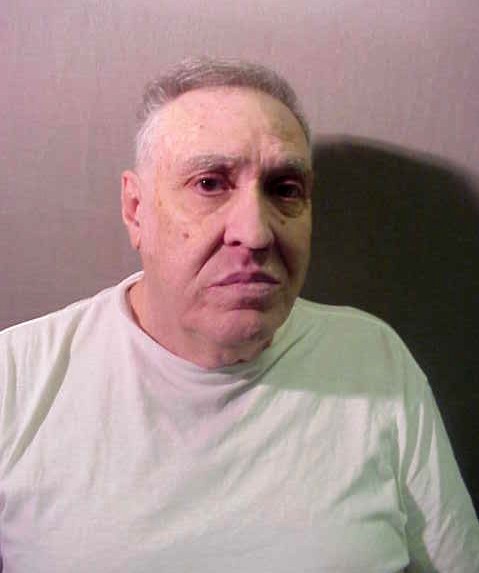
John Martini Sr. was an American murderer, kidnapper, robber and swindler whose violent crimes extended across Pennsylvania, Arizona and New Jersey. Born on June 30, 1930, Martini accumulated a lengthy criminal record before becoming connected to a series of calculated killings committed between 1977 and 1989. Authorities believed he was responsible for as many as six deaths, although he was convicted or entered guilty pleas in four murder cases. Two additional deaths attributed to him were never prosecuted.
Martini’s crimes were commonly motivated by financial gain, the elimination of witnesses or an effort to escape the consequences of previous offenses. He often gained access to victims through personal relationships, business dealings or carefully planned acts of deception. Rather than killing during sudden confrontations, Martini repeatedly placed his victims in vulnerable positions before shooting them at close range.
The Murder of Anna Mary “Polly” Duval
One of Martini’s earliest known victims was Anna Mary “Polly” Duval, a 62-year-old widow from Arizona. Duval knew Martini through one of his sisters and came to trust him sufficiently to invest money in what he represented as a real-estate transaction. Martini persuaded her to withdraw approximately $25,000 from her bank accounts for the supposed investment.
After Duval realized that the arrangement was fraudulent, she traveled to Philadelphia to confront Martini and attempt to recover her savings. Martini met her at the airport on October 16, 1977. Instead of returning her money, he drove her a short distance from the airport, shot her three times in the head and abandoned her body in a field near Philadelphia International Airport.
The murder remained unresolved for years. After Martini was arrested for later killings, investigators connected him to Duval’s death. He was eventually transferred to Pennsylvania, tried and convicted of murdering her. The prosecution showed that the killing had enabled Martini to keep the money he had taken while permanently silencing the person who could expose the fraud.
Suspected Atlantic City Double Murder
In January 1987, Martini was suspected of killing his aunt and her husband inside their Atlantic City, New Jersey, home. Publicly available accounts do not consistently identify the couple by name or provide a verified exact date of death. Martini was reportedly connected to the case through the circumstances surrounding the killings, but prosecutors never brought the matter to trial.
Because Martini was not convicted or formally tried for the Atlantic City deaths, the couple must be regarded as suspected victims rather than legally established victims. Their deaths nevertheless contributed to investigators’ belief that Martini’s total number of victims may have reached six.
The Glendale Double Murder
By 1988, Martini was living in Arizona and was romantically involved with Therese Afdahl. On November 8, 1988, the bodies of 27-year-old Teresa Marie Dempster and 42-year-old David Richard Uhl were discovered inside a car in the parking lot of a shopping center near Glendale, Arizona. Both victims had been shot.
Dempster was described in contemporary accounts as a suspected drug supplier, while Uhl worked as a salesman. Investigators developed evidence linking Martini and Afdahl to the killings, but the pair left Arizona before they could be arrested. Warrants charging them with first-degree murder remained active as they traveled east.
After Martini’s capture in New Jersey, Arizona authorities pursued the double-murder charges. In August 1992, Martini pleaded guilty to killing Dempster and Uhl under an agreement that allowed him to avoid a possible Arizona death sentence. He received a 50-year prison term for the two murders.
The Kidnapping and Murder of Irving Flax
Martini’s best-known crime began on January 23, 1989, in Fair Lawn, New Jersey. His victim, 58-year-old Irving Flax, was a businessman and warehouse executive who was leaving home for work when Martini confronted and abducted him. Martini and Flax had reportedly known one another years earlier, giving Martini enough familiarity to select him as the target of a ransom scheme.
Martini contacted Flax’s wife, Marilyn, and initially demanded $100,000 for her husband’s release. She was able to assemble $25,000 and followed instructions to leave the money at a designated location near a Paramus diner. Martini collected the payment, but he had no intention of releasing Flax.
After receiving the ransom, Martini shot Flax three times in the back of the head at extremely close range. Prosecutors later argued that Martini killed him to prevent identification and prosecution. Flax’s body was discovered on the morning of January 24, 1989.
Martini and Afdahl remained in northern New Jersey after the killing. On January 25, police arrested them as they attempted to leave a motel in Fort Lee. Investigators recovered the ransom money and a handgun. Martini subsequently gave a sworn statement acknowledging that he had held Flax for ransom and shot him.
Known and Suspected Victims
- Anna Mary “Polly” Duval, 62 — October 16, 1977 — Philadelphia, Pennsylvania: Duval was an Arizona widow whom Martini defrauded of approximately $25,000 through a false real-estate investment. After she traveled to Philadelphia to demand the return of her money, Martini shot her three times in the head and left her body near Philadelphia International Airport.
- Martini’s aunt — January 1987 — Atlantic City, New Jersey: Martini was suspected of killing his aunt inside her home, but surviving public accounts do not consistently provide her name or an exact date. He was never tried for the death.
- Martini’s uncle by marriage — January 1987 — Atlantic City, New Jersey: The husband of Martini’s aunt was killed with her. Martini was suspected but never prosecuted, and the victim’s identity and precise date of death are not consistently available in reliable public records.
- Teresa Marie Dempster, 27 — November 8, 1988 — Glendale, Arizona: Dempster was found shot to death inside a vehicle in a shopping-center parking lot. Martini later pleaded guilty to her murder.
- David Richard Uhl, 42 — November 8, 1988 — Glendale, Arizona: Uhl, a salesman, was found shot to death in the same vehicle as Dempster. Martini pleaded guilty to both Arizona murders in August 1992.
- Irving Flax, 58 — January 23, 1989 — Bergen County, New Jersey: Flax was kidnapped outside his Fair Lawn home and held for ransom. Martini collected $25,000 from Flax’s wife and then shot Flax three times in the back of the head. His body was discovered on January 24.
Trials, Convictions and Sentences
In December 1990, a New Jersey jury convicted Martini of purposeful or knowing murder, felony murder, kidnapping and weapons offenses in connection with Irving Flax’s death. During the penalty phase, jurors concluded that the murder had been committed to obtain money and to eliminate a witness. Martini was sentenced to death.
Therese Afdahl was separately convicted of felony murder and related crimes for her participation in the Flax kidnapping. She maintained that Martini had intimidated and abused her, but prosecutors showed that she had assisted with the ransom plot and remained with him afterward. She received a lengthy prison sentence.
Martini later resolved the Arizona case by pleading guilty to the murders of Dempster and Uhl. He was sentenced to 50 years in prison, avoiding the possibility of another death sentence. In Pennsylvania, a jury found him guilty of killing Anna Duval, establishing that his pattern of financially motivated violence had begun more than a decade before the Flax kidnapping.
Death Sentence and Final Years
Martini spent years challenging portions of his convictions while simultaneously declaring that he preferred execution to continued imprisonment. At various times, he attempted to abandon his appeals and demanded that New Jersey carry out his death sentence. His lawyers continued filing claims concerning his mental condition, legal representation and the fairness of the penalty proceedings.
New Jersey abolished the death penalty in December 2007 and commuted the sentences of the state’s remaining condemned prisoners to life imprisonment without parole. Martini therefore escaped execution despite his repeated demands that the state end his life.
John Martini died in his cell at New Jersey State Prison in Trenton on September 10, 2009. He was 79 years old. His death ended a legal history that had stretched across three states and more than three decades.
Legacy of the Case
Martini’s crimes demonstrated a recurring willingness to use murder as a tool for obtaining money and eliminating anyone who threatened his freedom. Anna Duval was killed after challenging him over stolen savings. Teresa Dempster and David Uhl were murdered in circumstances that led to Martini fleeing Arizona. Irving Flax was kidnapped for ransom and executed even after his wife complied with the demand for payment.
Although Martini was often identified as a serial killer responsible for six deaths, only four victims were tied to him through murder convictions or guilty pleas. The Atlantic City couple remained suspected victims because no trial established Martini’s responsibility. Even with that legal distinction, the confirmed cases reveal an offender who repeatedly deceived victims, exploited their trust and used close-range gunfire to ensure they could never testify against him.