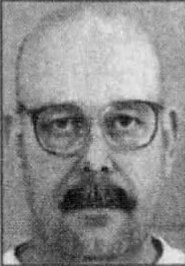
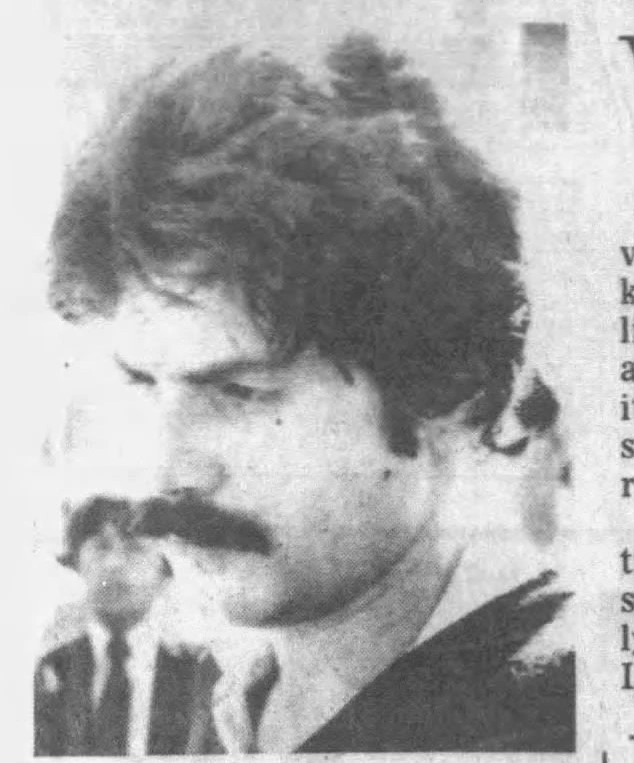
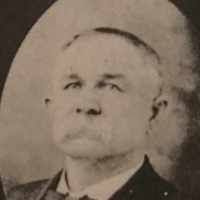
Martin Lee Sanders: The Highway Predator
Overview
Martin Lee Sanders was an American serial killer who exploited his career as a long-haul truck driver to commit a series of brutal murders across Washington state in the early 1980s. His transient lifestyle provided a cloak of anonymity, allowing him to prey on young women and teenage girls and then disappear back onto the nation's highways. For years, his crimes remained unsolved, leaving a trail of fear and unanswered questions.
Sanders murdered at least four victims: two young women hitchhiking in 1980 and two teenage friends in Spokane in 1983. The discovery of his first two victims was famously delayed by a historic natural disaster—the eruption of Mount St. Helens. The investigation into the four murders spanned years and multiple jurisdictions, with detectives struggling to connect the seemingly random acts of violence. The crucial break in the case came not from a crime scene, but from the walls of a Montana prison. After being incarcerated for a separate kidnapping and rape, Sanders's own arrogance led him to confess his murderous secrets to a cellmate. To escape the death penalty, he pleaded guilty and admitted to all four killings. He was sentenced to life in prison and died behind bars in 2022, closing the final chapter on a life defined by violence.
Early Life and Background
Martin Lee Sanders was born on May 31, 1952, in Walla Walla, Washington, to Don Sanders and Bette Brock. Publicly available information about his childhood, education, and personal relationships is scarce, leaving his developmental years largely a mystery. What is known is that as an adult, he found employment as a truck driver, a profession that kept him constantly on the move.
The life of a long-haul trucker afforded Sanders a high degree of mobility and isolation, factors that law enforcement agencies have identified as common among "highway serial killers." This profession allows perpetrators to commit crimes in one location and be hundreds of miles away by the next day, making it exceedingly difficult for local police departments to identify patterns or link cases across jurisdictional lines. Information sharing between agencies was not as efficient in the 1980s as it is today, a weakness that predators like Sanders exploited. He was able to blend into the vast, anonymous culture of the American highway system, using his truck as both his workplace and his hunting ground.
The Mount St. Helens Murders
In the spring of 1980, two adventurous young women from Fairbanks, Alaska, Marsha Weatter, 18, and Kathy Allen, 19, were on a hitchhiking trip through the Western United States. They kept in touch with their families and promised they would be home by April 6, 1980. In March, they were seen at a restaurant in Ritzville, Washington, a small town on Interstate 90. It was the last time anyone would report seeing them alive.
When the April 6 deadline passed with no word, their families grew frantic. They hired private investigators to retrace the women's steps, but the trail went cold in Ritzville. Months turned into a year with no leads. The Grant County Sheriff's detectives, desperate for a break, even consulted a psychic, who claimed the women had been abducted, but this provided no actionable information.
On May 18, 1980, a cataclysmic event occurred that would inadvertently conceal the crime. Mount St. Helens, a volcano in southwestern Washington, erupted with devastating force, killing 57 people and blanketing a vast area of the state in a thick layer of volcanic ash. The eruption was one of the most significant geological events in modern American history, and its fallout would complicate the search for the missing women.
The grim truth was finally revealed on October 10, 1981, nearly 17 months after the women disappeared. Pheasant hunters walking through sagebrush near an irrigated field about 150 yards north of Interstate 90, outside of Ephrata, stumbled upon human remains. The bodies were identified as Marsha Weatter and Kathy Allen. An autopsy revealed they had both been shot to death. Investigators realized the volcanic ash from Mount St. Helens, which lay several inches deep in the area, had hidden their bodies from view for over a year, preventing both discovery and decomposition by animals. For years, the case remained a frustrating cold case, with investigators looking at various suspects, including notorious serial killer Randall Woodfield, but finding no evidence to link anyone to the crime.
The Spokane Murders
Three years later, in May 1983, fear gripped the city of Spokane, Washington. The annual Lilac Festival was underway, a time of community celebration. On the evening of May 20, two 15-year-old friends, Rhonda Rima and Elizabeth Marks, attended the Fun Center Carnival at the Spokane Coliseum. They were seen by friends enjoying the festivities, two typical teenagers on a spring evening. When they failed to return home, their families reported them missing.
An extensive search was launched, and the community held its breath, hoping for the girls' safe return. But three weeks later, their worst fears were realized. The bodies of Rhonda and Elizabeth were discovered in the Spokane River. The city was shaken by the brutal double homicide. A joint funeral service was held at a local junior high school gymnasium, where over 300 mourners gathered to grieve the senseless loss of two young lives. The investigation into their murders would, like the Weatter and Allen case, stretch on for years without a suspect, leaving the families in an agonizing state of uncertainty.
The Victims
- Marsha Weatter, 18 — A young woman from Fairbanks, Alaska, she was exploring the country with her friend Kathy Allen. Their hitchhiking adventure in March 1980 was cut tragically short, and her family endured over a year of not knowing her fate.
- Kathy Allen, 19 — Also from Fairbanks, Alaska, she was traveling with Marsha Weatter. She had promised her family she would be home by early April 1980, but she was murdered and her body remained hidden by volcanic ash for 17 months.
- Rhonda Rima, 15 — A Spokane teenager who disappeared with her friend after attending the Lilac Festival carnival on May 20, 1983. Her life was stolen just as it was beginning.
- Elizabeth Marks, 15 — A friend of Rhonda Rima, she was also abducted and murdered after a night at the local carnival. Her death, along with her friend's, left a lasting scar on the Spokane community.
Investigation and Capture
The four murders remained unconnected and unsolved for much of the 1980s, filed away as cold cases in two different Washington counties. The breakthrough came from an entirely different state and a different crime. On May 18, 1986, Martin Lee Sanders was driving his semi-truck through Missoula, Montana, when he picked up two female hitchhikers. He brandished an unloaded gun and used handcuffs to control them, ultimately raping one of the women in the sleeping compartment of his cab.
Unlike his murder victims, these women survived and bravely reported the assault to the police. An investigation was launched, and on April 2, 1987, Sanders was arrested in Wyoming. He was extradited to Montana to face charges for the attack. He was convicted of kidnapping and rape and sentenced to 20 years in a Montana state prison. At the time, Montana authorities had no idea they had just taken a serial killer off the streets.
The key to unlocking the Washington cold cases came from Sanders himself. In 1989, while serving his sentence in Montana, he began boasting to a cellmate. Driven by a narcissistic need to relive his crimes, he confessed to the 1983 murders of Rhonda Rima and Elizabeth Marks in Spokane. He provided chillingly specific details about the killings—facts that only the perpetrator could have known. The cellmate, recognizing the gravity of the confession, alerted the authorities.
This crucial piece of information was relayed to detectives in Spokane, who immediately reopened the dormant investigation. The details Sanders had shared with his prison informant matched the evidence from the 1983 crime scene. After nearly a decade of dead ends, investigators finally had their prime suspect.
Trial and Sentence
In 1990, Martin Lee Sanders was extradited from Montana to Washington to stand trial for the murders of Rhonda Rima and Elizabeth Marks. The Spokane County prosecutor's office built a powerful case against him, centered on the detailed confession he had made to his cellmate. Facing the prospect of a conviction and a potential death sentence, Sanders chose to negotiate.
He agreed to a plea bargain. In exchange for the prosecution not seeking the death penalty, Sanders pleaded guilty to the murders of the two Spokane teenagers. As part of the comprehensive agreement, he also formally admitted his guilt in the 1980 murders of Marsha Weatter and Kathy Allen, finally closing the books on that long-unsolved case. The court accepted the plea deal, and Martin Lee Sanders was sentenced to life in prison without the possibility of parole.
Aftermath and Legacy
Martin Lee Sanders spent the next three decades behind bars. He was incarcerated at the Coyote Ridge Corrections Center, a state prison in Connell, Washington. His case became a prominent example of highway serial killings, a phenomenon that the FBI began to study more closely in the following years. His ability to operate across jurisdictions highlighted the critical need for improved communication and data sharing among law enforcement agencies nationwide.
For the families of Marsha Weatter, Kathy Allen, Rhonda Rima, and Elizabeth Marks, the conviction brought a painful and long-awaited resolution. While it could never erase their loss, it confirmed the identity of the man responsible and ensured he could never harm anyone again. The communities of Ephrata and Spokane were also granted a sense of closure, finally learning the truth behind the crimes that had haunted them for years.
Sanders's capture was not the result of forensic breakthroughs or brilliant detective work related to the murder scenes, but rather a consequence of his escalating violence in another state and his own hubris in prison. Had he not been caught for the Montana assault and subsequently bragged about his killings, he may well have remained a free man.
On April 4, 2022, Martin Lee Sanders died of a heart attack in prison. He was 69 years old. His death marked the quiet, final end to a life that had caused immeasurable pain and suffering. He left behind a legacy not of his own making, but one defined by the lives he cut short and the families he shattered.