Aaron Juan Saucedo and the Phoenix Serial Street Shootings
Overview
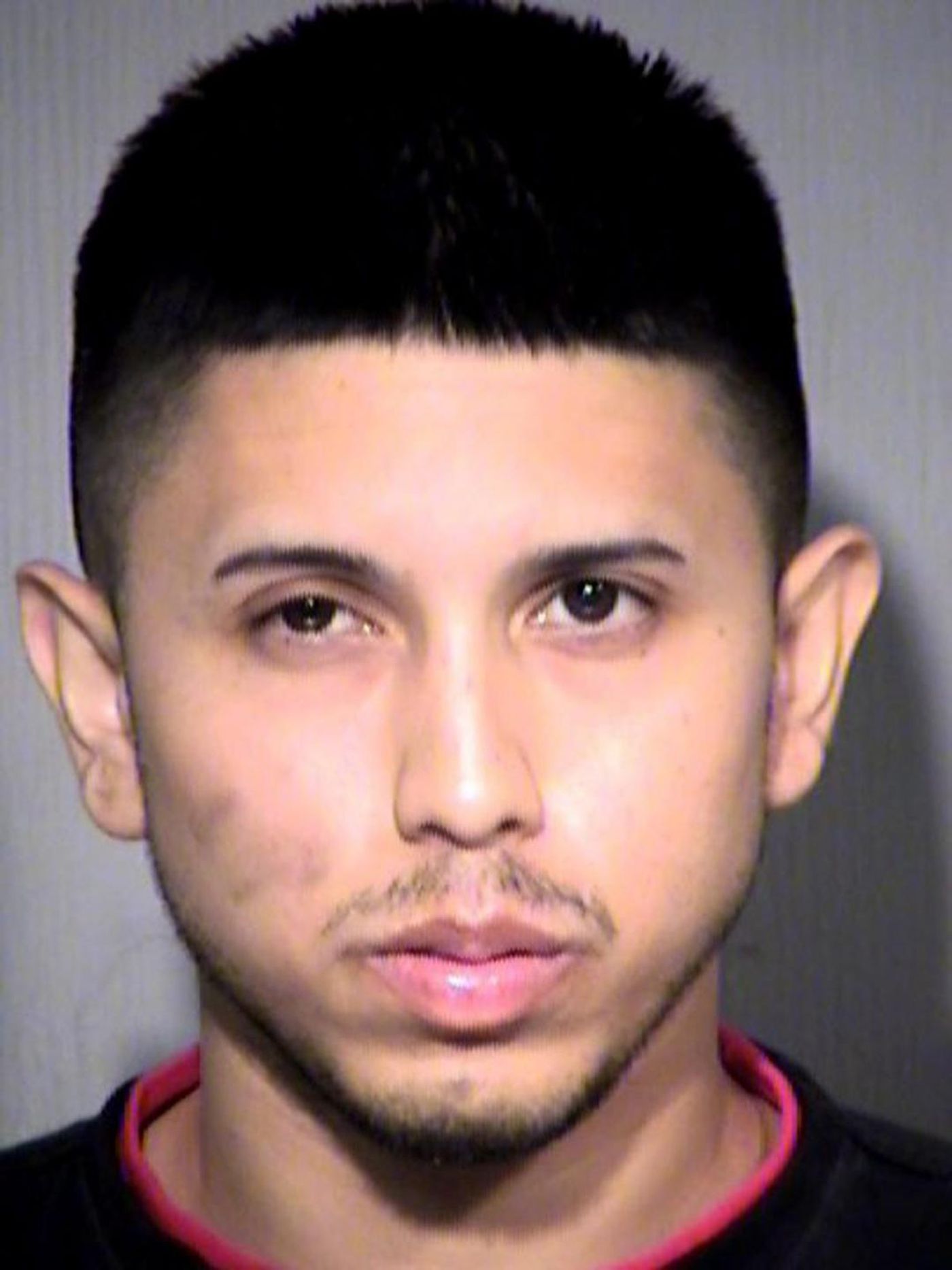
Aaron Juan Saucedo is the man accused of carrying out a series of nighttime shootings that terrorized Phoenix, Arizona, between August 2015 and July 2016. The attacks became known as the “Serial Street Shootings,” and Saucedo was widely identified in news coverage as the alleged “Serial Street Shooter” or “Maryvale Serial Shooter.” Authorities connected him to twelve separate shooting incidents in which nine people were killed and several others were wounded or placed in danger.
The shootings occurred primarily in working-class neighborhoods of west Phoenix, especially the Maryvale area. Victims were commonly attacked while standing outside homes, walking along residential streets, or sitting near vehicles. Several were shot only moments after returning home from work or while visiting friends and relatives. Investigators said most of the victims appeared to have been selected at random, although the first known murder involved a man personally connected to Saucedo.
Saucedo has denied responsibility for the crimes. Because the case has remained tied up in extensive pretrial proceedings, he should be described as an accused serial killer rather than a convicted one. As of July 2026, he remained jailed while awaiting trial on nine murder charges and numerous other felony counts. Prosecutors are seeking the death penalty.
The First Known Murder
The earliest killing attributed to Saucedo was the murder of 61-year-old Raul Romero on August 16, 2015. Romero was the boyfriend of Saucedo’s mother, making him the only known murder victim who had a personal connection to the accused shooter. Romero was standing in the driveway of his home near the 900 block of East Montebello Avenue, close to Seventh Street and Bethany Home Road in north-central Phoenix, when he was repeatedly shot.
Romero was taken to a hospital but died from his injuries. Investigators recovered 9-millimeter shell casings and projectiles from the scene. The murder initially remained unsolved, but detectives later said forensic evidence connected the ammunition and firearm evidence to Saucedo. Police arrested Saucedo for Romero’s murder in April 2017, before publicly linking him to the larger series of street shootings.
The Shootings Spread Across Phoenix
Several months after Romero’s death, 22-year-old Jesse Olivas was shot shortly after midnight on New Year’s Day 2016. Olivas had reportedly been walking home from a store when a vehicle approached near 59th Avenue and Encanto Boulevard. He was struck by multiple bullets and later died at a hospital. Investigators eventually concluded that Olivas was the first randomly selected murder victim in the series.
The violence intensified during the spring and summer of 2016. On March 17, a 16-year-old boy was shot and wounded while walking in a Phoenix neighborhood. The following night, a 21-year-old man was wounded while standing near his vehicle. Both survived, but the attacks demonstrated a pattern in which the shooter approached people outdoors, opened fire with little warning, and quickly escaped.
On April 1, 2016, 21-year-old Diego Verdugo-Sanchez was shot outside the home of his fiancée’s family in Maryvale. He and his fiancée were expecting a child, and relatives described him as a hardworking and devoted young man. The shooting occurred at approximately 9:00 p.m. while he was standing in front of the residence. His death was initially treated as the beginning of the known serial shooting pattern before police connected the earlier cases.
Victims of the Fatal Shootings
- Raul Romero, 61 — August 16, 2015: Romero was shot in the driveway of his home near the 900 block of East Montebello Avenue in north-central Phoenix. He was Saucedo’s mother’s boyfriend and the only known victim who had a personal relationship with the accused shooter. Romero died after being transported to a hospital.
- Jesse “Jesus” Olivas, 22 — January 1, 2016: Olivas was shot near 59th Avenue and Encanto Boulevard in west Phoenix shortly after midnight. He was walking home from a store when he was attacked and later died at a hospital.
- Diego Verdugo-Sanchez, 21 — April 1, 2016: Verdugo-Sanchez was shot at approximately 9:00 p.m. while standing outside the home of his pregnant fiancée’s family in the Maryvale area of Phoenix.
- Krystal Annette White, 55 — April 19, 2016: White was found shot to death near the 500 block of North 32nd Street in Phoenix. Her body was discovered beside a commercial building in an area east of downtown.
- Horacio de Jesus Peña, 32 — June 3, 2016: Peña was shot outside his home near the 6700 block of West Flower Street, close to 67th Avenue and Thomas Road. He had just returned from his job at an assisted-living facility and was walking toward his house with his keys in his hand.
- Manuel Castro Garcia, 19 — June 10, 2016: Garcia was shot at approximately 9:30 p.m. outside a home near the 6500 block of West Coronado Road in Maryvale. He had recently graduated from Maryvale High School and was remembered by relatives as friendly, affectionate, and gentle.
- Angela Linner, 31 — June 12, 2016: Linner was killed during a triple shooting outside a residence near the 6300 block of West Berkeley Road in Phoenix. She was with her friends Stefanie and Maleah Ellis when the attacker opened fire.
- Maleah Ellis, 12 — June 12, 2016: Maleah was shot and killed beside her mother and Angela Linner outside the West Berkeley Road residence. She was the youngest person killed during the series.
- Stefanie Ellis, 33 — July 7, 2016: Ellis was critically wounded in the June 12 attack that killed her 12-year-old daughter, Maleah, and their friend Angela Linner. She remained hospitalized for several weeks before dying from her injuries on July 7, 2016.
The Murder of Krystal White
Krystal Annette White was found dead on April 19, 2016, near the 500 block of North 32nd Street. Her killing occurred outside the primary cluster of Maryvale shootings, making the connection less obvious during the early investigation. She had been shot, and authorities later said ballistic evidence linked her death to the same firearm pattern associated with other victims.
White’s inclusion in the case demonstrated that the shooter was not confined to one neighborhood. Although many of the later attacks occurred in west Phoenix, the person responsible appeared willing to travel throughout the city. Police eventually described the crimes as a series of apparently unprovoked attacks rather than robberies, domestic disputes, or confrontations.
The Death of Horacio Peña
Horacio de Jesus Peña was murdered outside his home on the night of June 3, 2016. Peña had returned from work at an assisted-living facility and was approaching the residence near West Flower Street when he was shot multiple times. He still had his keys in his hand when he was discovered.
Investigators found approximately ten shell casings at the scene. No witness reported seeing the actual shooting, although someone noticed a light-colored or white sedan with shiny wheels parked nearby before the gunfire. Peña’s sudden death deeply affected his relatives, who described him as a quiet and hardworking man who had simply been coming home from work.
The Triple Shooting on West Berkeley Road
The most devastating single attack occurred during the early morning of June 12, 2016. Shortly before the killings, shots were fired into an unoccupied vehicle near the 6200 block of West Mariposa Drive. Less than half an hour later, another burst of gunfire erupted outside a home near the 6300 block of West Berkeley Road.
Angela Linner, Stefanie Ellis, and Stefanie’s 12-year-old daughter, Maleah Ellis, were together outside the residence when they were attacked. Angela and Maleah were killed, while Stefanie was rushed to a hospital in extremely critical condition. She had suffered numerous gunshot wounds and remained hospitalized until her death on July 7.
The killing of a child, her mother, and their friend increased public fear and pressure on investigators. Witnesses reported seeing a man leave the neighborhood in a light-colored sedan. The shootings appeared to have been carried out without an argument or any other known interaction between the victims and the attacker.
Other Shootings and Surviving Victims
Not every incident attributed to the Serial Street Shooter resulted in a death. On August 12, 2015, several days before Romero’s murder, shots were fired at a home near the 900 block of East Colter Street. No one was killed in that attack, but police later added the incident to the series.
A 16-year-old boy was wounded on March 17, 2016, while walking outside. On March 18, a 21-year-old man was shot and wounded while standing near a vehicle. Their identities were not widely released. Both survived, providing investigators with additional information about the shooter’s approach, vehicle, and method of attack.
On July 11, 2016, shots were fired at a vehicle occupied by a 21-year-old man and a four-year-old boy. Neither occupant was struck. This became the final known incident connected to the series. The fact that a small child had been placed in danger reinforced concerns that the shooter was attacking without regard for the identity or age of the people in his path.
The Investigation
Phoenix police formed a special investigative team as the number of shootings increased. Detectives compared bullets, shell casings, witness statements, surveillance recordings, and descriptions of suspicious vehicles. Several witnesses reported seeing a light-colored sedan, while descriptions of the suspected shooter varied enough that police released more than one composite sketch.
Investigators concluded that the shootings were linked through ballistic evidence and a repeated pattern of behavior. Victims were generally outside during nighttime or early-morning hours. The shooter appeared to approach quickly, fire several rounds, and escape before police arrived. Robbery did not appear to be the motive, and the victims had no known relationship to one another.
Public fear grew as authorities announced that a serial shooter was active in the city. Police increased patrols, distributed sketches, collected tips, and offered a large reward for information leading to an arrest. Residents were advised to remain aware of their surroundings and avoid staying outside alone late at night.
Arrest and Evidence
Saucedo was arrested on April 19, 2017, in connection with Raul Romero’s 2015 murder. Detectives said the investigation included firearm evidence, records connected to a handgun, and information obtained during interviews. Saucedo had reportedly owned a 9-millimeter handgun of the same general type associated with evidence from the shooting scenes.
Police also examined Saucedo’s vehicles. Witnesses had repeatedly described a white or light-colored sedan near several of the attacks, and investigators said Saucedo had access to vehicles that were consistent with those descriptions. Ballistic comparisons allegedly connected ammunition evidence from Romero’s murder with evidence recovered in the wider shooting series.
On May 8, 2017, Phoenix Police Chief Jeri Williams announced that Saucedo had been linked to all twelve incidents. He was subsequently charged with nine counts of first-degree murder, multiple counts of aggravated assault, drive-by shooting, discharging a firearm at a structure or vehicle, and other offenses. Authorities said the arrest brought an end to one of the most frightening criminal investigations in modern Phoenix history.
Court Proceedings
Saucedo appeared in court after his arrest and declared that he was innocent. His defense has continued to contest the allegations, and the case has experienced years of delays involving legal motions, questions regarding mental competency, disputes over evidence, and preparations for a lengthy capital murder trial.
Prosecutors have announced their intention to seek the death penalty for each of the nine murder charges. Because no jury has yet determined Saucedo’s guilt, the allegations against him remain unproven in court. As of July 2026, he remained in the Maricopa County jail, with his trial scheduled for December 2026.
Legacy of the Case
The Phoenix Serial Street Shootings created nearly a year of fear in neighborhoods where ordinary activities suddenly felt dangerous. People were attacked while returning from work, visiting loved ones, walking home, or standing in front of familiar houses. The apparent randomness of the crimes made residents feel that anyone outside after dark could become the next victim.
The nine people who died ranged in age from 12 to 61. They included parents, children, recent high-school graduates, workers, and people preparing to begin new chapters in their lives. Although the case became widely known because of the search for a serial shooter, the lasting impact is found in the families who lost relatives without warning and have spent years waiting for the criminal proceedings to reach a conclusion.
Aaron Juan Saucedo remains accused of committing the nine murders and the related shootings. The evidence against him must ultimately be evaluated in court, where prosecutors will attempt to prove that he was the gunman responsible for the series and the defense will have the opportunity to challenge every part of the state’s case.