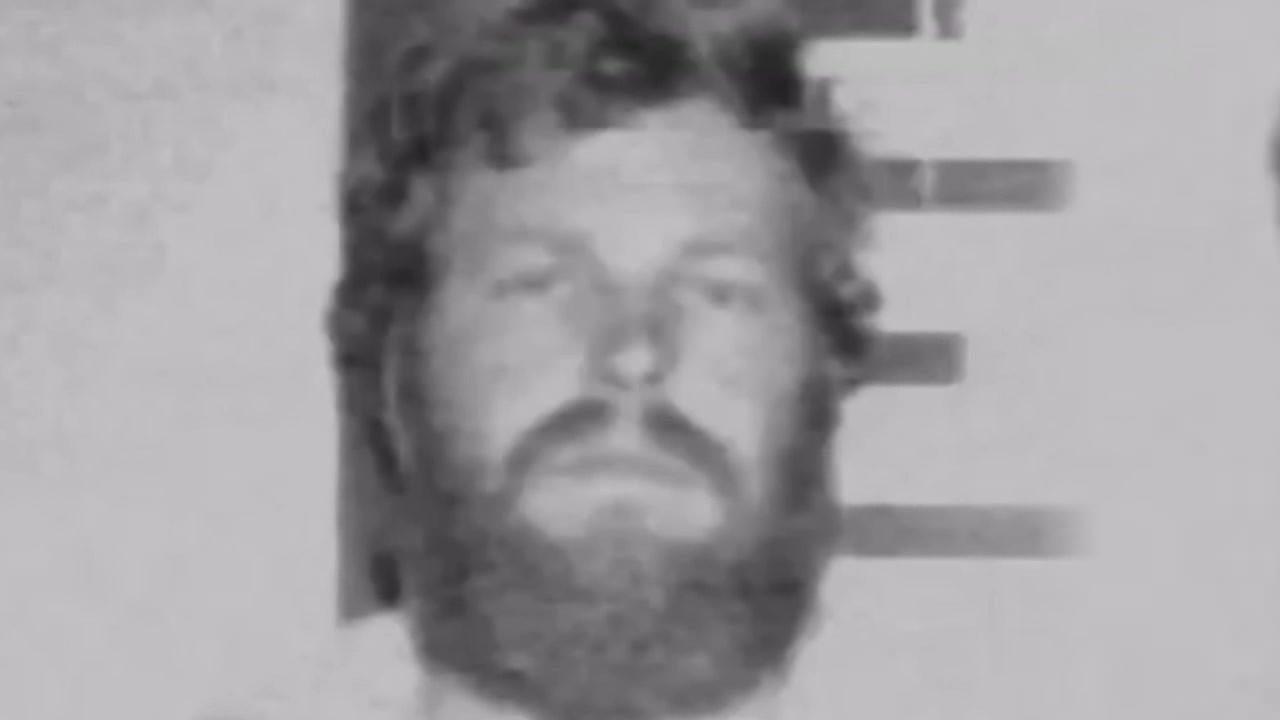
James Rodney Hicks: The Maine Serial Killer
Overview
James Rodney Hicks is one of the few convicted serial killers in Maine's history, responsible for the murders of three women over a span of nearly two decades. For years, Hicks maintained a facade of a family man while hiding his capacity for extreme violence. He first killed his wife, Jennie Hicks, in 1977, a crime for which he was initially convicted of manslaughter in a landmark case that proceeded without the victim's body. After serving a short sentence, he murdered two more women, Jerilyn Towers in 1982 and Lynn Willette in 1996. The cases remained unsolved for years, a source of constant pain for the victims' families and a lingering mystery for law enforcement. Hicks's reign of terror only ended in 2000 when, after being arrested for a violent crime in Texas, he confessed to all three murders in a deal to avoid a lengthy sentence in the Texas prison system. His confession brought a grim resolution to the disappearances and led authorities to the dismembered remains of his victims, finally securing two life sentences and cementing his legacy as a cold-blooded killer.
Early Life and Background
James "Jimmy" Rodney Hicks was born on April 17, 1951, in Etna, Maine, into a poor family. His father left when he was young, and his childhood was reportedly marked by acts of cruelty toward animals. In 1969, he met Jennie Cyr on a school bus in Carmel, Maine, and they married the following year. The young couple initially lived with Jennie's parents and struggled financially. They had a daughter, Veronica, in 1971, and a son, Seth, in 1974.
The marriage was described as strained, and the couple filed for divorce in 1974, citing Hicks's infidelity, but they reconciled after discovering Jennie was pregnant with their son. Hicks worked various construction jobs while Jennie was employed as a kitchen worker at a nursing home. By 1977, they were living in a trailer in Carmel with their two children and a 15-year-old live-in babysitter, Susan Matley. The relationship remained volatile, with Hicks known to be physically abusive. Just before Jennie's disappearance, she confided in the babysitter that Hicks had made unwanted sexual advances toward her and that she had finally decided to leave him.
The Murder of Jennie Hicks
On the night of July 18, 1977, Jennie Hicks told her husband she was leaving him for good. The couple argued, and a neighbor later reported hearing them fighting in the early hours of July 19. The babysitter, Susan Matley, returned to the trailer around 4 a.m. to find Jennie lying motionless on the floor with her arms in strange positions. Hicks told her Jennie was just sleeping and ordered her to bed. Later, Matley heard sounds of something being dragged across the floor.
The next day, Jennie Hicks, 23, was gone. Hicks claimed she had run off with a lover and was heading to Florida. However, he gave conflicting stories, and suspicious details emerged. Jennie had left behind her purse, identification, and her glasses, which she needed to see. Most importantly, her family knew she would never have abandoned her two young children. Her mother officially reported her missing on July 23, 1977. For years, Hicks maintained his story, and with no body, the investigation stalled. It wasn't until his confession in 2000 that the truth was revealed: after arguing with Jennie, he strangled her to death with his belt. He then dismembered her body and scattered her remains throughout the woods in the Carmel and Etna areas.
The Murder of Jerilyn Towers
After his wife's disappearance, Hicks continued to live in Maine. On the night of October 16, 1982, Jerilyn Towers, a 34-year-old mother from Newport, went to a local bar called The Gateway Lounge. There, she met James Hicks, who bought her drinks and spent the evening with her. They were seen leaving the bar together around 1 a.m. Jerilyn Towers was never seen alive again.
Her disappearance immediately raised red flags for law enforcement, particularly Newport Police Chief Jim Ricker, who was aware of Hicks's connection to the disappearance of his wife five years earlier. The investigation into Towers's disappearance prompted police to reopen the Jennie Hicks case. Hicks was questioned, but he denied any involvement, and police lacked sufficient evidence to charge him. In his 2000 confession, Hicks admitted to murdering Towers that night. He stated he strangled her from the backseat of a car with his hands. He kept her body for two weeks before dismembering it and burying her remains in a dirt-floor shed on his property.
The Murder of Lynn Willette
Despite being the primary suspect in two disappearances, Hicks was a free man for much of the 1980s and 1990s. After serving time for the manslaughter of his wife, he was released in 1990. He found work as a maintenance man at the Twin City Motor Inn in Brewer, where he met 40-year-old Lynn Ann Willette of Orrington. The two began a relationship and eventually moved into an apartment together on South Main Street in Brewer.
On May 26, 1996, following an argument about his criminal past, Hicks murdered Willette. She was reported missing, and once again, suspicion fell on Hicks, but a lack of evidence prevented police from making an arrest. His confession years later detailed the crime. He said he strangled her from behind with a cord as she was trying to leave the apartment after collecting her belongings. He built a wooden box and kept her body in the motel's maintenance room for several days before dismembering her. In a gruesome effort to conceal the evidence, he embedded her body parts in buckets of cement and buried them at a remote roadside site in the Haynesville Woods.
The Victims
- Jennie Lynn Cyr Hicks, 23 — Disappeared on July 19, 1977, from Carmel, Maine. A young mother to two small children, her family described her as a devoted and loving person who would never have willingly left her children behind.
- Jerilyn Towers, 34 — Vanished on October 16, 1982, after leaving a Newport, Maine, bar. She was a mother whose disappearance left her family searching for answers for nearly two decades.
- Lynn Ann Willette, 40 — Went missing on May 26, 1996, from Brewer, Maine. Her sister described her as fiercely independent and a "Jack of all trades." Her family, particularly her brother, relentlessly pushed police to keep investigating Hicks.
Investigation and Capture
The investigation into Jennie Hicks's disappearance was hampered from the start by the lack of a body or any physical evidence. The case gained new momentum in 1982 after Jerilyn Towers vanished after being seen with Hicks. Investigators re-interviewed Jennie's babysitter, Susan Matley, who provided a detailed and damning account of the night Jennie disappeared. Her testimony provided enough circumstantial evidence for a grand jury to indict Hicks for his wife's murder on October 4, 1983.
In March 1984, Hicks stood trial in Maine's first-ever murder case to be prosecuted without a body. The defense argued that Jennie had simply left her unhappy marriage. After nine hours of deliberation, the jury returned a verdict of guilty, but for the lesser charge of fourth-degree murder, equivalent to today's manslaughter. Hicks was sentenced to 10 years in prison and was released in 1990 after serving just six years.
Suspicion continued to follow Hicks, especially after Lynn Willette disappeared in 1996. He eventually moved to Texas with a new, much younger wife, Brandie Mayo. His downfall came in April 2000, when he was arrested in Lubbock, Texas, for the aggravated robbery and assault of a 67-year-old woman. He had held the woman at gunpoint, forced her to sign over her car title, write a suicide note, and drink cough syrup, with a plan to drown her and make it look like a suicide. The woman managed to escape and alert police. Facing a 55-year sentence in a Texas prison, Hicks decided to negotiate. In a letter to Maine detectives, he offered to confess to the three murders and lead them to the bodies in exchange for being allowed to serve his sentences in Maine.
Trial and Sentence
In the fall of 2000, James Hicks was extradited from Texas to Maine. He upheld his end of the bargain, leading investigators to the scattered and buried remains of his three victims. He showed them where he had buried Jennie Hicks and Jerilyn Towers behind his former home in Etna and led them to the cement-filled buckets containing Lynn Willette's remains in the Haynesville Woods.
On November 1, 2000, a Penobscot County grand jury indicted Hicks for the murders of Jerilyn Towers and Lynn Willette. He could not be retried for Jennie Hicks's death due to double jeopardy. On November 17, 2000, in Penobscot County Superior Court, James Hicks pleaded guilty to two counts of murder. On December 4, 2000, the judge, noting Hicks's complete lack of remorse, sentenced him to two consecutive life sentences without the possibility of parole. He was also ordered to pay restitution to the families of Towers and Willette. He was briefly returned to Texas to be sentenced for the assault, receiving a 55-year sentence there, before being transferred to Maine State Prison in Warren to serve his life sentences.
Aftermath and Legacy
The confessions of James Rodney Hicks brought a painful end to decades of uncertainty for the families of Jennie Hicks, Jerilyn Towers, and Lynn Willette. After years of searching and advocating for justice, they were finally able to lay their loved ones to rest. The case left a lasting scar on the small Maine communities where the crimes occurred, shattering the sense of safety and revealing a predator living in their midst. Hicks's ability to murder three women over 19 years, even serving a prison sentence for one killing before being released to kill again, highlighted a chilling failure of the justice system. His case remains a prominent example in Maine's criminal history, a dark tale of domestic violence that escalated to serial murder, concealed for years by lies and a chilling lack of conscience.