Nicholas Todd Sutton: A Series of Murders in Tennessee, North Carolina, and Prison
Early Life and Escalating Violence
Nicholas Todd Sutton was born on July 15, 1961, in Morristown, Tennessee. Commonly known as “Nicky,” he experienced an unstable childhood marked by family disruption, exposure to substance abuse, and repeated behavioral problems. After the death of his father, Sutton lived with his grandmother, Dorothy Virginia Sutton, a retired schoolteacher who supported him financially and attempted to provide him with a stable home.
By his late teens, Sutton had developed a serious drug habit and was frequently involved in disputes concerning money, narcotics, and property. His confirmed killings began in 1979, when he was only eighteen years old. Three people connected to him personally were killed within a period of several months. Years later, while serving multiple life sentences, Sutton participated in the fatal stabbing of another prisoner.
The Murder of John Michael Large
John Michael Large was a nineteen-year-old childhood friend of Sutton. The two young men had also shared an apartment in Knoxville, Tennessee. Large disappeared in August 1979 after becoming involved in a dispute with Sutton that reportedly concerned money intended for a cocaine transaction.
Sutton later admitted that he arranged to meet Large at a rural family property near Waterville in Haywood County, North Carolina. Sutton claimed that the confrontation occurred sometime between August 10 and August 22, 1979. Because the precise day was never firmly established in the available court and news accounts, Large’s death is generally placed within that date range.
According to Sutton’s confession, Large arrived at the property on a motorcycle and the two men argued. Sutton alleged that Large fired a gun at him before they began fighting inside or near a barn. Sutton struck Large with a wooden object and used a dog chain during the assault. He then forced a piece of wood into Large’s mouth or throat. An autopsy later determined that Large died from blunt-force trauma to the head.
After the killing, Sutton dragged Large’s body away from the immediate scene and buried him in a shallow grave near Mount Sterling, North Carolina. Large remained missing until Sutton led investigators to the burial site in April 1980. The remains were exhumed and examined in Chapel Hill, and North Carolina authorities subsequently obtained a murder warrant for Sutton.
The Killing of Charles Pomery Almon III
Charles Pomery Almon III was a forty-six-year-old Knoxville-area contractor who had financial dealings with Sutton. Almon disappeared during the latter part of 1979. His gold Jaguar was later found abandoned near a Holiday Inn in Newport, Tennessee, but Almon himself could not initially be located.
Sutton provided several contradictory accounts of Almon’s disappearance. In one version, he accused Almon of entering his grandmother’s home, attacking Dorothy Sutton, and demanding money. Sutton claimed that he obtained control of a firearm during the confrontation and shot Almon. In other statements, he connected Almon to a supposed bank robbery and changed his description of how the killing and disposal occurred.
Investigators eventually concluded that Sutton had killed Almon. Sutton indicated that the body had been wrapped, weighted with concrete blocks, and placed in a body of water. Divers searched the Nolichucky River and an abandoned rock quarry near Newport. Human remains were recovered from the quarry during the investigation, and authorities attributed Almon’s death to Sutton even though Sutton repeatedly altered important details of the crime.
Sutton was charged with Almon’s murder in June 1980. To avoid the possibility of a death sentence for the North Carolina and Tennessee cases, he eventually entered guilty pleas connected to the murders of Almon and Large. In April 1981, he received two additional life sentences.
The Murder of Dorothy Virginia Sutton
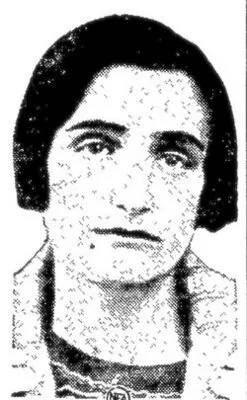
Dorothy Virginia Sutton was Sutton’s fifty-eight-year-old grandmother and primary source of financial support. She was last seen alive around December 22, 1979. On Christmas Day, December 25, Sutton went to the Morristown Police Department and reported her missing, claiming that he had last seen her with an unidentified man several days earlier.
Police examining Dorothy Sutton’s home found blood on the carpeting, walls, and floors. The evidence suggested that a violent assault had occurred inside the residence. Sutton was detained and questioned as investigators began searching Tennessee and nearby areas of North Carolina.
Sutton eventually admitted that he had placed his grandmother in a bag, attached a concrete block or similar weight, and thrown her into the Nolichucky River. Her body was recovered from the river on December 29, 1979, following an extensive search. An autopsy revealed that she had suffered a severe blow to the back of her head. Evidence also indicated that she was still alive when she entered the water and that drowning contributed to her death.
Sutton initially denied striking his grandmother. He claimed that he discovered her injured or apparently dead and disposed of her body because he feared that he would be blamed. He later attempted to place responsibility on Charles Almon, alleging that Almon attacked Dorothy during a confrontation over money. Prosecutors rejected Sutton’s changing explanations and maintained that he was responsible for the killing.
Sutton was convicted of murdering Dorothy Virginia Sutton and was sentenced to life imprisonment in April 1980. The case established a pattern that appeared in his other crimes: a personal dispute, extreme violence, concealment of the body, and repeated changes to his story after investigators uncovered contradictory evidence.
Unverified Claims of Additional Victims
During the investigation, Sutton claimed that he had killed additional people, including an unidentified teenager from the Alcoa area and an unidentified drug buyer from Atlanta. He asserted that the bodies had been buried on or near family property in North Carolina.
Authorities obtained warrants and conducted searches based on Sutton’s statements. No remains or physical evidence were found that confirmed these additional killings. Investigators eventually concluded that Sutton had probably invented the stories, possibly to manipulate prosecutors, delay proceedings, or create confusion about the known cases. The unidentified people mentioned in these confessions are therefore not included among his confirmed victims.
Life Imprisonment and the Murder of Carl Isaac Estep
After receiving multiple life sentences, Sutton was incarcerated in the Tennessee prison system. He was eventually housed at the Morgan County Regional Correctional Facility near Wartburg, Tennessee. Despite his imprisonment, Sutton remained involved in the prison drug culture and associated with inmates who possessed homemade weapons.
Carl Isaac Estep, a forty-four-year-old prisoner serving a life sentence, became involved in a dispute with Sutton. Prosecutors maintained that the conflict concerned drugs and threats of violence. Estep allegedly threatened Sutton with a homemade knife, after which Sutton and several other inmates armed themselves and confronted him.
On January 15, 1985, Estep was attacked inside the prison. He was stabbed thirty-eight times with homemade weapons. The number and distribution of the wounds demonstrated that the assault was prolonged and involved overwhelming force. Estep died at the correctional facility from the multiple stab wounds.
Sutton was prosecuted along with inmates Thomas Street, Charles Arnold Freeman, and David Wesley Stufflestreet. Sutton and Street were accused of directly participating in the stabbing, while the allegations against the other defendants varied. In March 1986, Sutton was convicted of first-degree murder. Street received a life sentence, while Freeman and Stufflestreet were acquitted of the charges against them.
Because Sutton was already serving life sentences when Estep was murdered, prosecutors sought the death penalty. The jury sentenced Sutton to death, finding that the murder had been committed by a prisoner already under substantial sentences for previous violent crimes.
Confirmed Victims
- John Michael Large, 19 — Killed sometime between August 10 and August 22, 1979, near Waterville in Haywood County, North Carolina. Large was beaten and killed during a dispute with Sutton. His body was buried in a shallow grave and recovered in April 1980.
- Charles Pomery Almon III, 46 — Killed in late 1979 in eastern Tennessee. Sutton admitted responsibility but repeatedly changed his account of the shooting and disposal of Almon’s body. Sutton later pleaded guilty in connection with the murder.
- Dorothy Virginia Sutton, 58 — Attacked around December 22, 1979, at her home near Morristown or Lowland, Tennessee. Her weighted body was recovered from the Nolichucky River on December 29, 1979. She suffered blunt-force trauma and drowned.
- Carl Isaac Estep, 44 — Murdered on January 15, 1985, at the Morgan County Regional Correctional Facility near Wartburg, Tennessee. Estep was stabbed thirty-eight times by Sutton and other inmates during a prison confrontation.
Appeals and Claims of Rehabilitation
Sutton remained on Tennessee’s death row for more than three decades. His attorneys filed repeated appeals challenging his conviction, sentence, legal representation, and the proportionality of imposing the death penalty. Courts consistently upheld the conviction and death sentence for Estep’s murder.
During his years in prison, Sutton developed a markedly different reputation from the violent young man described in the murder cases. Correctional officers, ministers, medical workers, and fellow prisoners portrayed him as a dependable inmate who assisted sick prisoners and attempted to defuse dangerous situations. Some prison employees credited him with helping protect staff members during violent disturbances.
Several jurors from his 1986 trial later supported commuting his sentence to life imprisonment. Relatives of some people connected to his cases also opposed his execution. Others, particularly members of John Large’s family, continued to believe that Sutton should receive the punishment imposed by the jury.
Execution
Sutton requested execution by electrocution rather than Tennessee’s lethal-injection procedure. Governor Bill Lee declined to grant clemency, and the courts rejected Sutton’s final requests for a stay.
On February 20, 2020, Nicholas Todd Sutton was executed in the electric chair at Riverbend Maximum Security Institution in Nashville, Tennessee. He was fifty-eight years old. His execution occurred more than forty years after the first confirmed murders and thirty-five years after the killing of Carl Estep.
Sutton’s case remains notable because it combined a series of murders committed during adolescence with an additional murder committed while already serving multiple life sentences. His later conduct in prison prompted substantial debate over rehabilitation, mercy, and capital punishment, but it did not erase the violent deaths of John Michael Large, Charles Pomery Almon III, Dorothy Virginia Sutton, and Carl Isaac Estep.