Donald Nash: The Contract Killer Behind the CBS Murders
Background
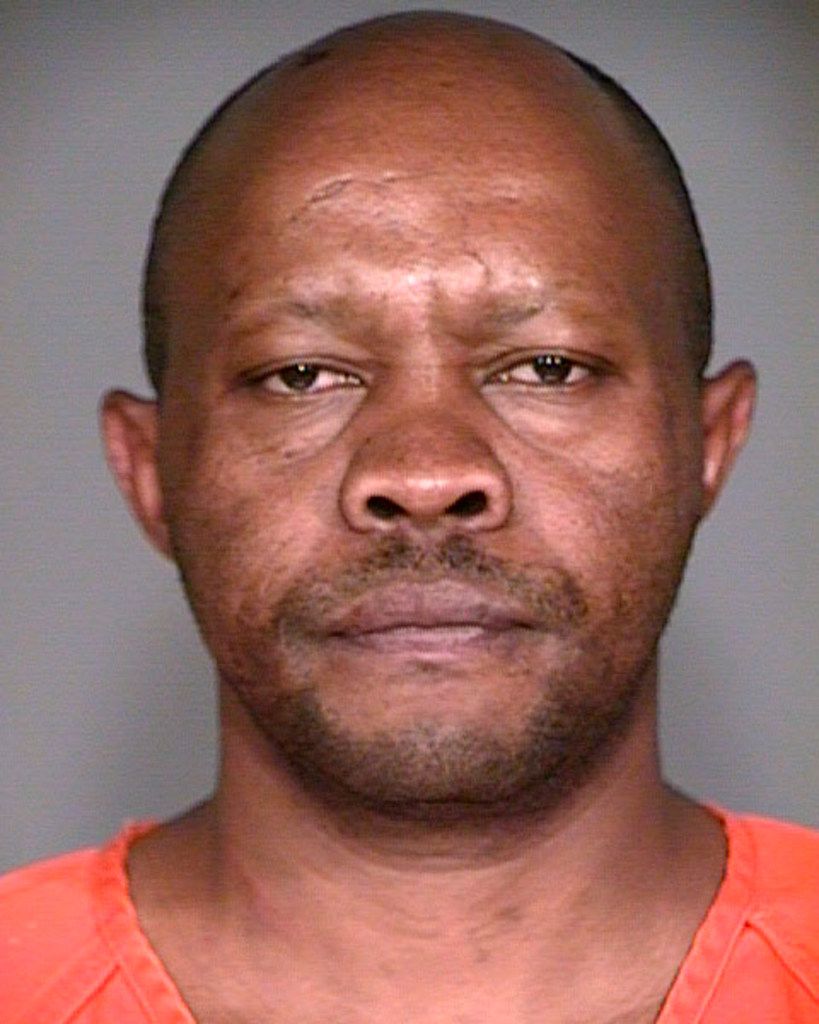
Donald Nash, born Donald J. Bowers on December 9, 1935, was an American contract killer whose crimes became associated with one of New York City’s most notorious multiple-murder cases. Although he is sometimes described as a serial killer because he was responsible for six deaths over separate incidents, Nash was primarily a hired assassin. His best-known crimes occurred during a violent campaign intended to silence witnesses connected to a multimillion-dollar financial fraud investigation.
Nash lived in Keansburg, New Jersey, and worked at various times as a taxi driver and construction worker. He legally changed his name from Donald J. Bowers to Donald Nash in 1978. His criminal history stretched back several decades and included arrests in both New York and New Jersey. In 1981, he was convicted of using forged documents to obtain a New York City taxi medallion, but he failed to appear for sentencing and became a fugitive.
The Candor Diamond Fraud Investigation
The murders that brought Nash national attention began with the collapse of the Candor Diamond Corporation, a Manhattan diamond business operated by Irwin Margolies and his wife, Madeleine. The company entered bankruptcy in 1981 while owing approximately $5.7 million to the financing company John P. Maguire and Company. Federal investigators suspected that Margolies had engaged in an extensive fraud scheme involving falsified financial records and improperly obtained loans.
Margaret Barbera, Candor Diamond’s comptroller, had participated in portions of the fraud. She later pleaded guilty to a federal charge and agreed to cooperate with prosecutors. In exchange for her testimony against Margolies, authorities were prepared to recommend that she receive no prison sentence. Jenny Soo Chin, a former Candor Diamond bookkeeper and a friend of Barbera, was also considered a potential witness who possessed damaging information about the company’s financial activities.
Faced with the possibility that the two women could help federal prosecutors build a case against him, Margolies arranged to have them killed. Donald Nash was hired to eliminate the witnesses. Prosecutors later alleged that Nash was promised $8,000 for each woman’s murder. The agreement set in motion a chain of killings that ultimately claimed the lives of the two intended targets and three innocent CBS employees who unexpectedly encountered Nash during one of the crimes.
The Disappearance of Jenny Soo Chin
On January 5, 1982, Jenny Soo Chin visited Margaret Barbera at Barbera’s home in the Ridgewood neighborhood of Queens, New York. After leaving the residence, Chin was confronted by a masked man and forced into her own automobile. She was driven away and was never seen alive again.
Chin’s bloodstained vehicle was discovered nine days later. Investigators found evidence inside the car indicating that violence had occurred, including a spent .22-caliber cartridge casing. Her body was never recovered, so an exact date and location of death could not be medically established. Prosecutors nevertheless concluded that Nash abducted and killed her on or shortly after January 5, 1982.
The disappearance initially appeared to be an isolated crime. Its significance became much clearer after the killings that occurred three months later. Ballistics evidence from Chin’s automobile was eventually connected to the firearm used in the murders of Margaret Barbera and the three CBS technicians.
The Abduction of Margaret Barbera
On April 12, 1982, Nash abducted Margaret Barbera in Manhattan. He transported her in a white van to a rooftop parking area near Hudson River Pier 92, where employees of the CBS television network regularly parked their vehicles. Nash apparently believed the location would give him enough privacy to complete the killing and dispose of Barbera without being observed.
Barbera was shot once in the head with a .22-caliber firearm. Her body was later recovered in lower Manhattan. The murder was clearly intended to prevent her from testifying in the federal fraud investigation against Irwin Margolies.
The Murders of the CBS Employees
As Nash attempted to place Barbera’s body into the van, three CBS television technicians arrived at the rooftop garage after completing their workday. Leo Kuranuki, Robert Schulze and Edward Benford saw the masked man handling what appeared to be a woman’s body. Instead of ignoring the disturbing scene, the men attempted to intervene.
Nash immediately turned his weapon on the witnesses. Each man was shot in the head with a .22-caliber bullet. One of the technicians attempted to escape and was pursued across a considerable distance before being killed. The deaths were not part of the original murder-for-hire agreement; Nash killed the men because they had witnessed Barbera’s abduction and murder and could have identified him or his vehicle.
A fourth CBS employee, Angelo Sticca, had fallen behind the other men as they walked toward their cars. He saw part of the attack and escaped in his automobile. Sticca survived and later provided investigators with important information about the masked gunman and the van used during the killings.
Confirmed and Attributed Victims
- Jenny Soo Chin – Abducted on January 5, 1982, after leaving Margaret Barbera’s home in Ridgewood, Queens, New York. Her bloodstained automobile was found on January 14, 1982. Her body was never recovered, and no medically verified date of death is available. Nash was convicted of conspiring to murder her.
- Margaret Barbera – Killed on April 12, 1982, in Manhattan, New York. Barbera was a former Candor Diamond comptroller and cooperating federal witness. She was abducted and shot in the head with a .22-caliber firearm.
- Leo Kuranuki – Killed on April 12, 1982, in the rooftop parking area at Hudson River Pier 92 in Manhattan. The CBS technician encountered Nash while Nash was attempting to move Barbera’s body.
- Robert Schulze – Killed on April 12, 1982, at the Pier 92 rooftop parking facility in Manhattan. Schulze was one of the CBS employees who attempted to intervene after discovering the masked killer.
- Edward Benford – Killed on April 12, 1982, at or near the Pier 92 rooftop parking facility in Manhattan. He attempted to escape but was pursued and fatally shot by Nash.
- Roy Tucker – Killed on October 17, 1994, inside Auburn Correctional Facility in Auburn, New York. Tucker was a fellow prisoner who worked with Nash in the prison kitchen. Nash attacked him with an improvised weapon fitted with razor blades.
The Investigation
The four Manhattan murders initially appeared to investigators to be the work of an organized-crime assassin. At the rooftop garage, detectives recovered .22-caliber cartridge casings, along with discarded shoes and sunglasses believed to have been left by the killer. When Barbera’s body was located, investigators determined that she had also been shot with a .22-caliber firearm.
Ballistics testing provided the crucial connection between the crimes. The cartridge casing found in Jenny Soo Chin’s abandoned automobile had been fired from the same weapon used to kill Barbera and the three CBS employees. Because Barbera was cooperating in a federal case, the Federal Bureau of Investigation joined the New York Police Department in the investigation.
Investigators discovered that the parking space beside Barbera’s had been rented under the name Donald J. Bowers, Nash’s former legal name. The discovery focused attention on Nash, who was already wanted for failing to appear for sentencing in the taxi-medallion forgery case.
Additional evidence was recovered near Nash’s home in Keansburg, New Jersey. FBI divers searched Waackaack Creek and found two .22-caliber cartridge casings that matched the casings from the murders. Another matching casing was reportedly recovered from the home of Nash’s nephew, Thomas Dane.
Capture and Evidence
Nash fled the New York area after the killings. On April 19, 1982, Kentucky State Police arrested him near Frankfort, Kentucky. He was driving the white van used during the crimes, although the vehicle had been repainted black in an apparent attempt to disguise it. He was initially detained on the outstanding fugitive warrant connected to his forgery conviction.
The investigation produced a substantial collection of physical and testimonial evidence. Prosecutors connected the van, cartridge casings, forensic material and the rented parking space to Nash. His nephew, Thomas Dane, became an important witness after receiving immunity. Testimony also established that Margolies had paid Nash $16,000 for the murders of Chin and Barbera and an additional $5,000 after the three CBS employees were killed.
Trial and Conviction
Nash was prosecuted in New York state court for the murders of Margaret Barbera, Leo Kuranuki, Robert Schulze and Edward Benford. He was also charged with conspiracy relating to the planned murders of Barbera and Jenny Soo Chin. The prosecution presented approximately 136 witnesses and introduced extensive forensic evidence linking Nash to the crime scenes.
Nash’s defense argued that his physical condition made it unlikely that he could have committed the crimes. An ophthalmologist testified that Nash had seriously impaired vision in one eye and might have been suffering from glaucoma. His attorney contended that such poor eyesight made Nash an improbable choice for a professional assassin. The jury rejected that argument.
On May 24, 1983, Nash was convicted of four counts of second-degree murder and one count of conspiracy. He received a sentence totaling 100 years in prison. Although Jenny Soo Chin’s body was never found, the evidence was considered sufficient to prove that Nash had participated in the conspiracy to kill her.
The Conviction of Irwin Margolies
Irwin Margolies was separately prosecuted for arranging the murders. In November 1983, he pleaded guilty to federal fraud charges and received a 28-year prison sentence. He was subsequently tried in state court for ordering the killings of Chin and Barbera.
On June 21, 1984, Margolies was convicted of two murders and conspiracy. He received two consecutive 25-year sentences for the killings, along with a concurrent eight-year sentence for conspiracy. The state sentences were ordered to begin after completion of his federal fraud sentence. The convictions confirmed that Nash’s crimes had been committed as part of a deliberate attempt to silence witnesses and obstruct a federal investigation.
The Prison Murder of Roy Tucker
More than a decade after the CBS murders, Nash killed again while imprisoned at Auburn Correctional Facility. Roy Tucker, another convicted murderer, had been transferred to Auburn in May 1994. Both men were assigned to work in the prison kitchen.
On October 17, 1994, Nash attacked Tucker while they were preparing meals. Nash used an improvised weapon described as a wooden board fitted with razor blades. Tucker suffered fatal injuries during the assault. The killing demonstrated that Nash remained capable of extreme violence even after years of incarceration.
Death and Legacy
Donald Nash remained in the New York state prison system for the rest of his life. He died of a heart attack on June 2, 2016, at the age of 80. His death ended a criminal history that had begun decades before the murders that made him infamous.
Nash’s classification as a serial killer is sometimes debated. Five of his victims were killed as part of a concentrated murder-for-hire operation in 1982, while the sixth was killed in prison more than twelve years later. He is therefore more precisely described as a contract killer and multiple murderer whose crimes occurred during separate episodes.
The case became widely known as the CBS murders because three of the victims were CBS technicians who unexpectedly encountered the crime in progress. Their attempt to help a woman in danger placed them directly in Nash’s path. The killings remain a disturbing example of how a calculated plan to silence two witnesses expanded into a mass killing when innocent bystanders attempted to intervene.