John Martin Crawford: The Saskatoon Serial Killer
Overview
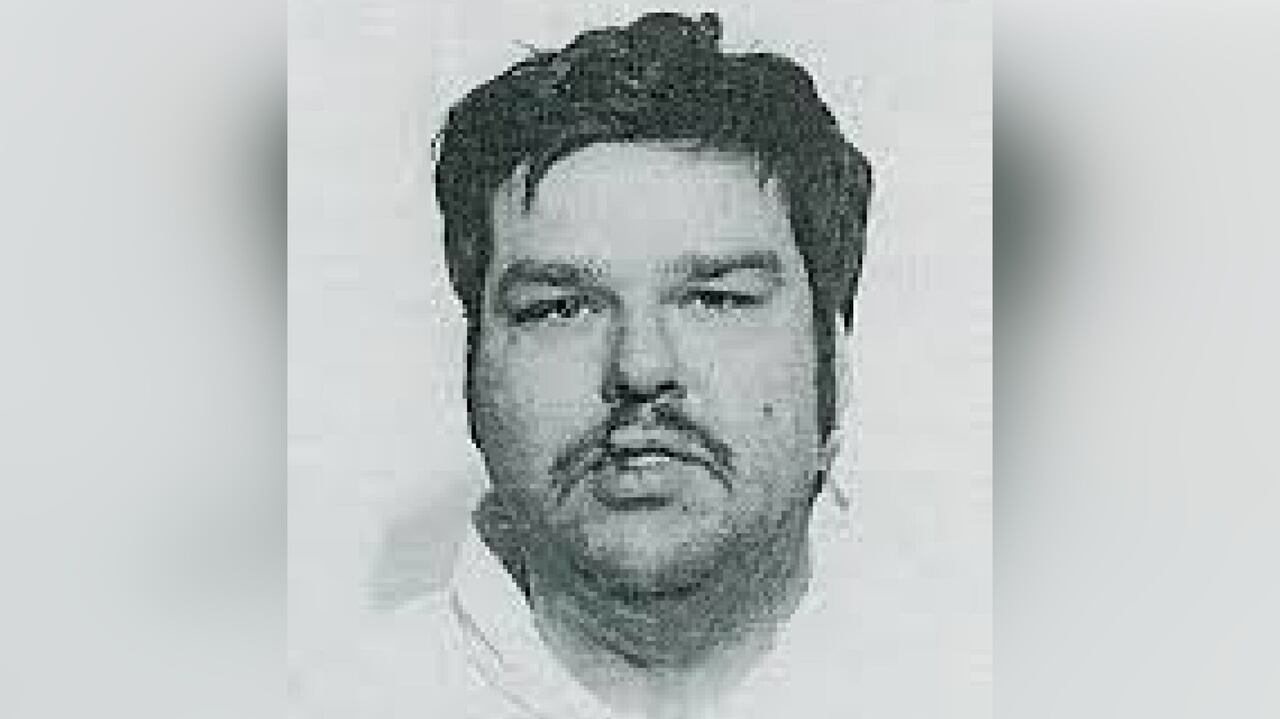
John Martin Crawford was a Canadian serial killer convicted of murdering three Indigenous women in Saskatoon, Saskatchewan, in 1992, more than a decade after he had already killed a woman in Alberta. His known victims were Mary Jane Serloin, Shelley Napope, Eva Taysup, and Calinda Waterhen. Crawford preyed on vulnerable Indigenous women, and his crimes were characterized by extreme brutality, including sexual assault, torture, and mutilation. Despite the horrific nature of his offenses, his case received significantly less media attention than those of other contemporary Canadian serial killers like Paul Bernardo, a fact many attribute to the race of his victims. He was serving three concurrent life sentences when he died in prison in 2020. His case is a focal point in discussions about systemic indifference to violence against Indigenous women in Canada.
Early Life and Background
John Martin Crawford was born on March 29, 1962, in Steinbach, Manitoba, to a 21-year-old single mother, Victoria. In 1964, his mother married Al Crawford, and the family, which soon included a sister, moved to Vancouver. Crawford's childhood was deeply troubled. His parents were both addicted to gambling, and his stepfather was an alcoholic. He began running away from home at the age of three and struggled in school, failing the first grade.
His substance abuse started at age 12 when he began sniffing glue, and as a teenager, it escalated to include marijuana, LSD, and prescription drugs. By sixteen, he reported hearing voices that tormented him. His first sexual experience, at age 13, was with two other boys and an 11-year-old girl they paid five dollars. This early experience shaped his view of sex as a transactional act. His family life further deteriorated when his mother and stepfather divorced in the mid-1980s while he was serving his first prison sentence.
First Murder: Mary Jane Serloin
Crawford's violent criminal history began in 1981 in Lethbridge, Alberta. On Christmas Day, the nude body of 35-year-old Mary Jane Serloin, a member of the Peigan reserve, was discovered in an alcove behind a fire hall. She had been brutally beaten, and her body was mutilated with deep bite marks on her neck and breasts. Crawford, then 19, had met Serloin in a bar the night of December 23rd.
Police arrested Crawford at his parents' home less than eight hours after the body was found. He was described as quiet and subdued. Dental impressions from the bite marks matched his teeth. Though charged with first-degree murder, the Crown accepted a plea deal, and in June 1982, Crawford pleaded guilty to the lesser charge of manslaughter. He was sentenced to ten years in prison. The judge noted his concern that Crawford had calmly returned to the bar for beer and pizza after the killing.
Crawford's time in prison was marked by anxiety and self-mutilation; he was transferred multiple times between institutions, including to the Regional Psychiatric Centre in Saskatoon. After serving seven years, he was released on mandatory supervision on March 23, 1989, and moved to Saskatoon to live with his mother.
The Saskatoon Murders
After his release, Crawford fell into a pattern of cruising the streets of Saskatoon in his mother's car, often with a former fellow inmate, Bill Corrigan, picking up Indigenous women. In 1990, he was fined for attempting to solicit an undercover police officer. His violence soon escalated into a series of murders in 1992 that terrorized the city's Indigenous community.
In the spring of 1992, Crawford and Corrigan picked up 16-year-old Shelley Napope. After driving her to a deserted area south of the city, both men sexually assaulted and beat her. Crawford then dragged her from the car and stabbed her to death.
The violence continued unabated. On September 20, 1992, Crawford murdered 30-year-old Eva Taysup. He raped, tortured, and strangled her. In a final act of desecration, he sawed off her arm before burying her body in a shallow grave.
The very next day, September 21, 1992, he killed 22-year-old Calinda Waterhen. He strangled her and buried her body near where he had left Taysup.
During this period, Crawford’s violent behavior was not limited to his murder victims. In May 1992, a woman named Janet Sylvestre reported to police that Crawford had raped her. He was arrested but released on bail into his mother's custody on June 18, 1992. The charges were not pursued after his release. In October 1992, he was charged with the attempted murder of a man named Derek Langager over a cigarette, though he was ultimately convicted of the lesser charge of aggravated assault and spent most of 1993 in jail.
The Victims
Crawford's proven victims were all Indigenous women, a fact central to the discussion of his case and the societal indifference it exposed.
- Mary Jane Serloin, 35 — Killed around December 25, 1981, in Lethbridge, Alberta. She was from the Peigan reserve near Fort MacLeod. Her sister, Justine English, later spoke out about the lack of attention given to her case, stating, "It seems any time a Native is murdered, it isn't a major case... It's just another dead Indian."
- Shelley Napope, 16 — Murdered in Saskatoon in the spring of 1992. A member of the One Arrow First Nation, her family filed nearly 30 missing persons reports to no avail. A series of letters she wrote before her death painted an intimate portrait of a young life cut tragically short.
- Eva Taysup, 30 — Murdered on September 20, 1992, in Saskatoon. She had been missing for years before her remains were discovered.
- Calinda Waterhen, 22 — Murdered on September 21, 1992, in Saskatoon, just one day after Eva Taysup was killed.
Investigation and Capture
For years, the disappearances of Taysup, Waterhen, and Napope were unsolved cases. The break came in October 1994 when a farmer discovered the skeletal remains of Eva Taysup and Calinda Waterhen in a brushy area southwest of Saskatoon. Shelley Napope's body was found later.
The Royal Canadian Mounted Police (RCMP) had already placed Crawford under surveillance for four months in 1994. They knew of his manslaughter conviction and his habit of cruising for Indigenous women. During this surveillance, officers witnessed a deeply controversial incident. They watched as Crawford picked up a woman named Theresa Kematch, drove her to a remote area, and brutally beat and raped her before dumping her on the street. The officers did not intervene. When Kematch was later found by city police, she was arrested. Kematch later sued the RCMP, with her lawyer stating, "a young woman was raped and beaten by a known monster" while officers watched. The RCMP maintained that its officers were not aware a criminal act was taking place at the time.
Following the discovery of the bodies, the investigation zeroed in on Crawford. Other women came forward with accounts of being raped and nearly strangled by him and Bill Corrigan. Crawford was finally arrested in January 1995 and charged with the three Saskatoon murders.
Trial and Sentence
John Martin Crawford's trial began in 1996. The prosecution, led by Crown prosecutor Terry Hinz, presented evidence linking him to the murders, including testimony from women who had survived his attacks. On May 30, 1996, a jury found him guilty of one count of first-degree murder in the death of Shelley Napope and two counts of second-degree murder for the deaths of Eva Taysup and Calinda Waterhen.
He was sentenced to three concurrent life sentences with no possibility of parole for 25 years. The sentencing judge described Crawford as being "like a wild animal, preying on vulnerable women." Crawford attempted to appeal his conviction, arguing that his right to silence was violated during the trial. However, on March 30, 2000, the Supreme Court of Canada dismissed his application for leave to appeal, cementing his life sentence.
Death in Prison
Crawford spent the remainder of his life incarcerated. On December 16, 2020, he died at the age of 58 while an inmate at the Regional Psychiatric Centre in Saskatoon. The Correctional Service of Canada announced his death but did not release the cause, stating that, as in all cases of an inmate's death, a review would be conducted and the police and coroner would be notified.
Aftermath and Legacy
The case of John Martin Crawford is frequently cited as a stark example of systemic indifference towards violence against Indigenous women in Canada. Journalist Warren Goulding’s award-winning 2001 book, *Just Another Indian: A Serial Killer and Canada's Indifference*, explored how Crawford's crimes were largely ignored by mainstream media and society. While the trials of serial killers like Paul Bernardo received extensive national coverage, Crawford, who killed four women and was suspected in other disappearances, remained virtually unknown outside Saskatchewan.
Goulding and other critics argue that the lack of attention was due to the fact that his victims were Indigenous and often involved in sex work, leading society, the media, and even law enforcement to devalue their lives. The families of the victims reported hitting "roadblocks" when they tried to report the women missing. The handling of the Theresa Kematch assault, where police watched Crawford commit a violent crime, is often highlighted as a particularly egregious example of this systemic failure.
Crawford is also a suspect in other unsolved cases, including the 1994 murder of Janet Sylvestre, the same woman who had accused him of rape in 1992. His name has also been linked to the disappearance of Shirley Lonethunder. Crawford's case remains a painful and instructive chapter in Canadian crime history, underscoring the tragic consequences of societal apathy and prejudice against Indigenous women and girls.