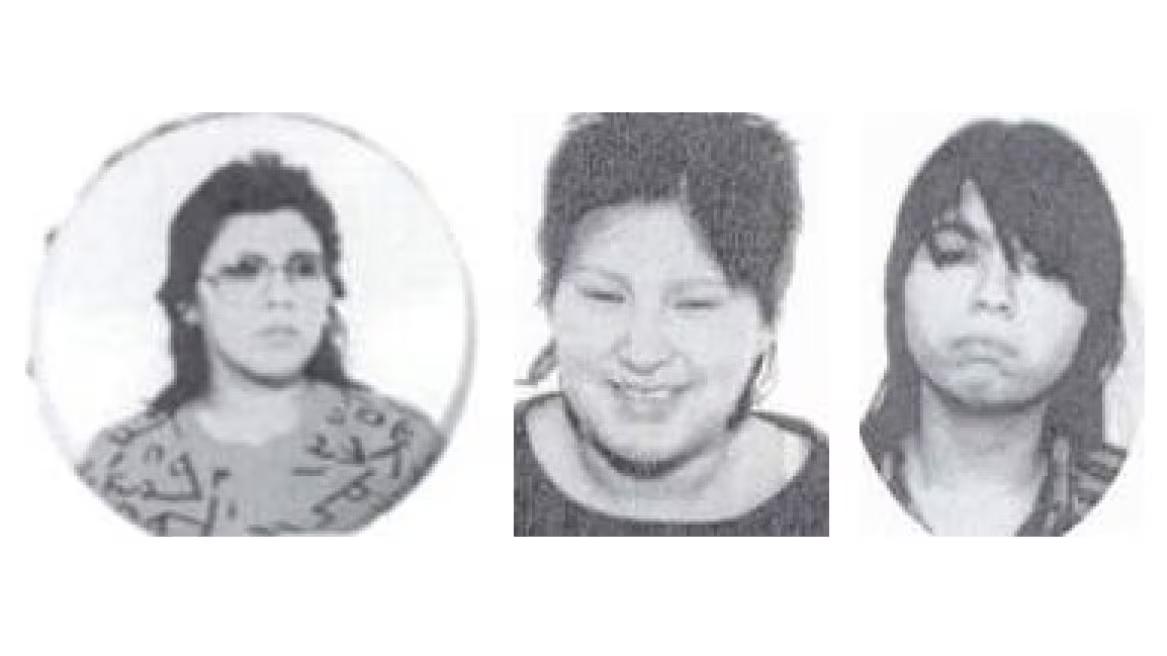
Eva Taysup was a gregarious and popular young woman with a big smile and a loud, infectious laugh. The daughter of Mary Taysup and Oliver Okemahwasin, she grew up in a strict but nurturing home with her ten siblings. Her family remembers happy summers traveling to powwows, where Eva, always surrounded by friends, would run off to play with the older girls. As a young adult, she moved to Saskatoon, Saskatchewan, where she met Ian Gardypie.
Between 1985 and 1989, the couple had four children together: Rene, Sydney, Rickie, and Angel Dawn. Family members recall Eva as a loving mother who "looked after her kids really well," creating a warm home where friends were always welcome for coffee and long visits.
In the early 1990s, this life filled with family and laughter came to a brutal end. On September 20, 1992, Eva, a 30-year-old Indigenous woman, was murdered in Saskatoon by John Martin Crawford, a man who would come to be known as a serial killer. For years, her family was left with only questions and silence. Eva was a missing person, one of hundreds of Indigenous women who had vanished in Western Canada, their cases often met with public and media indifference. The families of the missing, including Eva's, often felt their concerns were dismissed when they sought help from authorities.
The agonizing wait for answers ended in October 1994. A farmer working in heavy brush in a rural area southwest of Saskatoon, near what was known as Moon Lake, made a horrifying discovery: human remains. A police investigation was launched, and soon, the skeletal remains of three different women were unearthed within a 60-metre radius. Through dental records and forensic anthropology, the victims were identified as Eva Taysup, 22-year-old Calinda Waterhen, and 16-year-old Shelley Napope. The investigation revealed that Calinda Waterhen had been killed on September 21, 1992, just one day after Eva.
The discovery led investigators to a suspect they had long been aware of: John Martin Crawford. Crawford was a predator with a history of violence against women. In 1981, he had killed Mary Jane Serloin in Lethbridge, Alberta, but was convicted only of manslaughter and served less than ten years in prison. By 1992, he was free and cruising the streets of Saskatoon, preying on vulnerable, marginalized women. Following an intense four-month investigation after the bodies were found, police arrested Crawford in January 1995.
In 1996, John Martin Crawford stood trial for the murders of Eva Taysup, Calinda Waterhen, and Shelley Napope. He was convicted of two counts of second-degree murder for the deaths of Eva and Calinda, and one count of first-degree murder for the death of Shelley Napope. The judge who sentenced him to three concurrent life sentences with no chance of parole for 25 years described him as being like a "wild animal." The case brought to light the disturbing reality that a serial killer had been targeting Indigenous women, his crimes going largely unnoticed by the wider public.
Crawford was also a suspect in other disappearances and murders of Indigenous women, but was never charged in those cases. He remained imprisoned until his death at the Regional Psychiatric Centre in Saskatoon on December 16, 2020. For Eva’s family, the conviction brought a measure of legal justice, but it could never fill the void left by the loss of a beloved mother, daughter, and sister. Her death, and the deaths of Crawford's other victims, became a painful symbol of a larger, national tragedy of missing and murdered Indigenous women and the societal indifference they too often face.