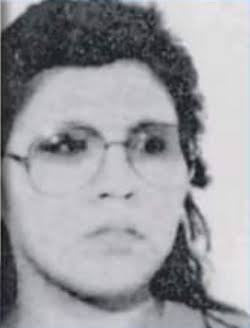
Calinda Waterhen, a 22-year-old Indigenous woman whose Cree name was Nemihkeepakow iskwew, or “Dancing Leaves Woman,” dreamed of becoming a teacher. Quiet and determined, she loved reading true-story books, watching her favorite TV show "Happy Days," and listening to the mellow, romantic music of the 1980s. More than anything, she longed for the simple warmth of being part of a family.
Her life, however, was cut tragically short on September 21, 1992, when she was murdered in Saskatoon, Saskatchewan.
Calinda was born in 1970 to very young parents who were members of the Makwa Sahgaiecan First Nation and struggled with alcohol and violence. Her difficult start in life led to her and her siblings being placed in the care of Social Services. For a time, Calinda lived with a foster family on the Flying Dust First Nation, where she was remembered as a welcome, quiet presence. Her foster sister, Evelyn Martel, recalled Calinda's free spirit and never doubted that she would achieve her goals. Like many young people, Calinda eventually moved to the city of Saskatoon, seeking her own path.
Her life ended just one day after another woman, 30-year-old Eva Taysup, was killed by the same man. For two years, Calinda's fate remained a mystery. The painful answer began to surface in October 1994, when a hunter discovered human remains in a shallow grave in a farmer’s field in a secluded area southwest of Saskatoon. The discovery of Calinda's body was the first of three. Within weeks, investigators unearthed the remains of Eva Taysup and 16-year-old Shelley Napope in the same area, all within a 60-meter radius.
The investigation quickly zeroed in on John Martin Crawford, a man with a violent history who was already known to police. Crawford had been released from prison in 1989 after serving part of a 10-year sentence for the 1981 manslaughter of Mary Jane Serloin in Lethbridge, Alberta. After his release, he moved to Saskatoon and continued to prey on vulnerable, predominantly Indigenous, women. Police identified him as a suspect in the disappearances and mounted a surveillance operation. The investigation culminated in his arrest in January 1995.
Crawford was charged with three counts of first-degree murder for the deaths of Calinda Waterhen, Eva Taysup, and Shelley Napope. During his trial, the court heard that Crawford had strangled Calinda. Unlike one of his other victims, her body was found intact. In 1996, a jury convicted Crawford of the first-degree murder of Shelley Napope and the second-degree murders of Calinda Waterhen and Eva Taysup. He was sentenced to three concurrent life sentences with no chance of parole for 25 years.
The case of John Martin Crawford, dubbed "The Lady Killer," drew criticism from Indigenous leaders and journalists for the lack of media attention and public outcry compared to cases involving white victims. Author Warren Goulding, in his book "Just Another Indian: A Serial Killer and Canada's Indifference," highlighted how the victims were often dismissed and their lives undervalued by society and the media. Calinda's father, Steve Morningchild, later spoke of his daughter's life and loss at memorials for missing and murdered Indigenous women, ensuring she would not be forgotten.
John Martin Crawford remained imprisoned until his death at the Regional Psychiatric Centre in Saskatoon on December 16, 2020. He was never charged in connection with other disappearances of women he was suspected of being involved in. For Calinda’s family, the pain of her loss remains fresh, a stark reminder of a life full of quiet promise that was brutally and senselessly extinguished.