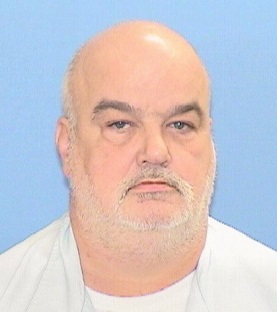
Lonnie David Franklin Jr.: The "Grim Sleeper" Serial Killer
Background
Lonnie David Franklin Jr. was an American serial killer who murdered women and girls in and around South Los Angeles over a period spanning more than two decades. Born on August 30, 1952, Franklin lived for years in the same South Los Angeles neighborhood where many of his victims were found. He worked for the City of Los Angeles as a sanitation employee and also spent time working as a garage attendant or mechanic at an Los Angeles Police Department facility. To people who knew him casually, he could appear to be an ordinary neighborhood resident, which helped conceal his crimes for many years.
Franklin eventually became known as the "Grim Sleeper." The nickname referred to what investigators initially believed was a long interruption in his murders between 1988 and the early 2000s. Later evidence raised the possibility that Franklin had committed additional crimes during this supposed dormant period, meaning the apparent "sleep" may never have been as complete as investigators first believed.
Pattern of Crimes
Franklin primarily targeted young Black women in South Los Angeles and nearby communities. Several victims had struggled with drug addiction or had connections to sex work, although this was not true of every victim. Their circumstances contributed to serious concerns that the disappearances and murders of vulnerable women in the area did not initially receive the attention that a developing serial-murder investigation required.
The locations where victims were recovered became an important feature of the case. Bodies were repeatedly abandoned in alleys, dumpsters, bushes, or beneath discarded objects. Eight of the ten women and girls Franklin was eventually convicted of murdering were shot with a .25-caliber firearm. Several of the shooting victims had also been strangled, while two later victims were killed by strangulation rather than gunfire. Ballistics testing eventually demonstrated that the same firearm had been used in a number of the early murders, helping investigators understand that individual killings previously treated as separate crimes were connected.
Confirmed Murder Victims
The exact time of death could not be established independently from the discovery date in every case. The dates below therefore reflect verified homicide records and official recovery dates. Where contemporary records disagree about a discovery date, that uncertainty is specifically noted rather than presenting an uncertain date as fact.
- Debra Ronette Jackson — August 10, 1985 — Vermont-Slauson, Los Angeles: Jackson, 29, was found in an alley near West Gage Avenue. She had been shot three times in the chest. Her death became the earliest murder for which Franklin was ultimately convicted and one of the cases later connected to the series through firearms and forensic evidence.
- Henrietta Wright — August 12, 1986 — Hyde Park, Los Angeles: Wright, 34, was found in an alley near the 2500 block of West Vernon Avenue. She had suffered multiple gunshot wounds, and her body had been concealed beneath a discarded mattress. Investigators believed she may have been killed somewhere else before being left in the alley.
- Barbara Ware — January 10, 1987 — Central-Alameda, Los Angeles: Ware, 23, was found in the 1300 block of East 56th Street. She had been shot in the chest and left among discarded material. A witness telephoned police after observing what appeared to be a body being dumped and provided investigators with the license plate number of a van connected to the incident.
- Bernita Rochelle Sparks — April 15-16, 1987 — Gramercy Park, Los Angeles: Sparks, 26, was recovered from a trash bin near the 9400 block of South Western Avenue. She had been shot and had suffered additional injuries. Homicide archives record April 15 in connection with her death, while Los Angeles County prosecutors later listed April 16 as the date her body was discovered. Because the official records differ by one day, the distinction is important when describing the case.
- Mary Katherine Lowe — October 31-November 1, 1987 — Gramercy Park, Los Angeles: Lowe, 26, disappeared around Halloween and was found in an alley in the 8900 block of Western Avenue. She had been shot with a small-caliber firearm and her body had been concealed near vegetation. Historical homicide records use October 31 in some accounts, while the Los Angeles County District Attorney listed November 1 as the discovery date.
- Lachrica Denise Jefferson — January 30, 1988 — Westmont, Los Angeles County: Jefferson, 22, was found in the 2000 block of West 102nd Place. She had been shot in the chest, and her body was partially concealed in the alley. Ballistics evidence connected her killing to the series of murders attributed to the same offender.
- Alicia "Monique" Alexander — September 11, 1988 — Vermont Square, Los Angeles: Alexander, 18, was found in an alley near 43rd Place and Western Avenue. She had been shot and her body had been concealed beneath discarded material. Her murder marked the last of the seven closely spaced killings between 1985 and 1988 for which Franklin was ultimately convicted.
- Princess Cheyanne Berthomieux — March 2002 — Inglewood: Berthomieux was only 15 years old. She had last been seen by her family on December 21, 2001, and was found strangled and beaten in shrubbery beside an Inglewood alley. Records disagree about whether her body was recovered on March 9 or March 19, 2002; later Los Angeles homicide records use March 19, while an earlier county record listed March 9. Her precise date of death remains less certain because of the period between her disappearance and the recovery of her body.
- Valerie Louise McCorvey — July 11, 2003 — Westmont, Los Angeles County: McCorvey, 35, was found on Denker Avenue between 108th and 109th streets. She had been strangled. Her killing demonstrated that the offender responsible for the earlier murders was apparently active again years after the last known attack of the 1980s.
- Janecia Lavette Peters — January 1, 2007 — Gramercy Park, Los Angeles: Peters, 25, was found shot to death near the 9500 block of South Western Avenue. Her body had been placed inside a plastic trash bag in a dumpster. Investigators later recovered a .25-caliber semiautomatic firearm from Franklin's home and determined that the weapon had been used to kill Peters.
Enietra Washington: The Survivor
One of the most important witnesses in the case was Enietra Margette Washington, who survived an attempted murder on November 20, 1988. Washington accepted a ride from a man driving an orange or rust-colored Ford Pinto. After driving into an isolated area of South Los Angeles, Franklin shot her in the chest and sexually assaulted her. She was also photographed during the attack before being left for dead. Despite the serious gunshot wound, Washington survived and was able to provide investigators with a description of both her attacker and his vehicle.
The bullet recovered from Washington was consistent with the weapon associated with the earlier serial killings. More than two decades later, after Franklin's arrest, investigators found a photograph of Washington among photographs stored at his property. She ultimately identified Franklin and gave powerful testimony at his trial. Franklin was convicted not only of the ten murders but also of the attempted, willful, deliberate, and premeditated murder of Washington.
The Investigation and Familial DNA Breakthrough
For years, investigators had physical evidence linking several murders but could not identify the person whose DNA appeared at crime scenes. The decisive break came in 2010 through California's familial DNA searching program. Rather than finding Franklin himself in the state's criminal DNA database, forensic specialists detected similarities between the unidentified killer's DNA and the DNA profile of Franklin's son, who had entered the database following an unrelated felony conviction.
Investigators examined the family connection and began focusing on Lonnie Franklin. Police then placed him under surveillance so that they could obtain an abandoned DNA sample without alerting him. On July 5, 2010, Franklin attended a gathering at a pizza restaurant. An undercover investigator collected discarded items from his table, including pizza crust and other material that could contain saliva. Laboratory testing produced the match detectives had been seeking: Franklin's DNA matched evidence associated with the serial murders.
Police arrested Franklin on July 7, 2010. Searches of his South Los Angeles house and garage produced an enormous collection of evidence, including firearms and hundreds of photographs of women. Investigators subsequently worked to identify the women appearing in the photographs and examined numerous unsolved murders and missing-person cases to determine whether Franklin might have had additional victims.
Trial, Conviction, and Sentence
Franklin's criminal trial finally began years after his arrest. Prosecutors presented a combination of DNA evidence, ballistics evidence, photographs, physical evidence recovered from Franklin's property, and testimony from Enietra Washington. The prosecution argued that the evidence showed a continuing pattern in which Franklin selected vulnerable women, attacked them, and abandoned their bodies in isolated locations around South Los Angeles.
On May 5, 2016, a Los Angeles jury convicted Lonnie David Franklin Jr. of ten counts of first-degree murder and one count of attempted murder. Jurors also found the multiple-murder special circumstance allegation true. During the penalty phase, prosecutors introduced evidence involving additional violent crimes and other deaths they believed could be connected to Franklin, reinforcing investigators' suspicion that the ten murder convictions did not necessarily represent the complete number of his victims.
Franklin was formally sentenced to death on August 10, 2016. He was transferred to California's death row at San Quentin State Prison. On March 28, 2020, Franklin was found unresponsive in his cell and was pronounced dead at the age of 67. He died before the automatic appeal of his death sentence could be completed.
Legacy of the Grim Sleeper Case
The Franklin investigation became significant for reasons extending beyond the identity of one serial killer. The case demonstrated the potential of familial DNA searching, a technique capable of identifying a suspect indirectly through the genetic profile of a close relative. It also forced renewed examination of how law enforcement, news organizations, and the wider community responded to the murders of Black women in South Los Angeles during a period of extraordinary violence.
The name "Grim Sleeper" describes the apparent gap between known murders, but it can obscure the lives of the people who were killed. Debra Jackson, Henrietta Wright, Barbara Ware, Bernita Sparks, Mary Lowe, Lachrica Jefferson, Alicia Alexander, Princess Berthomieux, Valerie McCorvey, and Janecia Peters were the ten victims whose murders resulted in Franklin's conviction. Enietra Washington survived and helped provide the eyewitness evidence that connected the decades-old investigation to the man eventually held responsible. Although Franklin died in prison in 2020, investigators have continued to regard the possibility of additional victims as an important unresolved part of the case.