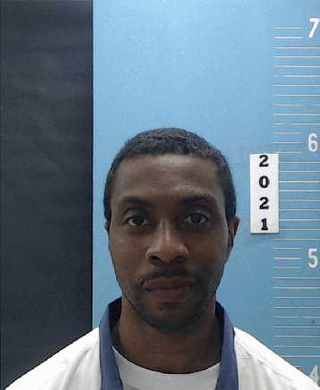
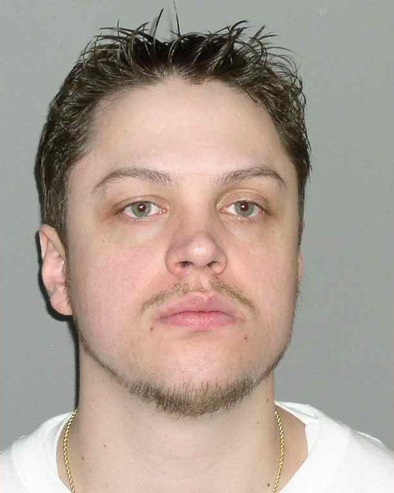
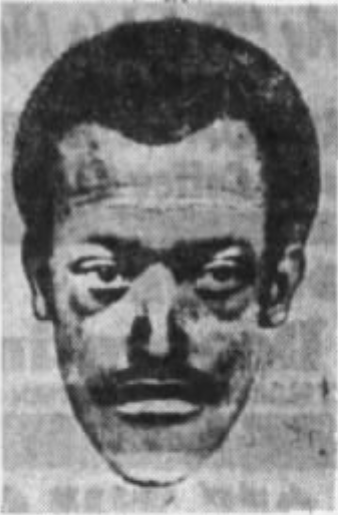
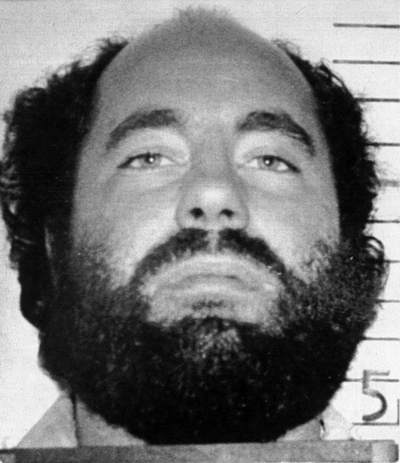
Richard “Babyface” Jameswhite
Background and Early Violence
Richard Jameswhite was a Brooklyn gang member and fugitive gunman who became known by the nickname “Babyface” because of his youthful appearance, short stature, and slight build. Born in 1973, Jameswhite was still a teenager when police began associating him with shootings, robberies, gang disputes, and drug-related violence in New York City. Authorities eventually described him as an exceptionally dangerous offender who was willing to open fire with little provocation.
Jameswhite’s documented violence began after his brother, Glester Jameswhite, was killed on a street in East Flatbush, Brooklyn, in January 1991. Richard reportedly believed that 19-year-old Kevin Smith had participated in his brother’s death. On February 19, 1991, Jameswhite allegedly shot Smith in an act of retaliation. Smith survived, and Jameswhite was arrested for attempted murder. However, he was released on bail and fled rather than appear in court.
After becoming a fugitive, Jameswhite associated with the Parkside Gang, a Brooklyn group that operated near the southern end of Prospect Park. Police said members of the gang committed robberies, targeted drug dealers, and became involved in violent disputes over drugs, money, and loyalty. Jameswhite’s reputation for sudden and unpredictable gunfire made him feared even by people within his own criminal circle.
The Brooklyn Murder Series
Between 1992 and 1993, New York investigators linked Jameswhite to a succession of fatal shootings in Brooklyn. Some appeared to involve gang rivalries or revenge, while others were connected to disputes within the drug trade. Police publicly identified five men killed during this period and later sought Jameswhite in connection with a sixth Brooklyn homicide.
On March 29, 1992, 22-year-old Javier Avila was shot and killed in Brooklyn. Investigators identified Jameswhite as the suspected gunman. Several months later, on August 24, 1992, 27-year-old Omark Dee was fatally shot. Police again attributed the killing to Jameswhite as his reputation for armed violence continued to grow.
On January 6, 1993, 21-year-old Fitzroy Reid was killed in another Brooklyn shooting connected to Jameswhite. By this time, Jameswhite had been avoiding capture for nearly two years. Detectives circulated information about him among other police departments because he was known to travel outside New York when authorities came close to finding him.
The Ocean Avenue Double Murder
One of the most notorious attacks attributed to Jameswhite occurred on May 1, 1993, near St. Paul’s Court and Ocean Avenue in Flatbush. According to police, Jameswhite sat on the handlebars of a bicycle while an accomplice pedaled through the neighborhood. Armed with a handgun in each hand, he allegedly opened fire on a group of men.
Eighteen-year-old Ryan Cambridge and 21-year-old Dodson Sparman were killed in the barrage. Two additional men were wounded. The image of the youthful-looking fugitive riding a bicycle while firing two weapons became one of the defining accounts of Jameswhite’s criminal career. Investigators believed the double homicide grew out of gang or drug-related hostilities.
Robberies and Additional Allegations
Jameswhite was also suspected of participating in an armored-car robbery in Flatbush during April 1993. The robbers escaped with approximately $101,000 after exchanging gunfire with armed guards. During the confrontation, New York City Transit Authority employee Robert Singleton was struck and killed by a stray bullet. Jameswhite was publicly identified as a suspected participant in the robbery, although the available record does not establish that he was convicted of Singleton’s death.
In September 1993, Jameswhite and other alleged gang members reportedly entered a Brooklyn apartment intending to rob drug dealers. Instead, they encountered two teenage girls, who were sexually assaulted. When detectives later accompanied one of the victims through the neighborhood in an effort to locate the attackers, Jameswhite allegedly spotted them, opened fire, and escaped in a vehicle.
By that time, police described Jameswhite as a suspect in at least five Brooklyn murders, numerous shootings, armed robberies, and sexual assaults. Law-enforcement agencies in Philadelphia, Baltimore, Boston, Rochester, Washington, Toronto, and other cities received information about him because investigators believed he moved frequently along the East Coast.
Claims of Supernatural Protection
People who knew Jameswhite told investigators that he believed he could not be captured or killed. He reportedly claimed that he had paid an Obeah practitioner in Jamaica to make him invisible to police and protected from bullets. Accounts from the period stated that he sometimes sent clothing to Jamaica so it could be treated as part of the supposed protection ritual.
Police believed this conviction contributed to his reckless behavior. Jameswhite reportedly acted as though ordinary consequences did not apply to him and showed little fear during shootings or confrontations. Detectives warned that he was extremely dangerous and likely to fire whenever he felt threatened, challenged, or disrespected.
The Murder of Anthony Maclin
Jameswhite’s flight from authorities ended after a minor traffic accident in DeKalb County, Georgia, on April 28, 1994. Jameswhite and his companion, Devon Brown, were entering the parking lot of a restaurant when their Honda was involved in a collision with a vehicle occupied by Anthony Maclin and Maclin’s fiancée.
Because Jameswhite and Brown were fugitives, they repeatedly asked the couple not to contact police. They offered to pay for the damage, and Jameswhite temporarily left the area in an effort to obtain enough money to settle the dispute. The discussion nevertheless became increasingly hostile.
When Maclin’s fiancée briefly turned away, she heard gunshots. She turned and saw Jameswhite holding Maclin from the side while Brown pointed a pistol. Maclin fell to the ground, and Jameswhite fired additional shots. Maclin was struck multiple times in the torso and died from his wounds.
Jameswhite and Brown fled in their vehicle, abandoned it several miles away, and attempted to escape on foot. Police pursued them to a nearby apartment complex. Jameswhite surrendered and was taken into custody while carrying two handguns and a switchblade knife. Ballistics testing connected one of the recovered weapons to bullets and cartridge casings found at the murder scene. Brown initially escaped but was arrested the following day.
Confirmed and Publicly Identified Victims
- Javier Avila, 22 — Killed on March 29, 1992, in Brooklyn, New York. Police identified Jameswhite as the suspected gunman.
- Omark Dee, 27 — Killed on August 24, 1992, in Brooklyn, New York. His shooting was among the murders publicly attributed to Jameswhite by investigators.
- Fitzroy Reid, 21 — Killed on January 6, 1993, in Brooklyn, New York. Authorities linked the fatal shooting to Jameswhite.
- Ryan Cambridge, 18 — Killed on May 1, 1993, near St. Paul’s Court and Ocean Avenue in Flatbush, Brooklyn. He was one of two men killed when Jameswhite allegedly fired from the handlebars of a moving bicycle.
- Dodson Sparman, 21 — Killed on May 1, 1993, near St. Paul’s Court and Ocean Avenue in Flatbush, Brooklyn. He died in the same shooting that killed Ryan Cambridge and wounded two other men.
- Robert Singleton — Killed during an armored-car robbery in April 1993 in Flatbush, Brooklyn. Singleton, a New York City Transit Authority employee, was struck by a stray bullet during a gun battle. Jameswhite was suspected of participating in the robbery, but his responsibility for Singleton’s death was not established by a murder conviction.
- Anthony Maclin — Fatally shot on April 28, 1994, following a minor vehicle collision in a restaurant parking lot in DeKalb County, Georgia. Jameswhite was convicted of Maclin’s murder.
Reported Victim Count
Contemporary police accounts described Jameswhite as being wanted or investigated in connection with as many as 15 murders committed between 1992 and 1994. The suspected killings were reported in New York, Connecticut, Pennsylvania, and Georgia. However, complete public records identifying all 15 alleged victims by name and date are not readily available.
The strongest publicly documented cases are the five named Brooklyn killings, the suspected death of Robert Singleton during the armored-car robbery, and the Georgia murder of Anthony Maclin. Jameswhite was ultimately convicted only for Maclin’s murder. The remaining deaths were allegations or investigative links rather than separate murder convictions.
Trial, Conviction, and Sentence
Jameswhite and Devon Brown were indicted in Georgia on June 23, 1994, on charges of malice murder and felony murder in the death of Anthony Maclin. Their joint trial began on December 5, 1994. Prosecutors relied on eyewitness testimony, the circumstances of the flight, and ballistics evidence linking a gun carried by Jameswhite to the shooting.
On December 12, 1994, both defendants were found guilty of malice murder and felony murder. The felony-murder verdict was vacated under Georgia law because it arose from the same homicide, and Jameswhite received a life sentence for malice murder. He challenged the sufficiency of the evidence and argued that he should have been tried separately from Brown, but the Supreme Court of Georgia affirmed the conviction in 1997.
Legacy of the Case
Richard Jameswhite’s case differed from that of a conventional predatory serial killer. His alleged murders were primarily shootings committed during gang disputes, robberies, drug conflicts, revenge attacks, and spontaneous confrontations. The victims were generally men associated with the environments in which Jameswhite operated or people who crossed his path during violent criminal activity.
Despite his young age, Jameswhite became the target of a multistate manhunt and was portrayed by police as one of Brooklyn’s most unpredictable fugitives. His youthful appearance contrasted sharply with the brutality attributed to him. Although authorities associated him with as many as 15 deaths, his only clearly documented murder conviction resulted from the impulsive killing of Anthony Maclin after an otherwise minor parking-lot collision.