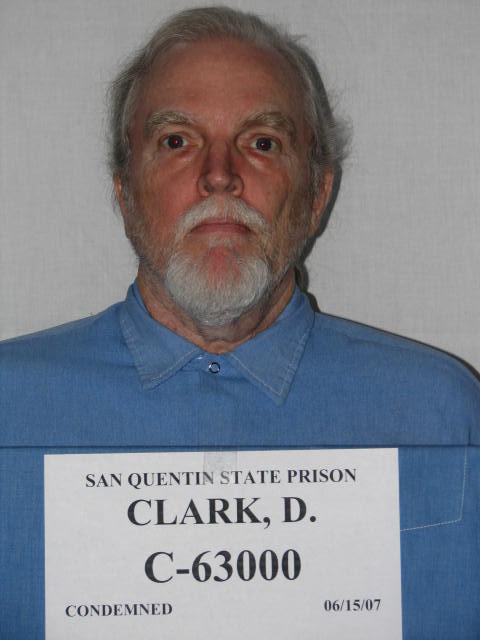
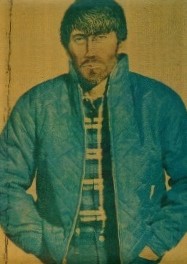
Douglas Daniel Clark – The Sunset Strip Killer
Douglas Daniel Clark was an American serial killer whose 1980 murder spree in the Los Angeles area became known as the Sunset Strip killings. Clark and his girlfriend, Carol Mary Bundy, became collectively known as the "Sunset Strip Killers," although the six murders for which Clark was convicted were attributed directly to him. His victims included teenage girls, young women, and women working as prostitutes in and around Hollywood. Clark's crimes were distinguished by shootings with small-caliber handguns, sexual violence, postmortem sexual acts, mutilation, and his disturbing practice of discussing or boasting about the killings afterward.
Clark was ultimately convicted of six counts of first-degree murder. Evidence introduced during his trial also connected him to additional unidentified homicide victims who were not included among the six murder counts. He received six death sentences in 1983 and remained under a sentence of death in California until he died in 2023.
Clark and Carol Bundy
Clark met Carol Bundy in December 1979 at a country-western nightclub in the Los Angeles area. Bundy was a vocational nurse, and the two developed an intense relationship in which violent and increasingly disturbing sexual fantasies became a recurring subject. By early 1980, Clark was periodically living with Bundy.
In April 1980, Bundy purchased two .25-caliber Raven semiautomatic pistols after Clark selected the weapons at a Van Nuys pawnshop. Bundy later testified that Clark claimed he could not legally purchase the guns himself. Clark had access to both weapons and was known to carry one or both of them.
The .25-caliber pistols became important pieces of evidence because multiple victims were killed with .25-caliber bullets. Investigators later recovered the two Raven pistols hidden in the boiler-room area of Clark's workplace.
The Attack on Charlene A.
Before the known murders began, Clark was accused of a violent attack against a woman identified in court records as Charlene A. At approximately 10:00 p.m. on April 27, 1980, Charlene was on Sunset Boulevard when Clark approached her in a blue station wagon. She entered the vehicle after the two discussed a sexual transaction.
Once she was inside, Clark suddenly began stabbing her repeatedly. Charlene suffered wounds to her back, neck, chest, stomach, arms, and hand. During the struggle, she grabbed the knife blade and suffered severe tendon injuries. Despite her wounds, she managed to open the vehicle door, escape, and survive. She later identified Clark from a photographic lineup and again identified him in court.
Clark was originally convicted of attempted murder and mayhem for the attack, although those convictions were reversed by the California Supreme Court in 1992. His six murder convictions and death sentence remained intact.
The Murder of Marnette Comer
Marnette Comer was a 17-year-old runaway from Sacramento who had been living in Southern California. Her sister last saw her on May 21, 1980. At the time, Marnette was wearing blue jeans and a pink shirt bearing the words "Daddy's Girl."
According to Carol Bundy's testimony, Clark later told her that he had killed Comer on May 31, 1980. Clark reportedly referred to the victim as "Foothill" because he had disposed of her body near Foothill Boulevard. Bundy said Clark told her he had picked Comer up on Sunset Boulevard while driving Bundy's Datsun and then shot her several times.
On June 30, 1980, Comer's body was discovered in a dark ravine off Foothill Boulevard near a freeway. The body had been there long enough to become significantly decomposed and mummified. An autopsy established that she had been shot three times in the chest area, and two .25-caliber bullets were recovered.
A particularly important connection between the murders emerged later. The jeans and pink "Daddy's Girl" shirt that Marnette had been wearing when her sister last saw her were eventually found wrapped around the severed head of another victim, Exxie Wilson.
The Murders of Cynthia Chandler and Gina Marano
Cynthia "Cindy" Chandler, 16, and her 15-year-old half-sister Gina Marano were together during the days preceding their murders. On June 10, 1980, a truck driver encountered the two girls hitchhiking and later reported that he had given Cindy a business card containing telephone numbers.
Investigators determined that the girls were probably killed sometime on June 11 or during the early morning hours of June 12, 1980. Carol Bundy later testified that Clark told her he had picked the girls up on June 11. According to Bundy's account, Clark was primarily interested in Chandler but allowed both teenagers into the vehicle when Marano would not leave her stepsister.
Both teenagers were shot. Gina Marano suffered two gunshot wounds to the head. Cynthia Chandler was shot in the head and chest. Evidence indicated that the girls were killed somewhere other than the location where their bodies were eventually abandoned.
At approximately 1:30 p.m. on June 12, a highway worker discovered their bodies near a freeway ramp close to Forest Lawn cemetery in the Los Angeles area. The absence of large amounts of blood at the discovery site and other physical evidence led investigators to conclude that the bodies had been transported there after the murders.
Clark's conduct after the killings provided investigators with additional evidence. He telephoned people whose telephone numbers or contact information had been associated with the girls. In one call, a man identifying himself as a police officer claimed to be investigating the murders.
On July 24, Clark telephoned one of the girls' acquaintances, Mindy Cohen. During the frightening call, the caller identified himself as the killer, described details of the Chandler and Marano murders, and threatened Cohen. She later identified Clark's voice. Telephone records established that the July 24 call originated from the apartment Clark shared with Bundy shortly before Clark arrived at work.
The Murders of Karen Jones and Exxie Wilson
Karen Jones, 24, and Exxie Wilson, 20, were together during the early morning hours of June 23, 1980. At approximately 2:00 to 2:30 a.m., a police officer encountered Jones on Sunset Boulevard and warned her against loitering. A nearby resident subsequently heard a scream.
At approximately 3:15 a.m., Karen Jones was found dead beside a curb. She had been shot in the head at close range. A .25-caliber jacketed bullet was recovered from her skull. The coroner determined that she had died sometime between midnight and approximately 2:00 a.m. on June 23.
At approximately 7:15 that morning, the decapitated body of Exxie Wilson was discovered in the parking lot of a restaurant. Wilson had also been killed by a .25-caliber gunshot to the back of the head. The medical evidence indicated that her head was most likely removed after death, or while she was unconscious and dying.
Four days later, at approximately 1:00 a.m. on June 27, a wooden box was discovered in an alley. Wilson's severed head was inside. It had apparently been frozen before being discarded and was wrapped in blue jeans and the pink "Daddy's Girl" shirt that had belonged to Marnette Comer.
Bundy later testified that Clark returned home early on June 23 and told her he had killed two women. According to her testimony, Clark said he initially took Wilson away in his vehicle and killed her, then went back for Jones because he feared Jones could identify him. Bundy testified that she later saw Wilson's frozen head and eventually helped Clark obtain the wooden box used to dispose of it.
Jane Doe 18 – The "Water Tower" Victim
Clark's sixth convicted murder victim has never been publicly identified and was designated Jane Doe 18. Clark reportedly referred to her as "Water Tower."
On August 26, 1980, a worker inspecting water towers near Sierra Highway in the Antelope Valley discovered scattered human remains. The young woman had been dead for approximately one to two months. A clump of blonde hair was recovered near the remains.
The cause of death was a gunshot wound to the back of the head. A .25-caliber jacketed bullet was recovered from her skull, once again linking the killing to the type of weapon used against Clark's other victims.
According to Bundy, sometime in late July or early August Clark told her he had picked up the unidentified woman in Hollywood, killed her inside the Datsun, and disposed of her body near water towers in a remote area. The precise date of Jane Doe 18's death has never been established.
Victims for Whose Murders Clark Was Convicted
- Marnette Comer, 17 – Reportedly killed May 31, 1980. Her body was discovered June 30, 1980, in a ravine off Foothill Boulevard in the Los Angeles area. She had been shot three times in the chest. Clark was convicted of her murder.
- Cynthia Leigh "Cindy" Chandler, 16 – Killed sometime June 11 or during the early morning hours of June 12, 1980. Her body was found June 12 near a freeway ramp by Forest Lawn cemetery in Los Angeles. She had been shot in the head and chest. Clark was convicted of her murder.
- Gina Marano, 15 – Killed sometime June 11 or during the early morning hours of June 12, 1980. She was found with Chandler near Forest Lawn cemetery on June 12. Marano had been shot twice in the head. Clark was convicted of her murder.
- Karen Jones, 24 – Killed during the early morning hours of June 23, 1980. Her body was discovered beside a curb at approximately 3:15 a.m. She died from a close-range gunshot wound to the head. Clark was convicted of her murder.
- Exxie Wilson, 20 – Killed between approximately midnight and 2:00 a.m. on June 23, 1980. Her body was discovered later that morning in a restaurant parking lot. She had been shot in the back of the head and decapitated. Her head was found in a wooden box in an alley on June 27. Clark was convicted of her murder.
- Jane Doe 18, unidentified young woman – Exact date of death unknown, probably during the summer of 1980. Her remains were discovered August 26, 1980, near Sierra Highway in the Antelope Valley, close to water towers. She had been shot in the back of the head with a .25-caliber weapon. Clark was convicted of her murder.
Additional Uncharged Murder – "Cathy," Jane Doe 28
Another unidentified woman, referred to as "Cathy" and designated Jane Doe 28 in Clark's court proceedings, was strongly connected to Clark and Bundy but was not one of the six victims named in Clark's murder convictions.
The victim was estimated to have been approximately 17 to 23 years old. Her skeletal remains were discovered near a creek bed in the Saugus-Newhall area in early March 1981. Investigators recovered portions of her skeleton, including her skull. A bullet wound behind the right ear established that she had been murdered.
The wound was similar to those inflicted upon several of Clark's known victims. Evidence presented during Clark's proceedings included writings attributed to Clark and statements from Bundy describing the killing of a young woman called Cathy. The killing was believed to have taken place near the end of July 1980, although an exact date has never been established.
Bundy eventually pleaded guilty to a second murder involving an unidentified woman whose remains were discovered in a rural canyon. Clark was not formally convicted of Jane Doe 28's murder, so she is more accurately described as an additional victim strongly linked to Clark and Bundy rather than one of Clark's six convicted victims.
Additional Uncharged Murder – Jane Doe 99
An additional unidentified woman known as Jane Doe 99, or the Malibu Jane Doe, was also linked to Clark during the penalty phase of his trial. Her exact date of death remains unknown, but evidence placed the killing during July 1980.
On August 28, 1980, her partially mummified remains were discovered approximately 30 feet down an embankment in the remote Tuna Canyon area near Malibu. She was approximately 20 years old, about 5 feet 3 inches tall, and had blonde hair. She had been killed by a gunshot wound to the left side of her forehead.
Fragments recovered from her skull were from a .25-caliber bullet. Although there was not enough material for a definitive ballistics identification, the characteristics were similar to ammunition associated with other killings in the case.
Bundy testified that Clark had pointed toward the Malibu area while they were driving and told her that he had left a "package" there, a term he reportedly used to describe a dead body. Evidence concerning Jane Doe 99 was presented as aggravating evidence during Clark's death-penalty proceedings. The California Supreme Court later concluded that the evidence was sufficient for a rational jury to determine beyond a reasonable doubt that Clark had committed the murder. Nevertheless, Jane Doe 99 was not one of the six homicide counts for which Clark was formally convicted.
Possible Other Victims
Over the years, other unidentified California homicide victims have occasionally been suggested as possible victims of Clark and Bundy, including two unidentified women whose remains were found near Valencia in January 1980. Those cases should be treated cautiously. They were not included among Clark's six murder convictions, and they were not among the two additional uncharged killings specifically examined in detail during the California Supreme Court's review of his case. They should therefore not be presented as confirmed Clark victims without additional evidence.
The Murder of Jack Murray and the Collapse of the Killing Spree
John Robert "Jack" Murray was Carol Bundy's former lover and was not one of the six people Douglas Clark was convicted of murdering. Murray's death, however, directly contributed to the exposure of Clark and Bundy.
Bundy had revealed information about the Sunset killings to Murray. Fearing that he might report what he knew to authorities, Bundy killed him in August 1980 and decapitated his body. Murray's remains were discovered in his van.
On August 11, 1980, Bundy contacted police and confessed to killing Murray. During her confession she also accused Clark of committing the Sunset murders and admitted her own involvement in concealing evidence. Clark was taken into custody that same day.
The Evidence Against Clark
The prosecution's case against Clark was built from a large combination of physical and circumstantial evidence. Investigators recovered two .25-caliber Raven pistols that had been hidden near the boiler room at Clark's workplace. Clark had previously admitted handling the weapons and regularly carrying a .25-caliber pistol.
Blood evidence found in a Buick station wagon used by Clark was consistent with blood characteristics from Karen Jones, while other blood found in the vehicle shared characteristics with Exxie Wilson. Investigators also examined a rental garage Clark had used in Burbank. Dark stains on the concrete reacted positively in presumptive tests for blood, including a long smear suggesting that a bloody object or body had been dragged across the floor.
A bloody boot impression found in the garage was consistent with boots seized from Clark. Clark's own writings after his arrest also became significant evidence. Prosecutors argued that some demonstrated knowledge of details about the murders that would be difficult for an uninvolved person to possess.
Telephone evidence was especially damaging. Clark had called people connected with Chandler and Marano, sometimes pretending to be a police investigator. Mindy Cohen identified Clark's voice as that of the man who telephoned her and claimed responsibility for killing the teenagers before threatening to make her another victim.
Trial and Conviction
Clark insisted that he was innocent. His defense was that Carol Bundy and Jack Murray had committed the Sunset killings and that Bundy murdered Murray before attempting to frame Clark. Bundy's testimony, physical evidence, telephone records, ballistics evidence, Clark's writings, and testimony from other witnesses severely undermined that theory.
The trial became lengthy and contentious. Clark repeatedly clashed with his attorneys and the judge and at various times sought to represent himself. The proceedings included months of testimony concerning the murders, Clark's sexual behavior, the weapons, vehicles, telephone calls, physical evidence, and statements allegedly made by Clark before and after the killings.
On January 28, 1983, Clark was found guilty of six counts of first-degree murder involving Marnette Comer, Cynthia Chandler, Gina Marano, Karen Jones, Exxie Wilson, and Jane Doe 18. The jury also found multiple-murder special-circumstance allegations true.
Death Sentence
On March 16, 1983, Clark was formally sentenced in Los Angeles County Superior Court to six consecutive death sentences for the six first-degree murders. He was transferred to California's death row later that month.
Clark continued to deny responsibility for the murders. His case went through decades of appeals. In 1992, the California Supreme Court reversed the attempted-murder and mayhem convictions arising from the attack on Charlene A., but affirmed Clark's six murder convictions and his death sentence.
Clark remained condemned for approximately four decades. California did not execute him, and he continued pursuing legal challenges to his conviction and sentence well into the twenty-first century.
Death in Prison
Douglas Daniel Clark died on October 11, 2023, at the age of 75. He had been housed on condemned status at San Quentin and was pronounced dead at an outside medical facility. California corrections officials reported that his death was from natural causes.
Carol Bundy had died in prison years earlier, on December 9, 2003. She had been sentenced to 52 years to life after pleading guilty to two first-degree murders, including the killing of Jack Murray and her involvement in the murder of an unidentified woman.
Legacy of the Sunset Strip Murders
The Sunset Strip murders remain among the most disturbing serial homicide cases in Los Angeles history. The victims were frequently young, vulnerable, and living on the margins of society, circumstances Clark attempted to exploit. Yet the investigation eventually brought together witness identifications, telephone records, firearms evidence, blood evidence, vehicle evidence, Clark's own writings, and information supplied by Bundy.
Six murders were ultimately proved against Douglas Daniel Clark in court, while evidence connected him to additional unidentified victims. Several women associated with the case have never regained their names, leaving an unfinished aspect to the investigation decades after Clark's conviction and death.