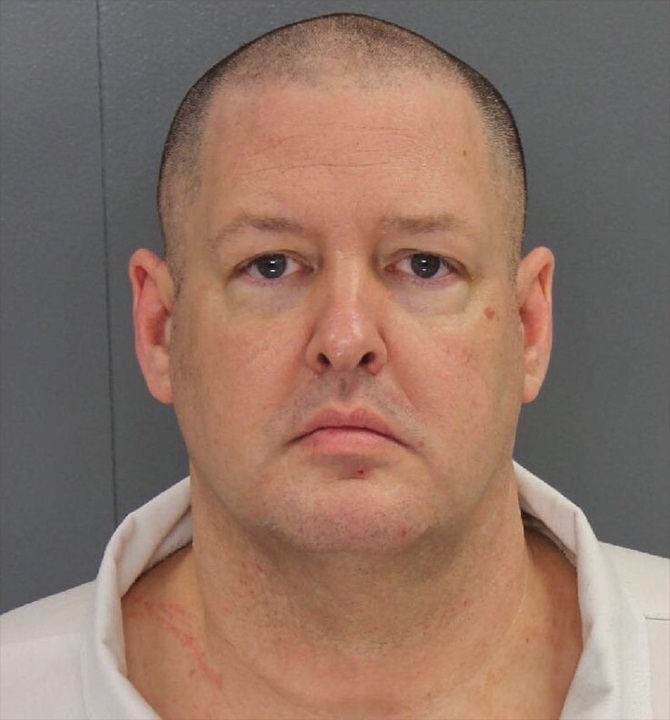
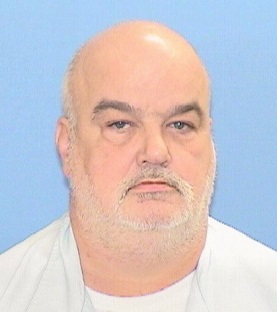
Hubert Geralds Jr.: The Englewood Strangler
Background
Hubert Geralds Jr., born November 13, 1964, is an American serial killer associated with a series of murders in the Englewood neighborhood on Chicago's South Side. His confirmed murder victims were five women killed between December 1994 and June 1995. Geralds became known as the "Englewood Strangler" because strangulation or suffocation was the central method used in the crimes. Many of the women he encountered were involved in sex work, used drugs, or lived in circumstances that made them especially vulnerable to predators operating in the neighborhood.
Geralds had spent time in prison before the murders. After living in New York, he was paroled from a New York prison on June 19, 1992. He was later convicted of residential burglary in Chicago and was paroled from an Illinois prison on October 29, 1994. Less than two months later, the first of the five murders ultimately attributed to him occurred.
The Englewood Murders
Geralds operated in and around Englewood, including an area of South Halsted Street that was known for street-level sex work. According to evidence and accounts developed during the investigation and prosecution, he commonly spent time with women while using crack cocaine or other drugs. He would get a woman alone or into an isolated location and then overpower her. The killings were committed through asphyxiation, generally by strangling or suffocating the victim. Investigators said the technique could leave fewer of the obvious external injuries that police normally associated with violent strangulation, complicating the early investigation of the deaths.
The murders occurred during a period when numerous women were being killed on Chicago's South Side. Several different offenders were eventually connected to murders in the same general area, making the investigation particularly difficult. Geralds was not responsible for every similar death in Englewood, an important fact that became especially clear when one murder for which he had originally been convicted was later proved to have been committed by another serial killer.
Confirmed Victims
- Doretha Withers - December 22, 1994 - age 37. Withers was killed in Chicago's Englewood area. Her death is recorded as December 22, 1994, and strangulation was identified as the method of killing. She was the earliest of the five women whose murders ultimately remained attributed to Geralds.
- Alonda Tart - March 14, 1995 - age 23. Tart died on March 14, 1995, in Chicago. She was strangled in Englewood and was only 23 years old. Her killing occurred almost three months after the death of Doretha Withers and demonstrated that the violence had continued into the spring of 1995.
- Joyce Wilson - March 26, 1995 - age 28. Wilson was killed on March 26, 1995. Her body was found in a truck on South Racine Avenue in Chicago. Geralds became especially significant to investigators in this case because he had personally reported Wilson's death to police. When detectives later began examining him in connection with Mary Blackman's death, they recognized his name from the Wilson investigation.
- Millicent "Peanut" Jones - June 12, 1995 - age 25. Jones died on June 12, 1995, in Chicago's Englewood neighborhood. She was 25 years old and died by asphyxiation associated with the same pattern of strangulation seen in Geralds' other confirmed murders. Her death came only days before the discovery that finally brought police directly to Geralds.
- Mary Blackman - June 17, 1995 - age 42. Blackman died on June 17, 1995. She was a friend of Geralds' sister, Angela Geralds. Her body was discovered in a trash bin in the Englewood area near South May Street. The cause of death was asphyxia by strangulation. Angela became suspicious of her brother and contacted police, providing the information that triggered the final stage of the investigation and Geralds' arrest.
The Attack on Clenshaw Hopes
One woman survived an attack attributed to Geralds and later became an important prosecution witness. Clenshaw Hopes testified about what happened on April 14, 1995. She and Geralds had been using crack cocaine and marijuana at her apartment in the 5700 block of South Elizabeth Street in Englewood. After leaving the apartment, the two separated while attempting to obtain more drugs.
Hopes said she was walking near an alley around 57th Street and Racine Avenue when she was suddenly grabbed from behind by the neck. The pressure caused her to lose consciousness. When she regained awareness, she was inside a van and Geralds was sexually assaulting her. Hopes managed to resist him, escape from the vehicle and make her way home, where she contacted police. Her survival provided investigators with something the murder victims could not: a witness who could identify her attacker and describe his method of overpowering women.
Arrest and Confessions
The critical break came after Mary Blackman's body was discovered on June 17, 1995. Geralds' sister told authorities that she believed her brother might have been connected to Blackman's death and described his violent behavior while using drugs. Detectives also realized that Geralds was the same man who had reported the discovery of Joyce Wilson's body several months earlier.
Geralds was arrested on June 18, 1995. During questioning, he confessed to several killings. Police said he admitted responsibility for Blackman's murder and then gave statements concerning the deaths of Joyce Wilson, Doretha Withers, Millicent Jones and Alonda Tart. He also confessed to the murder of another woman, Rhonda King. That last confession would later become one of the most significant problems in the prosecution.
The Rhonda King Wrongful Conviction
Geralds was originally convicted of six murders, not five. One of those victims was 18-year-old Rhonda King, who was found strangled on December 21, 1994. Geralds had confessed to killing King, and prosecutors initially treated her as another victim in the Englewood series.
The King conviction eventually proved to be wrong. In early 2000, another Chicago serial killer, Andre Crawford, confessed to King's rape and murder. Crawford supplied investigators with details that were considered substantially more convincing than Geralds' confession. DNA testing linked Crawford to the crime and excluded Geralds. On February 10, 2000, prosecutors moved to vacate Geralds' conviction for King's murder. Because the discovery raised serious concerns about the reliability of the interrogation process that had produced Geralds' confessions, prosecutors also vacated his other five murder convictions before proceeding against him again.
Rhonda King therefore should not be counted among Hubert Geralds' confirmed victims. Her case is an important part of the Geralds investigation because it demonstrated that more than one serial murderer was targeting vulnerable women in the same part of Chicago and showed that a confession, by itself, could produce a false solution to one of the cases.
Trial, DNA Evidence and Sentencing
Geralds went on trial in 1997 on the original collection of murder and assault charges. The prosecution relied on his statements, physical evidence and testimony concerning his attacks. DNA evidence connected him to multiple victims or attacks, while Clenshaw Hopes appeared in court and described surviving the assault against her.
The defense focused heavily on Geralds' intellectual functioning and psychological condition. Experts presented during the case placed his IQ in a very low range, and his attorneys argued that his limitations made him unusually vulnerable to suggestion during police questioning. Prosecutors disputed the extent of those limitations and argued that Geralds was capable of understanding and concealing his actions.
Geralds was convicted in 1997 and initially sentenced to death in January 1998. The later discovery that Andre Crawford had actually murdered Rhonda King forced prosecutors to undo that set of convictions. Geralds subsequently pleaded guilty to the other five murders. He received life imprisonment without the possibility of parole rather than another death sentence.
Significance of the Case
The Hubert Geralds case is notable not only because of the five murders but also because of what the investigation revealed about violence against marginalized women in Chicago during the 1990s. Numerous women involved in drug use or sex work were killed in and around Englewood, and similar victim profiles initially made it difficult for investigators to determine which deaths were connected to which offenders. Geralds was one of several violent men eventually associated with murders of women on Chicago's South Side.
The case also illustrates the danger of assuming that one suspected serial killer is responsible for every superficially similar crime. Geralds confessed to Rhonda King's murder and was convicted of it, yet biological evidence and Andre Crawford's detailed confession ultimately proved that the killing belonged to a different offender. Geralds' confirmed record therefore stands at five murdered women: Doretha Withers, Alonda Tart, Joyce Wilson, Millicent "Peanut" Jones and Mary Blackman, along with the attempted murder and sexual assault of survivor Clenshaw Hopes.