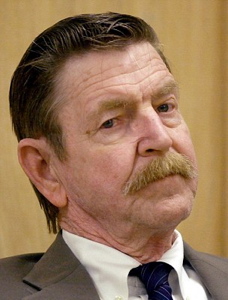
Lee Boyd Malvo and the Beltway Sniper Murders
Background and Association with John Allen Muhammad
Lee Boyd Malvo was born on February 18, 1985, in Kingston, Jamaica. He became internationally notorious for participating in the 2002 Beltway sniper attacks with John Allen Muhammad, an older man whom Malvo regarded as a father figure. Although Malvo is frequently described as a serial killer, the concentrated timing and continuous nature of the shootings have also led criminologists to classify him as a spree killer or mass murderer.
Malvo experienced an unstable childhood marked by frequent moves and separation from his parents. He met Muhammad in Antigua while still a teenager. Muhammad gradually gained considerable influence over him, providing attention, discipline and a sense of belonging that Malvo had lacked. Their relationship eventually became controlling and destructive. Prosecutors maintained that Muhammad trained Malvo to use firearms, conditioned him to follow orders and involved him in an increasingly violent plan.
By 2002, Muhammad and the 17-year-old Malvo were traveling across the United States in a blue 1990 Chevrolet Caprice. Investigators later discovered that the vehicle had been modified so that a shooter could lie inside its trunk and fire through a small opening near the license plate. This concealed firing position allowed the pair to attack people from a distance without immediately revealing where the shots had originated.
Killings Before the Washington-Area Attacks
The violence associated with Malvo and Muhammad began months before the attacks around Washington, D.C. Some earlier cases were connected through confessions, fingerprints, eyewitness accounts or firearms evidence, although not every killing resulted in a separate criminal conviction. The preliminary attacks demonstrated the pair's willingness to target people in homes, parking lots, businesses and other ordinary locations.
- Keenya Nicole Cook — February 16, 2002 — Tacoma, Washington: Cook, 21, was shot in the face after answering the door at her aunt's home. Her aunt had supported Muhammad's former wife during a bitter divorce and child-custody dispute, leading investigators to believe the aunt may have been the intended target. Malvo and Muhammad were identified as suspects, and Malvo later acknowledged responsibility for the shooting.
- Jerry Ray Taylor — March 19, 2002 — Tucson, Arizona: Taylor, 60, was practicing golf shots at the Fred Enke Golf Course when he was killed by a single long-distance rifle shot. Malvo confessed to the killing during a 2006 interview with Tucson investigators, although the case had previously lacked enough physical evidence to conclusively connect the pair to the crime.
- Claudine Lee Parker — September 21, 2002 — Montgomery, Alabama: Parker, 52, was closing the ABC Select Spirits store on Zelda Road when she and coworker Kellie Adams were shot during a robbery. Parker died from her wounds that night, while Adams survived. A fingerprint recovered from evidence at the scene was matched to Malvo, giving investigators an important link between the Alabama crime and the later sniper attacks.
- Hong Im Ballenger — September 23, 2002 — Baton Rouge, Louisiana: Ballenger, 45, was leaving her job at the Beauty Depot on Florida Boulevard when she was shot and robbed near her vehicle. Ballistics evidence connected the fatal bullet to the Bushmaster rifle later recovered from Muhammad and Malvo's car.
The Beginning of the Beltway Sniper Attacks
The attacks that made Malvo and Muhammad infamous began in the Washington metropolitan area in October 2002. The victims appeared to have little in common. They included men and women of different ages, occupations and ethnic backgrounds. Most were engaged in routine activities such as shopping, mowing grass, reading, cleaning a vehicle or pumping gasoline.
Because the victims seemed to be selected randomly, authorities initially had difficulty predicting where the shooters would strike next. Fear spread quickly through Maryland, Virginia and Washington, D.C. Residents avoided lingering outdoors, motorists crouched beside their vehicles while refueling and schools restricted outdoor activities. News reports described people moving in zigzag patterns through parking lots because no one knew when or where another shot might be fired.
The principal weapon was a Bushmaster XM-15 semiautomatic rifle chambered for .223-caliber ammunition. Many of the victims were struck by a single carefully aimed bullet. Muhammad and Malvo frequently selected firing positions that offered a quick escape route, then drove away before witnesses realized that the sound they had heard was gunfire.
Victims of the October 2002 Attacks
- James D. Martin — October 2, 2002 — Wheaton, Maryland: Martin, 55, was shot and killed in the parking lot of a Shoppers Food Warehouse on Randolph Road. His death occurred shortly after a bullet had been fired through the window of a nearby Michaels craft store without injuring anyone. Martin became the first person killed during the main Washington-area attacks.
- James L. “Sonny” Buchanan Jr. — October 3, 2002 — Rockville, Maryland: Buchanan, 39, was mowing grass near the Fitzgerald Auto Mall on Rockville Pike when he was shot from a distance. The attack occurred during the morning rush hour and was the first of several fatal shootings committed within a few hours.
- Prem Kumar Walekar — October 3, 2002 — Aspen Hill, Maryland: Walekar, 54, was a taxi driver who had stopped at a Mobil station near Aspen Hill Road and Connecticut Avenue. He was fatally shot while pumping gasoline into his cab.
- Sarah Ramos — October 3, 2002 — Silver Spring, Maryland: Ramos, 34, had gotten off a bus and was sitting on a bench outside the Leisure World Shopping Center when she was shot. She was reportedly reading while waiting for a ride when the bullet struck her.
- Lori Ann Lewis-Rivera — October 3, 2002 — Kensington, Maryland: Lewis-Rivera, 25, was vacuuming her minivan at a Shell gas station near Connecticut and Knowles Avenues when she was killed. The public nature of the shooting intensified fear that anyone performing an ordinary task could become the next victim.
- Pascal Emile Charlot — October 3, 2002 — Washington, D.C.: Charlot, 72, was walking near Georgia Avenue and Kalmia Road when he was shot during the evening. He was taken to a hospital but died less than an hour later. His death was the fifth fatal shooting committed by the pair that day.
- Dean Harold Meyers — October 9, 2002 — Prince William County, Virginia: Meyers, 53, was shot in the head while refueling his vehicle at a Sunoco station on Sudley Road near Manassas. His murder later became the basis of the capital-murder prosecution against John Allen Muhammad in Virginia.
- Kenneth Harold Bridges — October 11, 2002 — Spotsylvania County, Virginia: Bridges, 53, was a businessman and father who was shot while pumping gasoline at an Exxon station near Interstate 95 outside Fredericksburg. Witnesses initially had little information about the location of the shooter.
- Linda Gail Franklin — October 14, 2002 — Fairfax County, Virginia: Franklin, 47, was an intelligence analyst for the Federal Bureau of Investigation. She was helping load purchases into a vehicle outside a Home Depot at the Seven Corners Shopping Center when she was shot and killed. Malvo was later convicted of capital murder for her death.
- Conrad Everton Johnson — October 22, 2002 — Aspen Hill, Maryland: Johnson, 35, was a Montgomery County bus driver. He was standing near his bus on Grand Pre Road before beginning his morning route when he was shot. Johnson remained conscious long enough to provide information to emergency responders but died at a hospital later that morning. He was the final person killed in the Washington-area sniper attacks.
Surviving Shooting Victims
Several people survived attacks associated with the Washington-area rampage. On October 4, 2002, Caroline Seawell was shot in the back while loading purchases into her vehicle outside a Michaels craft store in Spotsylvania County, Virginia. She survived after receiving emergency medical treatment.
On October 7, 13-year-old Iran Brown was shot outside Benjamin Tasker Middle School in Bowie, Maryland. A handwritten Tarot card was found near the scene with threatening language directed at police. Brown suffered severe internal injuries but survived after undergoing extensive surgery.
On October 19, Jeffrey Hopper was shot outside a Ponderosa restaurant in Ashland, Virginia. A note discovered nearby directed police toward a telephone message in which the attackers referred to the earlier robbery and shooting in Montgomery, Alabama. That communication helped investigators connect Malvo's fingerprint from the Alabama crime scene to the expanding sniper investigation.
Extortion, Fear and the Investigation
Muhammad and Malvo attempted to communicate with investigators through written messages and telephone calls. Some communications demanded money and warned that additional people would be killed if authorities failed to follow instructions. The pair reportedly sought millions of dollars and wanted the money transferred through a prepaid banking card.
The investigation involved local police departments, state authorities, federal agents and other law-enforcement organizations. Officers initially focused on reports of white vans or box trucks seen near several locations. Those reports proved misleading and allowed Muhammad and Malvo's dark blue Chevrolet Caprice to travel through roadblocks without immediate detection.
The crucial break came when investigators traced a reference made by the shooters to the Montgomery, Alabama, liquor-store attack. Malvo's fingerprint had been found on a firearms magazine near that scene. Because he had previously been fingerprinted by immigration authorities, investigators were able to identify him. His connection to Muhammad then led authorities to search for Muhammad's Chevrolet Caprice.
Police issued a description and license-plate information for the vehicle. During the early morning hours of October 24, 2002, a truck driver spotted the Caprice parked at a rest area near Myersville, Maryland. A heavily armed tactical team surrounded the vehicle and arrested Muhammad and Malvo while they slept.
Evidence Recovered from the Vehicle
Inside the Caprice, investigators found the Bushmaster XM-15 rifle linked through ballistics testing to numerous shootings. They also discovered ammunition, communications equipment, maps and other material associated with the attacks. The back seat and trunk had been altered to create a concealed firing platform.
A hole near the rear license plate permitted the rifle barrel to be pointed toward a victim while the shooter remained hidden inside the trunk. The arrangement reduced the chance that witnesses would see a person carrying a rifle and allowed the pair to leave a crime scene without exiting the vehicle.
Malvo's Trial and Convictions
Malvo was first prosecuted in Virginia for the murder of Linda Franklin. The trial was moved to Chesapeake because of the enormous publicity surrounding the case. Prosecutors argued that Malvo had willingly participated in a campaign intended to terrorize the population and extort money. His defense attorneys contended that the teenager had been psychologically dominated and indoctrinated by Muhammad.
In December 2003, a jury convicted Malvo of capital murder and firearms charges. Although Virginia law permitted a death sentence at the time, the jury sentenced him to life imprisonment without parole. The fact that Malvo had been 17 during the crimes became central to later legal challenges concerning the punishment of juvenile offenders.
Malvo subsequently entered guilty pleas in additional Virginia cases. In October 2006, he pleaded guilty in Maryland to six counts of first-degree murder for the deaths of James Martin, James Buchanan, Prem Kumar Walekar, Sarah Ramos, Lori Lewis-Rivera and Conrad Johnson. He received six consecutive life sentences without the possibility of parole.
Confessions and Changing Accounts
Malvo gave different accounts of who had fired particular shots. During his original Virginia proceedings, he portrayed himself as the gunman in numerous attacks, partly in an effort to shield Muhammad from execution. He later testified that both men had acted as shooters and that some of his previous statements were false.
In testimony during Muhammad's 2006 Maryland trial, Malvo described an elaborate plan involving continued killings, attacks on police officers and an extortion demand. He said Muhammad envisioned creating widespread chaos and eventually using the money to establish a training operation for additional young recruits. Some aspects of this plan were based primarily on Malvo's testimony and were never carried out.
Malvo also described the intense psychological influence Muhammad exercised over him. In later interviews, he said Muhammad offered affection and approval while isolating him from other people. Malvo claimed that this manipulation distorted his judgment and transformed him into an obedient participant in the killings. These explanations did not erase his criminal responsibility, but they became important in later debates over his age, development and punishment.
Sentencing Developments
Because Malvo was a juvenile when the crimes occurred, changes in constitutional law affected portions of his sentence. In 2005, the United States Supreme Court prohibited the execution of offenders who were younger than 18 when they committed their crimes. Later rulings restricted mandatory life-without-parole sentences for juveniles and required courts to consider youth and the possibility of rehabilitation.
Virginia later enacted legislation allowing people who received lengthy sentences for crimes committed as juveniles to seek parole after serving at least 20 years. That change made Malvo eligible for parole consideration in Virginia, although it did not guarantee his release. The Virginia Parole Board denied him parole in August 2022.
His Maryland sentences have been the subject of separate legal proceedings and resentencing arguments. Regardless of those disputes, Malvo remains convicted of multiple murders and continues to serve extensive prison sentences. John Allen Muhammad was convicted separately, sentenced to death and executed by the Commonwealth of Virginia on November 10, 2009.
Legacy of the Crimes
The Beltway sniper attacks remain among the most frightening crime sprees in modern American history. The randomness of the victims made the attacks especially terrifying. There appeared to be no safe occupation, neighborhood, age group or routine activity. People were killed while shopping, working, walking, reading and refueling their vehicles.
The crimes also demonstrated how misleading witness reports and public assumptions can complicate a large investigation. Authorities initially concentrated heavily on white commercial vehicles, while the actual killers traveled in an older blue sedan specifically modified to conceal their weapon and movements.
Although Malvo was only 17, the attacks required preparation, surveillance, concealment and repeated decisions to continue. His youth and Muhammad's manipulation became major issues during his trials and appeals, but the scale of the suffering remained undeniable. The victims left behind spouses, children, parents, friends and communities whose lives were permanently altered.
Lee Boyd Malvo's case continues to raise difficult questions about juvenile responsibility, psychological coercion and the possibility of rehabilitation. At the same time, the names of those killed remain central to the history of the case. Their deaths were not merely steps in a criminal timeline; they were individual tragedies inflicted upon people carrying out the ordinary routines of their lives.