Paul Dennis Reid: The Fast-Food Restaurant Murders
Background
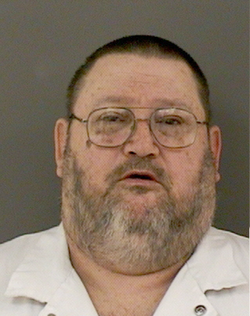
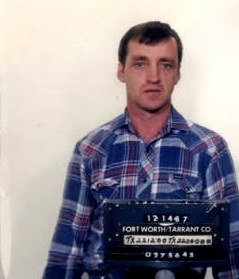
Paul Dennis Reid Jr. was an American serial killer responsible for murdering seven restaurant employees during a series of robberies in Tennessee in 1997. The crimes occurred at a Captain D's and a McDonald's in the Nashville area and at a Baskin-Robbins in Clarksville. Because each attack targeted employees working in or closing a restaurant, Reid became widely known as the “Fast-Food Killer.”
Reid was born on November 12, 1957, in Texas. Before moving to Tennessee, he accumulated a history of violent criminal behavior. In 1983, he was convicted in Texas for offenses connected to the armed robbery of a Houston-area steakhouse. He received a 20-year sentence but was released on parole in 1990 after serving approximately seven years.
Reid eventually moved to Nashville, where he reportedly hoped to establish himself as a country music performer. He instead worked at several restaurants, including a Shoney's. His familiarity with restaurant operations may have helped him understand when employees arrived, when businesses closed and when cash was most likely to be accessible. During a period lasting slightly more than two months, Reid carried out three attacks that left seven young employees dead and one additional employee seriously wounded.
The Captain D's Murders
On the morning of February 16, 1997, Reid entered a Captain D's restaurant on Lebanon Road in the Donelson area of Nashville before the business had opened to customers. He gained access by presenting himself as a person seeking employment. Inside were 16-year-old employee Sarah Jackson and 25-year-old manager Steve Hampton.
Reid forced Jackson and Hampton into the restaurant's walk-in cooler. Both victims were made to lie on the floor before Reid shot them. He then stole money from the restaurant, including a considerable quantity of coins. Hampton's wallet, which contained approximately $600 intended for his rent, was also taken.
The crime initially provided investigators with few obvious leads. A major break came when Hampton's driver's license and video-rental card were discovered along Ellington Parkway in East Nashville. Fingerprints recovered from the cards were later matched to Reid. Prosecutors also presented evidence that Reid used money from the robbery as part of a vehicle purchase shortly after the killings.
The McDonald's Murders
On March 23, 1997, Reid targeted a McDonald's restaurant on Lebanon Road in the Hermitage area of Nashville. The restaurant was only a few miles from the Captain D's where the first two murders had occurred. Four employees were leaving after closing when Reid confronted them with a firearm and forced them back into the building.
Inside the restaurant, Reid gathered the employees in a storage area. He shot and killed 17-year-old Andrea Brown, 27-year-old Ronald Santiago and 23-year-old Robert A. Sewell Jr. Reid also attempted to shoot employee Jose Antonio Ramirez Gonzalez, but the weapon did not fire as intended.
Gonzalez fought for his life and was repeatedly stabbed and assaulted. Realizing that resistance might lead Reid to continue the attack, Gonzalez remained still and pretended to be dead. Reid took approximately $3,000 from the restaurant and fled. After hearing Reid leave, the severely wounded Gonzalez managed to reach a telephone and call 911.
Gonzalez survived after receiving emergency medical treatment. His survival gave investigators an eyewitness who could describe the attack and later testify against Reid. The McDonald's crime also demonstrated that the Captain D's murders were not an isolated incident. The locations, restaurant setting, robbery motive and treatment of the employees suggested that the same offender could be responsible.
The Baskin-Robbins Kidnappings and Murders
On the night of April 23, 1997, Reid approached a Baskin-Robbins store on Wilma Rudolph Boulevard in Clarksville, Tennessee. The store had closed, but employees Angela Holmes, 21, and Michelle Mace, 16, were still inside. Reid persuaded the young women to allow him into the building.
Once inside, Reid robbed the store and abducted Holmes and Mace. He forced them to leave with him and transported them to the area of Dunbar Cave State Park in Clarksville. Both women were killed during the night of April 23. Their bodies were discovered in the park on April 24, 1997.
The investigation produced several important pieces of physical and circumstantial evidence. Witnesses reported seeing a vehicle resembling Reid's car near the area where the victims were found. Investigators also obtained evidence concerning a gasoline purchase made near the park on the night of the murders. Forensic evidence connected to the victims was recovered from Reid's vehicle and footwear, strengthening the prosecution's case that he had transported Holmes and Mace to the park.
Verified Victims
- Sarah Marie Jackson, 16 — Murdered on February 16, 1997, inside the Captain D's restaurant on Lebanon Road in Donelson, Nashville, Tennessee.
- Steve Hampton, 25 — Murdered on February 16, 1997, inside the Captain D's restaurant on Lebanon Road in Donelson, Nashville, Tennessee.
- Andrea Brown, 17 — Murdered on March 23, 1997, inside the McDonald's restaurant on Lebanon Road in Hermitage, Nashville, Tennessee.
- Ronald Santiago, 27 — Murdered on March 23, 1997, inside the McDonald's restaurant on Lebanon Road in Hermitage, Nashville, Tennessee.
- Robert A. Sewell Jr., 23 — Murdered on March 23, 1997, inside the McDonald's restaurant on Lebanon Road in Hermitage, Nashville, Tennessee.
- Angela Holmes, 21 — Abducted from the Baskin-Robbins on Wilma Rudolph Boulevard and murdered on April 23, 1997, near Dunbar Cave State Park in Clarksville, Tennessee. Her body was discovered on April 24.
- Michelle Mace, 16 — Abducted from the Baskin-Robbins on Wilma Rudolph Boulevard and murdered on April 23, 1997, near Dunbar Cave State Park in Clarksville, Tennessee. Her body was discovered on April 24.
The Surviving Victim
Jose Antonio Ramirez Gonzalez was the only employee to survive Reid's three restaurant attacks. During the McDonald's robbery, Gonzalez was shot at, stabbed repeatedly and left with life-threatening injuries. By remaining motionless and convincing Reid that he was dead, Gonzalez avoided another attack and was able to summon help after Reid departed.
His testimony became an important part of the McDonald's prosecution. Gonzalez provided a firsthand account of how Reid forced the employees back into the restaurant, attacked them and stole the restaurant's money. His survival also meant that Reid faced an attempted first-degree murder charge in addition to charges for the three employees who were killed.
Identification and Arrest
Investigators began focusing closely on Reid after he was arrested in Cheatham County in June 1997 for allegedly attempting to abduct a former restaurant supervisor. The arrest gave authorities access to his photograph and fingerprints. Detectives compared those fingerprints with evidence from the restaurant investigations and connected Reid to the cards belonging to Captain D's victim Steve Hampton.
Police then examined Reid's movements, finances, vehicle and employment history. Evidence from the separate crime scenes gradually established links among the three attacks. Reid's restaurant experience, the surviving witness's account, fingerprint evidence, forensic findings and records placing him near relevant locations allowed prosecutors to construct three separate murder cases against him.
Trials and Convictions
Reid was prosecuted in three trials covering the Captain D's, Baskin-Robbins and McDonald's crimes. The cases received intense publicity throughout Tennessee. Because of concerns that extensive news coverage could influence potential jurors in Middle Tennessee, jurors from other parts of the state were selected for portions of the proceedings.
In the Captain D's case, Reid was convicted of murdering Sarah Jackson and Steve Hampton and of committing robbery. Prosecutors relied heavily on the fingerprint evidence found on Hampton's discarded cards, financial evidence following the robbery and other circumstances connecting Reid to the restaurant.
In the Clarksville case, Reid was convicted of the first-degree murders and especially aggravated kidnappings of Angela Holmes and Michelle Mace, as well as especially aggravated robbery. The prosecution presented evidence connecting Reid's vehicle and clothing to the victims and placing him near Dunbar Cave State Park during the period in which the women were killed.
In the McDonald's case, Reid was convicted of murdering Andrea Brown, Ronald Santiago and Robert Sewell Jr. He was also convicted of attempting to murder José Antonio Ramirez Gonzalez and of especially aggravated robbery. Gonzalez's testimony provided jurors with a direct account of the attack, while the circumstances of the robbery closely resembled the earlier Captain D's killings.
Across the three trials, Reid received seven death sentences, one for each murder victim. His convictions and sentences were reviewed and upheld by Tennessee appellate courts. The Tennessee Supreme Court affirmed the judgments in the Captain D's case in 2002, the Baskin-Robbins case in 2005 and the McDonald's case in 2006.
Years on Death Row
Reid spent the remainder of his life on Tennessee's death row. His post-conviction proceedings became complicated by disputes over his mental competency and his ability to decide whether legal appeals should continue. At various times, Reid expressed a desire to abandon appeals, while attorneys and others argued that his mental condition prevented him from making a competent and informed decision.
Although seven death sentences remained in place, Reid was never executed. He experienced serious health problems while incarcerated and was eventually transferred to a hospital for treatment.
Death and Legacy
Paul Dennis Reid died at Nashville General Hospital at Meharry on November 1, 2013. He was 55 years old and had been hospitalized while still under a sentence of death. His reported medical problems included complications associated with pneumonia, respiratory illness and heart failure.
Reid's crimes deeply affected the Nashville and Clarksville communities because the victims were ordinary employees, most of them teenagers or young adults, working routine restaurant shifts. Several were preparing to open a business or leave after closing when they were suddenly trapped by an armed robber. The calculated selection of restaurants, the theft of money and the killing of employees who could identify him established a repeated and deadly pattern.
The seven victims remain the central figures in the case: Sarah Jackson, Steve Hampton, Andrea Brown, Ronald Santiago, Robert Sewell Jr., Angela Holmes and Michelle Mace. Their murders between February 16 and April 23, 1997, brought together three major investigations and resulted in one of Tennessee's most widely known serial-murder prosecutions. Reid died in custody more than 16 years after the killings, leaving seven convictions and seven death sentences in force.