Thomas Lee Penn: The 1966 Richmond Killing Spree
Overview
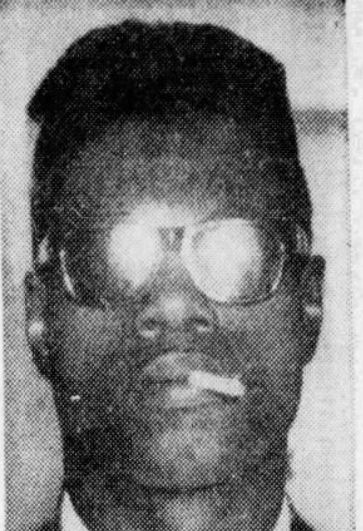
Thomas Lee Penn was an American serial and spree killer responsible for a terrifying series of shootings in and around Richmond, Virginia, during the spring of 1966. Penn was only 18 years old when he was arrested. Some of the crimes were committed with the assistance of his older brother, William Penn, although Thomas was regarded by investigators as the principal driving force behind the violence.
Between April 10 and May 21, 1966, six people were killed. The victims varied widely in age, race and background, and the shootings occurred in motels, residential neighborhoods, isolated roads and wooded areas. The apparent randomness of the attacks created intense fear because Richmond residents could identify no particular type of person who was safe from the killers.
Robbery was involved in several of the murders, but the extreme number of shots fired at certain victims suggested that obtaining money was not Penn’s only motive. He sometimes lured victims into vehicles, drove them to secluded locations and shot them repeatedly. He later gave police detailed statements describing several of the killings.
The Victims
- Mozelle Leon Spencer, 78 — April 10, 1966 — Eggleston Motel, Richmond, Virginia: Spencer was working as a night clerk at the motel when he was robbed and fatally shot. Thomas Penn later implicated his brother William in the crime. William was ultimately convicted for his participation in Spencer’s killing and received a prison sentence of 26 years.
- Willie Sexton, 21 — April 1966 — Chickahominy River area, Virginia: Sexton lived in the 2800 block of East Broad Street in Richmond. He was shot nine times in the back. His body was then placed in the Chickahominy River, where it was later discovered. Available accounts identify the killing as occurring in April 1966, but do not consistently provide a verified exact day.
- Cynthia Johnson, 16 — May 10, 1966 — Behind 1409 North 32nd Street, Richmond, Virginia: Johnson was a Church Hill resident who had last been seen after separating from a boyfriend following an argument. She was shot twice in the chest, and her body was abandoned behind a building on North 32nd Street.
- Addison E. Wilkins, 20 — May 21, 1966 — 3600 block of East Richmond Road near Oakwood Cemetery, Richmond, Virginia: Penn encountered Wilkins near Forest Hill Avenue and asked him for directions to Laburnum Avenue. Penn instead drove him to an excavation area near Oakwood Cemetery. After pretending that the vehicle had accelerator trouble, Penn persuaded Wilkins to get out and then opened fire. Wilkins was shot ten times, including five times in the back of the head. Penn stole approximately $11, Wilkins’s identification and his watch. He later burned the identification and destroyed the watch.
- Malcomb Lynn Norment Jr., 41 — May 21, 1966 — 3600 block of East Richmond Road near Oakwood Cemetery, Richmond, Virginia: After killing Wilkins, Penn returned to West Broad Street and offered Norment a ride to a bus station. He instead transported Norment to the same excavation area near Oakwood Cemetery. Norment was forced out of the vehicle and shot repeatedly. The medical examination documented gunshot wounds to his chest, back, head and face. Penn stole money and identification from him before placing his body near Wilkins.
- James Horace Carter Sr., 52 — May 21, 1966 — Wooded area in rural Henrico County, Virginia: Carter, a resident of Sandston, was shot twelve times in the stomach, back and head. His body was abandoned in woods east of Richmond. Penn later implicated William Penn as an active participant in Carter’s killing.
The Oakwood Cemetery Murders
The murders of Addison Wilkins and Malcomb Norment demonstrated Penn’s calculated method of approaching strangers, gaining their trust and transporting them to isolated locations. Wilkins apparently believed that he was helping Penn with directions. Norment believed that Penn was taking him to a bus station. Both men were instead driven to an excavation site in the 3600 block of East Richmond Road near Oakwood Cemetery.
When Richmond police detective H. W. Duke discovered the bodies, the victims had no identification or money, and their pockets had been turned inside out. Wilkins had suffered ten gunshot wounds from a .22-caliber weapon. Norment had been shot seven or more times in several parts of his body.
In his statement to police, Penn described pretending to have trouble with the accelerator before asking Wilkins to step out of the car. Penn said that he told Wilkins he was going to send him to a “resting place” and then shot him. Penn admitted firing at Wilkins as the victim attempted to escape. He also admitted taking the man’s watch, identification and money.
Penn said that he returned to Richmond after killing Wilkins, found Norment and offered him transportation. At the cemetery site, Penn ordered Norment out of the vehicle and shot him. Penn recalled that Norment grabbed his chest and attempted to speak before collapsing. Penn removed Norment’s identification, later burned it in a heater and spent the stolen money.
The Attack That Ended the Spree
The investigation began to focus on Thomas Penn after the attack on teenage survivor Johnnie Mae Hicks during the night of May 22, 1966. Hicks encountered Penn near a friend’s home on North 29th Street. Penn falsely represented himself as a detective while she was having a dispute with her boyfriend.
Penn eventually led Hicks into a field, where he sexually assaulted her, shot her twice and left her for dead. During the attack, he reportedly boasted about killing two white men the previous day, an apparent reference to Wilkins and Norment. Hicks survived and was able to identify Penn as her attacker.
Warrants were issued for Thomas Penn on charges connected to the rape and shooting. Investigators soon added William Penn to the list of suspects. On May 29, 1966, Thomas appeared at a Richmond police station with his father and brother and surrendered.
Confessions and William Penn’s Involvement
Thomas Penn initially provided investigators with statements on May 29 and May 31, 1966. He admitted responsibility for several of the murders and described the locations, weapons, stolen property and disposal of the victims’ bodies. His knowledge of details that had not been widely publicized helped connect him to the crimes.
In his later statement, Thomas implicated William in the murders of Mozelle Spencer, Willie Sexton, Addison Wilkins, Malcomb Norment and James Carter. He claimed that William fired some of the shots, drove a vehicle used during the crimes and shared money stolen from victims.
The precise extent of William’s participation remained disputed. Thomas was considered the principal killer, while William was prosecuted for a more limited role. William was convicted for participating in the robbery and killing of Mozelle Spencer and was sentenced to 26 years in prison.
Mental-Health Evidence
Thomas Penn’s mental condition became a major issue during his trials. He had previously been examined at Central State Hospital in Petersburg. Psychiatrist Dr. William M. Lordi had evaluated Penn in 1962 and diagnosed him as psychotic and suffering from paranoid schizophrenia.
When Dr. Lordi examined Penn again after the murders, he believed Penn had deteriorated intellectually and emotionally and had become more psychiatrically disturbed. Lordi expressed the opinion that the killings were impulsive acts arising from a mental disease that affected Penn’s ability to control his behavior.
Two psychiatrists who observed Penn for approximately 41 days reached a different conclusion. They reported finding no organic brain damage, mental illness or significant mental defect. They testified that Penn functioned within the normal intelligence range, understood the difference between right and wrong and had not acted under an irresistible impulse.
The juries ultimately rejected Penn’s insanity defense. Although evidence showed that he had a history of serious emotional and behavioral disturbance, the prosecution successfully argued that his attempts to conceal evidence, burn identification documents, steal property and lure victims through deception demonstrated awareness of his actions.
Trials and Sentences
On December 17, 1966, Thomas Lee Penn was convicted of murdering Cynthia Johnson and was sentenced to life imprisonment. He was later tried for the murders of Addison Wilkins and Malcomb Norment. On April 17 and 18, 1967, a jury found him guilty of both killings and imposed additional life sentences.
Penn appealed his convictions, arguing that his statements to police had been obtained in violation of his constitutional rights and that he had not properly waived his right to an attorney. The Supreme Court of Appeals of Virginia reviewed the interrogations, his mental condition and the warnings given to him. His convictions were upheld.
Contemporary reports sometimes summarized Penn’s punishment as two life sentences, while the reported court proceedings document separate life sentences associated with multiple murder convictions. He remained incarcerated in the Virginia prison system after his appeals were unsuccessful.
Impact on Richmond
The Penn murders shocked Richmond because they unfolded rapidly and appeared to target people without a consistent pattern. The victims included teenagers, working adults and an elderly motel clerk. They were Black and white, male and female, and ranged in age from 16 to 78.
The repeated shootings, robbery of bodies and abandonment of victims in rivers, excavation sites and woods intensified public fear. The case involved six murders, a rape and a nearly fatal shooting within approximately six weeks. The survivor’s identification of Thomas Penn brought the spree to an end before additional victims could be attacked.
Thomas Lee Penn’s crimes remain one of Richmond’s most disturbing historical murder cases. His combination of opportunistic victim selection, deception, robbery and excessive gunfire left six people dead and permanently affected their families and the surrounding community.