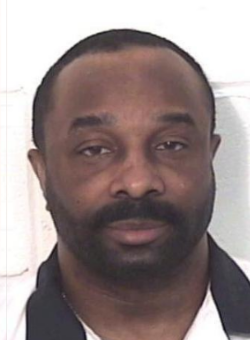
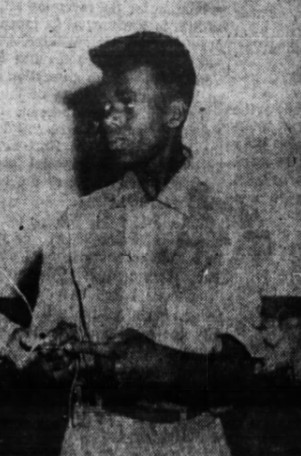
Edward Dennis Isaac: The Prince George Serial Killer
Overview
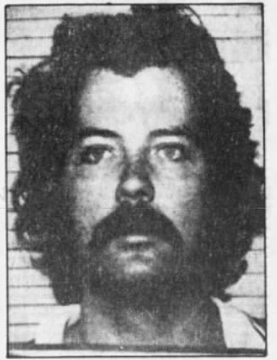
Between the autumn of 1981 and the summer of 1982, a series of brutal murders cast a dark shadow over the city of Prince George, British Columbia. Three females, a woman and two teenage girls, were killed and their bodies discarded in wooded areas, their lives cut short by Edward Dennis Isaac. For years, the crimes remained unsolved, fueling fear in a region already grappling with the disappearances and murders of women along the notorious Highway 16, often called the "Highway of Tears." Isaac, born in 1958 or 1959, was a predator who exploited the vulnerability of his victims, leaving a trail of devastation. His reign of terror came to an end only after his former girlfriend, burdened by the secret she was forced to keep, found the courage to speak to the police in 1985. Isaac was arrested on February 7, 1986, and subsequently confessed to the three killings. He pleaded guilty to one count of second-degree murder and two counts of manslaughter, receiving three concurrent life sentences. His case remains a chilling chapter in Canadian crime history and a somber reminder of the dangers that have plagued the remote highways of northern British Columbia.
Early Life and Background
Details about Edward Dennis Isaac's early life and upbringing are scarce in public records. Born in Canada in 1958 or 1959, his life before the murders remains largely undocumented. One account suggests that by his early twenties, he had already exhibited signs of cruelty and instability, though specific instances are not detailed. What is known is that in the early 1980s, Isaac was living in Prince George, a hub for the logging and railway industries, surrounded by vast wilderness and isolated roads. It was in this environment that his violent impulses would manifest in a series of horrific crimes.
The Murder of Jean Mary Kovacs
On the night of October 10, 1981, 36-year-old Jean Mary Kovacs was evicted from a bar in Prince George after several hours of drinking. After continuing to drink at home, she took a taxi to a highway intersection just outside the city. She told the driver she intended to hitchhike to Jasper or Edmonton. It was the last time she was seen alive. Later that day, she encountered Edward Dennis Isaac. He shot her four times with a .22-caliber firearm and mutilated her body with a knife. Her remains were discovered the following day by a man gathering firewood in a water-filled ditch near a logging road by Purden Lake, approximately 40 kilometers from Prince George. The Royal Canadian Mounted Police (RCMP) launched a massive investigation, questioning 12,000 people and interviewing a thousand more, with 300 individuals considered suspects. Despite their extensive efforts, the case went cold, and Isaac remained at large.
The Murder of Roswitha Fuchsbichler
Just over a month later, on November 14, 1981, 13-year-old Roswitha Fuchsbichler left a house party in the foothills area of Prince George in the early morning hours. She had arranged to meet an older man at a gas station, but when he failed to appear, she began to hitchhike. At some point, she was picked up by Edward Dennis Isaac. He strangled her and then, in a chilling confession years later, stated he fatally stabbed her once in the heart "to see what it felt like." He then disrobed and sexually mutilated her body before dumping it in a wooded area behind the Hart Highway, about 20 kilometers from where the party had been held. Roswitha was reported missing at 6:45 p.m. that same day. A week later, her body was discovered by two joggers. Investigators immediately suspected a connection to the Kovacs murder due to the similar modus operandi, but a lack of physical evidence hampered their ability to definitively link the two cases.
The Murder of Nina Marie Joseph
The final known victim of Edward Dennis Isaac was 15-year-old Nina Marie Joseph. On August 16, 1982, she was with Isaac when he made a sexual demand that she refused. In response, he strangled her with the cord of her own jacket. He then removed her clothing and stabbed and slashed her body with a knife. To dispose of her remains, Isaac enlisted the help of his then-girlfriend. Together, they took Nina's body to Freeman Park, where Isaac posed her in a spread-eagle position, tying her legs to two trees. He then threatened his girlfriend, warning her that she would suffer the same fate if she ever told anyone what he had done. For years, his threat kept her silent.
The Victims
- Jean Mary Kovacs, 36 — October 10, 1981, near Prince George. A First Nations woman, Jean was last seen with the intention of traveling east. Her life was tragically cut short, and her body was found discarded in a ditch.
- Roswitha Fuchsbichler, 13 — November 14, 1981, in Prince George. A young teenager with her whole life ahead of her, Roswitha was killed after leaving a party and accepting a ride from a stranger.
- Nina Marie Joseph, 15 — August 16, 1982, in Prince George. A teenage girl whose life was brutally taken from her, Nina's murder was the one that ultimately led to Isaac's capture due to a terrified witness.
Investigation and Capture
For years, the murders of Jean Kovacs, Roswitha Fuchsbichler, and Nina Joseph remained unsolved, casting a pall over Prince George. The initial investigations were extensive but yielded no arrests. The breakthrough in the case came in late 1985, years after the last murder. Edward Dennis Isaac's former girlfriend, who had helped him dispose of Nina Joseph's body under duress, had moved away from Prince George. Feeling safe from his threats, she went to the police and recounted the horrific events she had witnessed. Her testimony provided the crucial evidence that had been missing. On February 7, 1986, Edward Dennis Isaac was arrested in Fort St. James. Initially charged only with the murder of Nina Joseph, he soon confessed to the other two killings, bringing an end to the years-long mystery.
Trial and Sentence
Following his arrest, the legal proceedings against Edward Dennis Isaac moved forward. In June 1986, he pleaded guilty to manslaughter in the death of Nina Marie Joseph. In August of the same year, he was charged with the murder of Roswitha Fuchsbichler. After a psychiatric evaluation found him fit to stand trial, he pleaded guilty to manslaughter in her case in 1987. Subsequently, he was charged with the murder of Jean Mary Kovacs. During a preliminary hearing, witnesses testified that Isaac had told them that he and his brother, Jim, had raped, shot, and mutilated Kovacs. His brother could not be charged as he had been murdered a few years prior. Isaac ultimately pleaded guilty to second-degree murder in Kovacs' death. For his crimes, Edward Dennis Isaac was sentenced to three concurrent life terms with the possibility of parole after 15 years. As of 1989, he was incarcerated at the Kent Maximum Security Prison.
Aftermath and Legacy
The crimes of Edward Dennis Isaac are inextricably linked to the tragic phenomenon of the "Highway of Tears," a 725-kilometer stretch of Highway 16 between Prince George and Prince Rupert where dozens of women, many of them Indigenous, have disappeared or been found murdered since the 1970s. Isaac is one of three convicted serial killers known to have been active along this corridor, the others being Brian Peter Arp and Cody Legebokoff. His murders, which targeted vulnerable women and girls, highlighted the dangers faced by those who hitchhike in this remote region, often out of necessity due to a lack of public transportation. The resolution of his case, brought about by the courageous testimony of his ex-girlfriend, brought a measure of justice for his three victims and their families. However, the broader issue of violence against women along the Highway of Tears continues to be a source of pain and activism for the affected communities. The stories of Jean Mary Kovacs, Roswitha Fuchsbichler, and Nina Marie Joseph serve as a stark reminder of the human cost of this ongoing tragedy.