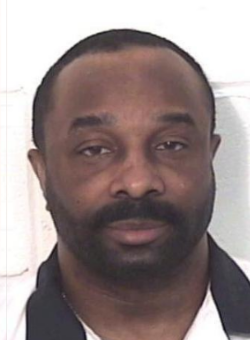
Terry Blair: The Kansas City Serial Killer
Overview
Terry Anthony Blair was an American serial killer from Kansas City, Missouri, whose known crimes stretched from 1982 to 2004. He was convicted of killing seven women: Angela Monroe in 1982 and six more women in Kansas City in 2004. Investigators also suspected him in additional deaths, but those charges were later dropped. Blair’s murders were concentrated around Kansas City’s Prospect Avenue corridor, an area where several victims were found in abandoned houses, alleys, vacant lots, garages, and overgrown spaces.
Blair’s crimes were marked by a repeated targeting of vulnerable women, including women described in court records and police accounts as sex workers or women living in unstable circumstances. His 2004 victims were found within a relatively small geographic area, and several had been hidden or covered after death. The case drew intense public attention after anonymous 911 calls led police to multiple bodies. The caller claimed responsibility for several killings and gave specific directions to where victims had been left. A judge later found that the evidence supported the conclusion that Blair was the anonymous caller.
Early Life and Violent Background
Terry Blair was born on September 16, 1961, in Kansas City, Missouri. His family history was repeatedly described as violent and troubled, with several relatives facing serious criminal charges over the years. Blair grew up in an environment where violence, instability, and criminal behavior were recurring themes. While that background does not explain or excuse his crimes, it became part of the broader public discussion surrounding the case after his arrest.
Before he became known as a serial killer, Blair had already been convicted of murder. His first known victim was Angela Monroe, a young pregnant woman who had been in a relationship with him and was the mother of two of his children. Blair was convicted in connection with her 1982 killing and sentenced to 25 years in prison. After serving approximately 21 years, he was released, and within a short time, Kansas City would again be confronted with a series of murders later tied to him.
The 1982 Murder of Angela Monroe
Angela Monroe was killed on May 15, 1982, in Kansas City, Missouri. She was 19 years old, pregnant, and the mother of two of Blair’s children. Blair later became convicted in her death. Reports describe the killing as an attack that followed conflict between Blair and Monroe. Her body was associated with the area of Linwood Boulevard and Forest Avenue in Kansas City.
Blair was sentenced to 25 years in prison for Monroe’s murder. He served roughly 21 years before being released. This conviction was important in the later serial murder investigation because it showed that Blair had a prior history of lethal violence against women before the 2004 murders.
The 2004 Prospect Corridor Murders
In 2004, multiple women were found dead in Kansas City, Missouri, in and around the Prospect Avenue corridor. The discoveries occurred between July and September 2004. The victims were found in abandoned or neglected locations, including a backyard, a detached garage, an alley near a business, and vacant or overgrown lots. Several bodies were concealed with brush, tarps, carpet, cushions, roofing material, or other debris.
The case began to unfold publicly after Anna Ewing’s body was found in July 2004. In early September, police found the bodies of Sheliah McKinzie and Patricia Wilson Butler in a garage at 2609 Montgall. Soon after, an anonymous male caller contacted 911 and claimed responsibility for those deaths and for other bodies that had not yet been found. On September 3 and September 4, 2004, the caller directed police to additional victims, including Carmen Hunt, Darci Williams, and Claudette Juniel.
The 911 calls became a central part of the case. The caller gave locations with enough accuracy that police were able to find victims who might otherwise have remained undiscovered for longer. The caller also used dehumanizing language about the victims and said he killed them because they were prostitutes. Blair denied making the calls, but the court found that the evidence supported identifying him as the caller. The calls, combined with DNA evidence, witness testimony, Blair’s proximity to key locations, and his conduct after being named as a person of interest, helped support the convictions.
Victims
- Angela Monroe — Killed on May 15, 1982, in Kansas City, Missouri. She was 19 years old, pregnant, and the mother of two of Terry Blair’s children. Blair was convicted of her murder and sentenced to 25 years in prison.
- Anna Ewing — Found dead on July 14, 2004, at 2608 East 23rd Street in Kansas City, Missouri, near the Prospect Avenue area. She was 42 years old. Her body was found in a backyard area, partially nude and covered with brush. Her date of death is listed as on or before July 14, 2004.
- Sheliah McKinzie — Found dead on September 2, 2004, in a detached garage at 2609 Montgall in Kansas City, Missouri. She was 38 years old. Her body was found under a tarp and positioned above Patricia Wilson Butler’s body. Her death occurred on or before September 2, 2004.
- Patricia Wilson Butler — Found dead on September 2, 2004, in the same detached garage at 2609 Montgall in Kansas City, Missouri. She was 45 years old. Her body was badly decomposed and concealed beneath Sheliah McKinzie’s body. Her death occurred on or before September 2, 2004.
- Carmen Hunt — Found dead on September 4, 2004, behind an apartment building at 2905 Park in Kansas City, Missouri. She was 40 years old. Her remains were found in an overgrown area covered with carpet and brush. The medical examiner stated she had been dead for at least a week when found, so her death occurred on or before September 4, 2004.
- Darci I. Williams — Found dead on September 4, 2004, near 24th and Prospect in Kansas City, Missouri, close to a fenced parking area near a U-Haul location. She was 25 years old. Her body was covered with roofing tar paper and hidden in brush. Her death occurred on or before September 4, 2004.
- Claudette Juniel — Found dead on September 4, 2004, in a vacant lot at 2745 Olive in Kansas City, Missouri. She was 31 years old. Her body was concealed with couch cushions, sticks, and a tire. Her death occurred on or before September 4, 2004.
Details of the Crime Scenes
The crime scenes showed a pattern of concealment. Victims were not left in open, easily visible places. Instead, their bodies were placed in abandoned or low-traffic areas and covered with available materials. Anna Ewing was found in a backyard area covered with brush. Sheliah McKinzie and Patricia Wilson Butler were found hidden in a garage. Carmen Hunt was covered with carpet and brush behind an apartment building. Darci Williams was covered with roofing tar paper near 24th and Prospect. Claudette Juniel was hidden beneath cushions, sticks, and a tire in a vacant lot.
The bodies were all found in Kansas City, Missouri, within a close radius of the Prospect corridor. That geographic concentration helped investigators link the deaths. The locations also mattered because the anonymous 911 caller described several of them before police had publicly located all of the bodies. This gave the caller knowledge that only the killer or someone directly connected to the killings would likely possess.
The 911 Calls
On September 3, 2004, an unidentified male called 911 and reported a body near 29th and Park. That victim was later identified as Carmen Hunt. During the call, the man claimed that he had placed the body there and also referred to two bodies found near Montgall, meaning Sheliah McKinzie and Patricia Wilson Butler. He refused to identify himself.
On September 4, 2004, the same caller contacted 911 again and reported two more bodies. He gave directions to a body near 24th and Prospect, later identified as Darci Williams, and another near 27th and Olive, later identified as Claudette Juniel. He also referred to an earlier body found near 23rd and Prospect, which was Anna Ewing. The caller repeatedly described the victims as prostitutes and used hateful language to justify the killings.
The phone used for the calls was a deactivated cell phone that could still dial emergency services. After media reports mentioned that authorities were trying to trace the phone, the calls stopped. Investigators later focused on Blair based on a combination of evidence, including his prior murder conviction, his location near the calls, witness statements, DNA evidence, and the caller’s knowledge of the bodies.
Investigation and Arrest
Police began focusing on Blair after the pattern of bodies and the 911 calls drew attention to the Prospect Avenue area. Blair had family connections and personal history in the area, including places near where bodies were found. He was also on parole after serving time for Angela Monroe’s murder. Witnesses and surviving women gave information that placed Blair under suspicion, and investigators examined whether he matched the behavior and language of the anonymous caller.
Blair was arrested in September 2004 after police identified him as a person of interest. When his image appeared in news coverage, he hid at a friend’s residence and was later found by police. During questioning, he denied knowing or having sex with the victims. That denial became important because DNA evidence linked him to Sheliah McKinzie, and the court considered his denial as evidence of consciousness of guilt.
Trial and Conviction
In December 2004, Blair was charged with eight counts of first-degree murder in connection with the 2004 killings. He was also charged with first-degree assault and three counts of forcible rape. Before trial, prosecutors agreed to dismiss two of the murder charges, as well as the assault and rape charges, and they did not seek the death penalty. Blair waived his right to a jury trial, meaning the case was decided by a judge.
On March 27, 2008, Jackson County Circuit Judge John R. O’Malley found Blair guilty of six counts of first-degree murder for the deaths of Sheliah McKinzie, Patricia Wilson Butler, Carmen Hunt, Anna Ewing, Darci Williams, and Claudette Juniel. On April 24, 2008, Blair was sentenced to six consecutive life sentences without the possibility of parole.
The court found that the evidence supported Blair’s guilt across all six 2004 murders. The case relied on a combination of direct and circumstantial evidence. The anonymous 911 calls were especially significant because the caller identified multiple body locations and admitted involvement. DNA evidence tied Blair to Sheliah McKinzie, and additional biological evidence was discussed in relation to Anna Ewing. The court also considered Blair’s denials, his behavior after being identified as a person of interest, and the fact that one person was understood to have killed all six 2004 victims.
Dropped and Suspected Cases
Blair was also accused in the deaths of Sandra Reed and Nellia Harris, but those murder charges were later dropped as part of the pretrial agreement. He was additionally charged with one assault and three rapes, but those charges were also dismissed before trial. Because those cases did not result in convictions against Blair, they are not included among his confirmed murder victims.
Investigators believed Blair may have been responsible for more victims than the seven murders for which he was convicted. However, the confirmed legal record consists of Angela Monroe in 1982 and the six women whose 2004 murders led to his life sentences.
Death in Prison
Terry Blair remained imprisoned after his 2008 convictions. He was serving six consecutive life sentences without parole for the 2004 murders, in addition to his earlier murder history. Blair died on May 11, 2024, after being found unresponsive at Potosi Correctional Center in Missouri and transported to a nearby hospital. He was 62 years old.
Legacy of the Case
The Terry Blair case remains one of Kansas City’s most disturbing serial murder cases because of the number of victims, the concentrated geography of the killings, and the chilling 911 calls that led police to several bodies. The victims were women whose lives were often reduced in public discussion to the circumstances in which they were found, but each had a name, a history, and people affected by her death.
Blair’s crimes exposed the danger faced by vulnerable women in neglected urban spaces and highlighted how serial predators can exploit social invisibility. His convictions brought legal closure for six of the 2004 murders, but unanswered questions remained about other possible victims and the full scope of his violence.