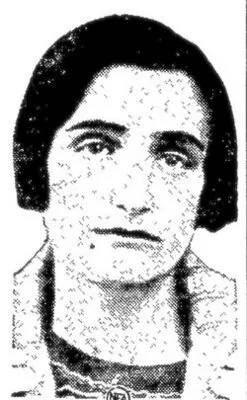
James Allen Red Dog: A Multistate Killer
Early Life and Background
James Allen Red Dog was born on February 1, 1954, in Poplar, Montana, on the Fort Peck Indian Reservation. He was of Sioux and Assiniboine ancestry and grew up in an economically deprived environment. As an adult, Red Dog attributed some of his criminal behavior to the poverty, isolation and lack of employment opportunities he experienced while growing up. However, prosecutors who later examined his history argued that his background did not adequately explain the repeated and often apparently motiveless violence that marked his life.
Red Dog began accumulating a serious criminal record while still a teenager. Over the next eighteen years, he became connected to five killings in Montana, California, Illinois and Delaware. His victims included business owners, men who had offered him shelter, a prison inmate and an acquaintance of his wife. Some of the killings occurred during robberies or escapes, while others appeared to result from personal disputes or sudden eruptions of violence.
The 1973 Montana Robbery and Killing
Red Dog's first known homicide occurred on October 4, 1973, when he was nineteen years old. Red Dog, Steven Wayne Lilley and Ralph James Clancy participated in the robbery of a combined liquor and pizza business near Wolf Point on the Fort Peck Reservation. The store was operated by 39-year-old William Clark Veseth.
During the robbery, Veseth was shot and killed. Although Red Dog initially denied responsibility, he later admitted that he had fired the fatal shot. All three defendants originally faced serious charges, but the cases produced different outcomes. Clancy pleaded guilty to robbery, while Lilley was convicted of murder before later obtaining a retrial.
Red Dog was found guilty of robbery and involuntary manslaughter. Because of complications involving federal law and the verdict returned by the jury, the manslaughter conviction was dismissed. The judge nevertheless imposed the maximum available sentence of fifteen years for robbery. Red Dog could not later be retried for Veseth's murder because constitutional protections against double jeopardy prevented a second prosecution for the same killing.
Escape and the Los Angeles Double Murder
In 1977, Red Dog was allowed to leave custody temporarily to attend a Native American religious ceremony. He escaped during the furlough and fled to Los Angeles with another man, Raymond Tapaha. On the evening of August 9, the fugitives met Stanley Large Jr. and Moses Alex John in a Los Angeles bar.
Large and John reportedly offered the two men a place to stay for the night. After the hosts fell asleep, Red Dog and Tapaha restrained them with tape and rope. Both victims were repeatedly stabbed while they were bound and unable to defend themselves. Their bodies were discovered on August 10, 1977.
A third man, Levi Aragon, was also present during the episode. He survived but was kidnapped and sexually assaulted as the attackers left the residence. Red Dog and Tapaha were captured soon afterward.
On April 10, 1978, Red Dog pleaded guilty in Los Angeles Superior Court to two counts of second-degree murder. His California sentence was ordered to run concurrently with the federal robbery sentence he was already serving. As a result, the two murders added comparatively little time to his incarceration, a decision that Delaware prosecutors later described as an extraordinary failure of the criminal justice system.
The Killing of Joseph Ortega in Illinois
While imprisoned in Marion, Illinois, Red Dog became involved in another death. Joseph Ortega, an inmate associated with a prison gang, had reportedly angered other prisoners. On February 20, 1983, Ortega died after being given heroin as part of a plan to kill him.
Red Dog was accused of supplying the heroin used in Ortega's death. Although he was not ultimately prosecuted as Ortega's principal killer, authorities considered him an active participant in the killing. He later cooperated with investigators and provided information concerning prison gangs, other inmates and alleged militant activities.
His cooperation led federal officials to place him in the Witness Protection Program. After years in prison, Red Dog was paroled on June 27, 1990. He was relocated to Delaware under a new identity arrangement, but state authorities were reportedly not given a complete warning about the extent of his violent history.
Relocation to Delaware
In Delaware, Red Dog lived with his wife, Bonnie Red Dog, near Wilmington. Bonnie worked with 30-year-old Hugh Pennington at the Tally Ho Motor Lodge. Pennington was a night auditor and lived with his mother, Ailsa Pennington, in New Castle County.
Red Dog became involved with members of the local Nanticoke community and taught aspects of Sioux culture and tradition. Outwardly, he appeared to be rebuilding his life after prison. Less than eight months after his release, however, he committed the crime that resulted in his death sentence.
The Murder of Hugh Pennington
On February 9, 1991, Hugh Pennington returned home from work at approximately 9:00 p.m. His mother and Bonnie Red Dog were watching a movie at the house. Pennington went to bed shortly after arriving because his employment as a night auditor required him to maintain an unusual sleeping schedule.
At approximately 9:30 p.m., Ailsa Pennington and Bonnie left for the Red Dog residence. The Pennington house was left unlocked. James Red Dog arrived sometime afterward and encountered Hugh in the kitchen. Prosecutors believed that Red Dog had spent much of the day drinking and that an insignificant comment or action by Pennington may have provoked him.
Red Dog forced Pennington into a basement workshop. He bound the victim's wrists and ankles with duct tape and electrical cord and placed him on the floor. Red Dog then attacked him with a knife, repeatedly cutting his throat and inflicting a wound so severe that Pennington was nearly decapitated. Investigators concluded that Red Dog removed his boots before the attack to prevent them from becoming stained with blood.
After the murder, Red Dog returned to his apartment shortly after midnight carrying a whiskey bottle. He falsely told Ailsa Pennington that a friend's vehicle had become stuck and persuaded her to drive him. He brought a coil of new clothesline, claiming that it would be used to tow the vehicle.
Once they were on the road, Red Dog admitted that the story about the stranded vehicle was false. He abducted Ailsa, threatened her and subjected her to a prolonged series of sexual assaults. He forced her to drive through Delaware and assaulted her multiple times over the following hours. She eventually escaped and alerted authorities.
Police conducted an extensive search for Red Dog. He attempted to confuse tracking dogs by covering himself with deer feces. Four days after Pennington's murder, officers captured him while he was walking across the Winchester Bridge in Wilmington.
Charges, Conviction and Death Sentence
A Delaware grand jury indicted Red Dog on nine criminal counts. The charges included first-degree murder and possession of a deadly weapon for killing Hugh Pennington. Additional charges involved kidnapping, four counts of first-degree unlawful sexual intercourse and weapons offenses arising from the attack on Ailsa Pennington.
Red Dog entered pleas of no contest rather than proceeding to a full trial. He claimed that heavy alcohol consumption had left him unable to remember significant portions of the crime. He nevertheless expressed remorse and said that he did not want Pennington's family to endure a lengthy trial.
During the penalty proceedings, prosecutors presented Red Dog's extensive history of violence, including the California double murder and his role in the other deaths. Red Dog personally requested a death sentence and instructed his attorneys not to pursue efforts that would prolong his life. In April 1992, a Delaware judge sentenced him to die by lethal injection.
Delaware law required an automatic review of the death sentence even though Red Dog did not want an appeal. The Delaware Supreme Court examined the conviction and punishment and upheld the sentence. Public defenders later questioned whether he was mentally competent to abandon further appeals, but psychiatric examinations found no psychosis, major mental illness or cognitive impairment that would prevent him from understanding his decision.
Execution
Red Dog repeatedly stated that accepting execution was consistent with his personal interpretation of a warrior's code. He wrote that he wanted the process expedited for the sake of his family and the families of his victims. Some members of his family supported his decision, while his attorneys continued attempting to preserve his legal rights.
Before the execution, Red Dog requested the presence of John H. Morsette, a medicine man from Montana. Prison officials allowed Morsette to perform a brief Native American spiritual ceremony and place a necklace around Red Dog's neck.
James Allen Red Dog was executed by lethal injection at the Delaware State Correctional Center near Smyrna on March 3, 1993. He was pronounced dead at 10:28 a.m. at the age of thirty-nine. He became the second prisoner executed in Delaware after the state resumed executions in 1992.
Confirmed and Attributed Victims
- William Clark Veseth, 39 — Killed on October 4, 1973, during the robbery of his liquor and pizza business near Wolf Point on the Fort Peck Indian Reservation in Montana. Red Dog later admitted firing the fatal shot.
- Stanley Large Jr., 28 — Murdered on August 10, 1977, at a residence in Los Angeles, California. Large had offered Red Dog and Raymond Tapaha a place to sleep. He was restrained and repeatedly stabbed.
- Moses Alex John, 31 — Murdered on August 10, 1977, with Stanley Large Jr. in Los Angeles, California. John was bound and stabbed while sleeping or otherwise unable to defend himself.
- Joseph Ortega — Died on February 20, 1983, at the federal prison in Marion, Illinois. Red Dog was accused of supplying the heroin used by inmates to kill Ortega after a prison dispute.
- Hugh Pennington, 30 — Murdered on February 9, 1991, in the basement of his home in New Castle County, Delaware. Red Dog bound Pennington and repeatedly cut his throat with a knife.
Legacy of the Case
Red Dog's criminal history exposed serious failures in communication between federal authorities and state law-enforcement agencies. Delaware officials maintained that they had not been adequately informed that a man with multiple homicide convictions and connections to another prison killing had been relocated into their state through a federal protection program.
The case contributed to demands for laws requiring federal agencies to notify states when dangerous offenders were released or relocated within their borders. Prosecutors argued that Red Dog's freedom resulted from a succession of unusually lenient sentences, concurrent prison terms and cooperation agreements that repeatedly returned a demonstrably violent offender to society.
Although Red Dog was formally executed for the murder of Hugh Pennington, his documented record stretched from the 1973 killing of William Veseth in Montana to the 1991 murder in Delaware. The five deaths associated with him revealed a recurring pattern of robbery, betrayal, sudden violence and attacks against people who were restrained, sleeping or otherwise vulnerable.