Robert Leroy Biehler: Serial Killer and Contract Murderer
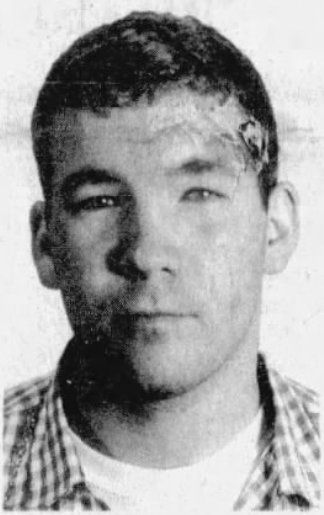
Robert Leroy Biehler was an American career criminal, serial killer, and contract murderer whose violent history stretched across several decades in Southern California. Born on August 5, 1934, in Chase, Kansas, Biehler accumulated convictions for robbery and burglary before becoming responsible for four murders committed in the Los Angeles area between 1966 and 1974. His victims included a mother and her teenage son, a man involved in the drug trade, and a former professional roller derby skater whose death was arranged as a contract killing.
Biehler's crimes were not random attacks against strangers. The murders were connected to his criminal relationships, efforts to protect himself from exposure, disputes involving illegal activity, and, in the final case, payment to eliminate another person. Investigators suspected him in the first double homicide shortly after it occurred, but insufficient evidence prevented prosecution at the time. Nearly a decade passed before witnesses and newly discovered evidence allowed authorities to connect him to all four killings.
Early Criminal History
Biehler had developed a serious criminal record long before the murders for which he eventually became notorious. On February 25, 1956, he participated with accomplices in the robbery of Paul and Marguerite Troutner at their Pasadena home. The victims were restrained while money and valuables were stolen. Biehler was arrested and convicted, beginning a pattern of imprisonment, release, and renewed criminal activity.
By 1960 he was again involved in armed robberies and burglaries in Los Angeles County. California appellate records document Biehler's participation in offenses including the August 1960 armed robbery of the Boysburger Cafe and burglary-related crimes. He spent additional time in the California prison system before eventually being paroled in August 1966.
Only a few months after that parole, Biehler became connected to the first two murders ultimately included in his four first-degree murder convictions.
The Murders of Julia and Kenneth Cook
On December 22, 1966, 38-year-old Julia Cook and her 15-year-old son, Kenneth Cook, were murdered inside Julia's North Hollywood residence. Julia was associated with people in the criminal underworld, including individuals involved in prostitution, drugs, and stolen property. Biehler knew her personally and was later accused of wanting her eliminated because she could expose his activities and because he was interested in taking control of criminal operations with which she was associated.
Julia and Kenneth were shot inside the residence. The home appeared to have been disturbed, and investigators quickly began examining people associated with Julia. One of those people was Robert Biehler. Police also investigated Morton Molin, an associate who had connections to both Julia and the weapon reportedly obtained shortly before the killings.
Biehler became a major suspect, but investigators faced a significant problem: his wife Janet provided him with an alibi. Without sufficient physical evidence to overcome that account, authorities were unable to successfully prosecute him for the murders in 1966. He was instead returned to prison for a parole violation.
The Cook murders remained unresolved for years. Janet Biehler would eventually become a critical witness against her former husband, acknowledging that the alibi she had provided following the killings was false. Her testimony helped prosecutors revive a double-murder case that had remained dormant for approximately a decade.
The Murder of Michael Coveney
Biehler was eventually paroled again and returned to the Los Angeles area. On October 14, 1973, he became involved in a confrontation with 28-year-old Michael Coveney, a former serviceman who frequented the Shadow Hills Lounge and was involved in selling cocaine. Accounts of the case describe an argument involving money, drugs, and Biehler's concern that Coveney could expose him for possessing a firearm while on parole.
Witness testimony later established that Coveney and Biehler had an altercation at the Shadow Hills Lounge. Biehler removed Coveney from the area and transported him to the vicinity of the home where Biehler was staying near Sunland. Coveney was subsequently shot and killed.
Biehler then concealed Coveney's body in the Angeles National Forest area. The grave remained undiscovered for more than two years. Because Coveney had effectively disappeared and his remains were hidden in a remote location, investigators initially lacked the physical evidence necessary to establish what had happened to him.
The concealment eventually failed. In December 1975, Christine Corder, a woman who had been closely associated with Biehler and possessed information about his crimes, assisted investigators. Police were led to the area where Coveney had been buried, and his remains were recovered on or about December 10, 1975. The discovery provided investigators with the evidence they needed to dramatically expand the case against Biehler.
The Contract Killing of Carole E. Phillips
The fourth murder involved 33-year-old Carole E. Phillips, a former professional roller derby skater also known by the nickname "Flip." Phillips was involved in a troubled relationship with Maida Sue Ellington, a woman Biehler knew through the Hollywood Call Board Answering Service. Ellington was reportedly involved in embezzlement and other illegal activities, and Phillips threatened to disclose information about her conduct.
Ellington ultimately sought Biehler's help in eliminating Phillips. The arrangement transformed Biehler from a killer attempting to protect his own interests into a paid contract murderer.
The first attempt occurred on October 5, 1974, at the Kagel Canyon residence shared by Phillips and Ellington. Biehler disguised himself with work clothing, a wig, and a false mustache and posed as a plumber. He carried a toolbox as part of the disguise and gained access to the residence under the pretense that he was there to make repairs. Phillips was shot several times but survived the attack.
Her survival created an obvious problem for the people responsible. Phillips had seen enough of her attacker and the circumstances surrounding the supposed plumbing visit to provide investigators with important information. Rather than abandoning the plan, a second attempt was arranged.
Detailed accounts of the case place the fatal attack on December 22, 1974. Phillips and Ellington had been at the Hialeah Lounge when Biehler and an associate waited nearby. After the women left, Biehler entered their vehicle and forced them to travel to an isolated area. Phillips was shot and killed, while Ellington was deliberately injured as part of an effort to make the incident appear to be a robbery in which both women had been attacked.
The staged explanation did not prevent investigators from focusing on Ellington. Her previous statements concerning Phillips and evidence surrounding the earlier attempted killing created serious suspicion. Ellington was eventually prosecuted for her role in arranging Phillips' murder.
Confirmed Victims
- Julia Cook, 38 — Killed December 22, 1966, inside her residence in North Hollywood, Los Angeles, California. Julia was shot along with her teenage son. Biehler was suspected shortly afterward but was not successfully prosecuted until years later.
- Kenneth Cook, 15 — Killed December 22, 1966, inside the North Hollywood residence he shared with his mother, Julia Cook. Kenneth was killed during the same attack and was believed to have been eliminated because he was present and could identify the killer.
- Michael Coveney, 28 — Killed October 14, 1973, in the Sunland/Shadow Hills area of Los Angeles County, California. After the killing, his body was transported into the Angeles National Forest and secretly buried. His remains were recovered in December 1975.
- Carole E. Phillips, 33 — Killed December 22, 1974, in Los Angeles County, California, during a contract killing arranged by Maida Sue Ellington. Phillips had survived an earlier attempt on her life on October 5, 1974. Some later summaries have incorrectly placed the fatal attack on Christmas Eve, but detailed accounts of the case identify December 22, 1974, as the date of the final attack.
Arrest and the Case Against Biehler
The major breakthrough came in December 1975 when investigators located Michael Coveney's buried remains. Evidence supplied by people close to Biehler, particularly Christine Corder and Janet Biehler, enabled detectives to reconstruct crimes that had taken place over nearly a decade.
Robert Biehler was arrested on December 12, 1975. Authorities ultimately charged him with four murders: Julia Cook, Kenneth Cook, Michael Coveney, and Carole Phillips. Prosecutors presented the killings as separate acts linked by Biehler's willingness to use murder whenever another person threatened his criminal interests or when killing someone could financially benefit him.
Janet Biehler became particularly important to the prosecution. She testified that the alibi she had previously supplied for Biehler following the Cook murders was fabricated. Her testimony also provided prosecutors with information concerning the Coveney killing. Other witnesses supplied evidence concerning the planning and execution of the attacks on Carole Phillips.
Conviction and Sentencing
After a lengthy prosecution, a jury found Robert Leroy Biehler guilty of four counts of first-degree murder in February 1977. The four convictions formally established that the deaths of Julia Cook, Kenneth Cook, Michael Coveney, and Carole Phillips were all attributable to him.
The prosecution sought the most severe punishment available, and the circumstances of the crimes included a contract killing and multiple murders. However, California's death penalty laws were undergoing major constitutional changes during this period. The sentencing court was therefore unable to impose the punishment the judge believed the crimes warranted.
Judge Harry V. Peetris sentenced Biehler to four consecutive life sentences in March 1977. The judge publicly expressed frustration that the law still left the possibility that Biehler could eventually become eligible for parole despite four separate first-degree murder convictions.
Death in Prison and Legacy
Biehler remained incarcerated and never regained his freedom. He died from cancer on January 10, 1993, at San Quentin State Prison in California. He was 58 years old.
The Robert Leroy Biehler case is notable because his murders occurred across an eight-year period and initially appeared disconnected. Two victims were killed together in 1966, another victim disappeared in 1973 and remained buried in a remote forest for years, and the final victim was targeted through a paid murder arrangement after surviving an earlier assassination attempt.
The eventual prosecution demonstrated how older homicide investigations can change when witnesses who once protected an offender begin cooperating with authorities. The false alibi surrounding the Cook murders, the hidden remains of Michael Coveney, and testimony concerning the Phillips contract killing had kept crucial pieces of the case separated for years. Once those pieces were combined, prosecutors were able to establish Biehler's responsibility for four murders and bring a violent criminal career that had lasted for decades to a permanent end.