Sarah Jane Whiteling: The Wholesale Poisoner of Philadelphia
Introduction
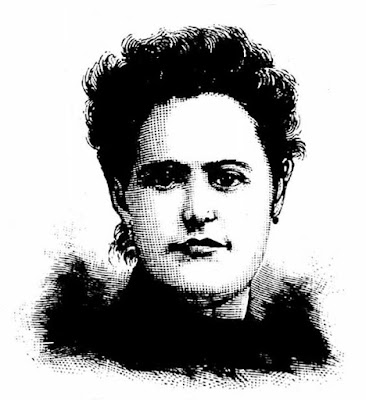
Sarah Jane Whiteling was a Philadelphia poisoner who murdered her husband and two young children during a closely spaced series of deaths in 1888. Known in contemporary reports as the “Wholesale Poisoner” and the “Philadelphia Poisoner,” Whiteling used an arsenic-based household product called Rough on Rats to kill members of her own family. The poisonings occurred inside an impoverished household where illness, financial hardship and repeated moves initially helped conceal the true cause of the victims’ suffering.
Whiteling’s crimes were especially shocking because each victim depended upon her for care. Her husband became violently ill at home, and her children were only nine and two years old when they died. Physicians initially attributed the deaths to intestinal diseases that could produce symptoms similar to arsenic poisoning. Only after all three family members died within approximately two months did officials recognize the pattern and order a deeper investigation.
Early Life and Family
Sarah Jane Whiteling was reportedly born in Germany in approximately 1848. Details about her early life are incomplete, but she later lived in the United States and spent time in Iowa, Chicago and Philadelphia. She was first married to a man named Tom Brown. That marriage ended after Brown was imprisoned, and Whiteling later formed a relationship with Thomas Storey, with whom she had a daughter named Bertha.
On March 27, 1880, Sarah married John Whiteling. Bertha, who was still an infant, became part of the Whiteling household. Sarah and John later had a son, William C. Whiteling, commonly called Willie, who was born in approximately 1886. By 1888, the family was living in Philadelphia and experiencing serious financial difficulty. John reportedly worked at different times as a laborer, factory worker or streetcar employee, but he was also described as physically frail and frequently ill.
The family carried small life-insurance policies that required modest payments but promised money after a death. Such policies were common among working-class families because they could cover funeral expenses. In the Whiteling case, however, the insurance payments became an important part of the prosecution’s theory that Sarah had a financial motive for poisoning her family.
The Poison Used in the Murders
Whiteling obtained Rough on Rats, a commercially available poison containing arsenic. During the nineteenth century, arsenic could be purchased with relatively little difficulty and was commonly sold for killing rodents. It was also notorious as a murder weapon because its symptoms could resemble naturally occurring gastrointestinal illnesses.
Arsenic poisoning can produce severe abdominal pain, vomiting, diarrhea, dehydration, weakness, delirium and collapse. Those symptoms could easily be mistaken for inflammation of the bowels, typhoid fever or other digestive illnesses, particularly before modern toxicological testing became routine. Whiteling exploited that uncertainty as each member of her family became sick and died.
Confirmed Victims
- John Whiteling, 38 — Died on March 20, 1888, in Philadelphia, Pennsylvania. John was Sarah Jane Whiteling’s husband. He suffered prolonged sickness, vomiting, abdominal pain and episodes of delirium before his death. His physician initially certified the cause as inflammation of the bowels. Sarah collected money from insurance or benefit policies following his death.
- Bertha Whiteling, 9 — Died on April 24, 1888, in Philadelphia, Pennsylvania. Bertha was Sarah’s daughter from an earlier relationship. Her illness was initially attributed to typhoid fever or another intestinal disease. She had also been insured, and Sarah received a payment after the child’s death.
- William C. “Willie” Whiteling, 2 — Died on May 26, 1888, in Philadelphia, Pennsylvania. Willie was the young son of Sarah and John Whiteling. He developed violent gastrointestinal symptoms before dying. His death was initially blamed on congestion or inflammation of the bowels. Like his father and sister, Willie was covered by small insurance policies.
The Poisoning of John Whiteling
John Whiteling had been sick for weeks before his death. During February and March 1888, he reportedly experienced periods of delirium and required close attention. On March 17, the family physician, Dr. George Smith, was called to the Whiteling residence after John began vomiting and complaining of intense abdominal pain. Dr. Smith believed that John was suffering from inflammation of the bowels and prescribed medication.
John’s condition continued to deteriorate. He doubled over in pain, suffered repeated vomiting and became progressively weaker. On March 20, 1888, he died inside the family’s Philadelphia home. Because his symptoms appeared consistent with a natural intestinal illness and because no immediate evidence of poisoning was recognized, his body was buried without a criminal investigation.
Sarah later offered inconsistent explanations concerning her husband’s death. At one point, she claimed John had taken poison himself because the family was deeply impoverished. Prosecutors maintained that Sarah had deliberately administered arsenic to him. Toxicological examination after John’s body was exhumed revealed arsenic, strongly contradicting the original natural-death diagnosis.
John had been insured through small policies or benefit organizations. Sarah received payments reported to total several hundred dollars. Although the amount was not a fortune, it was significant to a family living in severe poverty. The timing of the payment and the later deaths of the insured children caused investigators to suspect that money was at least one motive for the killings.
The Murder of Bertha Whiteling
Approximately five weeks after John’s death, nine-year-old Bertha became seriously ill. The child experienced symptoms that again resembled a severe intestinal disease. On April 24, 1888, Bertha died in Philadelphia. Her death was initially attributed to typhoid fever or a related illness, and she was buried near John without an autopsy.
Bertha’s death later became the central charge in the prosecution of Sarah Whiteling. Investigators established that Sarah had purchased arsenic and that the child’s exhumed remains contained the poison. Sarah eventually admitted giving Bertha Rough on Rats.
Whiteling offered a disturbing explanation for killing her daughter. She claimed that Bertha had misbehaved, stolen small objects and was in danger of growing into what Sarah described as a sinful or wicked woman. Rather than correcting or protecting the child, Whiteling portrayed murder as a way to prevent Bertha from living an immoral life. Authorities and the public viewed the explanation as evidence of either profound mental disturbance or an attempt to rationalize a calculated killing.
Bertha had a small life-insurance policy, and Sarah received another payment following her death. The repeated pattern was becoming unmistakable: a family member became violently ill, a physician diagnosed an intestinal condition, the victim died, and Sarah collected insurance money.
The Murder of Willie Whiteling
Only about one month after Bertha’s death, two-year-old Willie became ill. By that time, Sarah was the only surviving member of the immediate household. The boy experienced severe digestive distress before dying on May 26, 1888. A physician initially attributed his death to congestion or inflammation of the bowels.
Willie was also insured under small policies. Sarah stood to receive only a limited amount of money, but the fact that the third insured family member had died from similar symptoms created intense suspicion. Three people in one household had now died within a period of approximately nine weeks.
Whiteling later admitted poisoning Willie and reportedly said that the child was “in the way.” The cold phrasing became one of the most horrifying elements of the case. Willie was a toddler who was entirely dependent on his mother, yet she administered a poison capable of causing extreme abdominal pain, vomiting and prolonged physical collapse.
Suspicion and Investigation
The rapid succession of deaths eventually attracted the attention of Philadelphia officials. Coroner Ashbridge and other authorities questioned whether three members of the same family could have died naturally from similar intestinal conditions in such a short period. Detectives began reviewing the circumstances surrounding the deaths, the insurance policies and Sarah’s behavior.
Detective Frank Geyer was among the investigators associated with the case. Geyer would later become nationally known for tracing and identifying children murdered by serial killer H. H. Holmes. In the Whiteling investigation, detectives discovered that Sarah had purchased Rough on Rats and that arsenic poisoning could explain the symptoms suffered by all three victims.
The bodies of John, Bertha and Willie were exhumed from Mechanics’ Cemetery. Professor Henry Leffmann, a respected Philadelphia chemist and toxicologist, participated in the scientific examination. Tests revealed substantial quantities of arsenic in the remains. The findings transformed three apparent natural deaths into a triple-murder investigation.
Arsenic can remain detectable in human remains after burial because it is a mineral poison that does not decompose like many organic substances. This made exhumation and chemical analysis especially important in nineteenth-century poisoning cases. The discovery of arsenic in all three bodies provided powerful evidence that the deaths were connected.
Arrest and Confession
Sarah Jane Whiteling was arrested in June 1888. Officials reportedly feared that she might attempt suicide and kept her under close observation. During her confinement, she spent long periods reading religious material, praying and displaying signs of emotional distress.
When confronted with the toxicological findings and evidence that she had purchased arsenic, Whiteling confessed to poisoning her children. She acknowledged using Rough on Rats but continued to give shifting accounts of her husband’s death. She claimed that John had poisoned himself, even though investigators believed she was responsible for administering the arsenic.
Whiteling said she had considered killing herself after the deaths but abandoned the idea because she believed suicide would prevent her from entering heaven. Her statements mixed religious beliefs, financial hardship, self-pity and grotesque justifications for killing her children.
Authorities also examined reports that other children may have become sick after receiving candy connected to Whiteling. Some historical accounts alleged that she gave poisoned candy to neighboring children in an attempt to suggest that contaminated sweets, rather than deliberate poisoning inside her home, caused the illnesses. Those children survived, and Whiteling’s confirmed murder count remained three.
The Insurance Motive
The prosecution emphasized the insurance payments attached to each death. John, Bertha and Willie were insured for relatively small amounts, but Sarah collected money after each burial. The combined payments were reportedly only a few hundred dollars, yet they exceeded what the impoverished household might ordinarily have had available at one time.
Contemporary newspapers portrayed Whiteling as a woman who destroyed her entire family for insurance money. The financial evidence supported a practical motive, but her confessions also revealed confused and irrational explanations. She spoke of family burdens, her daughter’s supposed future immorality, her son being an obstacle and her husband’s despair over poverty.
Whether Whiteling acted solely for money or from a combination of greed, depression, resentment and mental illness became a central question at her trial. The prosecution presented the poison purchases, insurance collections, repeated deaths and toxicological findings as evidence of deliberate planning.
Trial and Insanity Defense
Sarah Jane Whiteling’s trial began in Philadelphia on November 26, 1888. Although she was accused of killing three people, the prosecution focused primarily on the murder of Bertha because the evidence surrounding the child’s poisoning and Sarah’s confession was particularly strong.
Her attorneys attempted to establish that she was legally insane or mentally incapable of full criminal responsibility. Dr. Alice Bennett, a pioneering physician and psychiatrist who supervised the women’s department at the State Hospital for the Insane at Norristown, evaluated Whiteling and provided testimony concerning her mental condition.
The defense argued that Whiteling suffered from serious psychiatric disturbances that may have been connected, according to the medical theories of the period, to hormonal or menstrual changes. The concept was sometimes described as periodic insanity. Her relatives also testified that she had long behaved strangely or appeared mentally unstable.
The prosecution maintained that the killings demonstrated calculation rather than uncontrollable madness. Whiteling purchased poison, administered it separately to three people, accepted false natural-death diagnoses, buried the victims and collected insurance payments. She also provided differing explanations when questioned. Those actions indicated that she understood what she was doing and recognized the need to conceal it.
On November 28, 1888, after deliberating for approximately two hours, the jury found Sarah Jane Whiteling guilty of first-degree murder. Under Pennsylvania law, the conviction carried a mandatory death sentence.
Public Debate Over the Death Sentence
The sentence generated widespread controversy. Some Philadelphia residents believed that no person who poisoned a spouse and two children deserved mercy. Others argued that executing a woman, particularly one whose mental condition had been questioned by physicians, was unnecessarily cruel.
Petitions were circulated asking Pennsylvania Governor James A. Beaver to commute Whiteling’s sentence to life imprisonment. Supporters of clemency emphasized the insanity testimony and argued that she should be confined in a mental institution rather than hanged.
The appeals were unsuccessful. State officials concluded that the jury had properly rejected the insanity defense and that the calculated nature of the poisonings justified execution. Whiteling remained confined at Moyamensing Prison while the date of her death approached.
Execution
Sarah Jane Whiteling was executed by hanging at Moyamensing Prison in Philadelphia on June 25, 1889. She was approximately forty or forty-one years old. Before the execution, she met with religious advisers and continued to express confidence that God would forgive her.
At approximately ten o’clock that morning, Whiteling was led to the scaffold before a limited group of official witnesses. After a prayer, the trapdoor opened and she dropped through the platform. Contemporary accounts differed concerning the exact mechanics of her death, but she was pronounced dead after the hanging.
Whiteling became the first woman executed in Philadelphia County. Her body was later examined by Dr. Alice Bennett, who studied her brain in an effort to determine whether a physical abnormality might explain her mental condition and violent behavior. The examination did not produce a conclusive explanation for the murders.
Legacy
The Whiteling case became one of the most notorious American poisoning cases of the nineteenth century. It demonstrated how arsenic could be used to imitate natural illness and how several deaths could pass without investigation until a recognizable pattern emerged.
The case also became part of a broader debate over women, mental illness and capital punishment. Whiteling’s defense raised questions about whether psychiatric evidence should reduce a defendant’s legal responsibility, while her conviction showed that juries were willing to impose the death penalty on a woman when the crimes were considered sufficiently calculated and brutal.
Sarah Jane Whiteling’s three confirmed victims were the people closest to her: her husband, her nine-year-old daughter and her two-year-old son. Each died after enduring symptoms of arsenic poisoning, and each death was initially disguised by a plausible medical diagnosis. The exhumation of their bodies and the discovery of arsenic exposed a deliberate sequence of family murders that had unfolded behind the ordinary walls of a Philadelphia home.
Although Whiteling offered financial, religious and psychological explanations for her actions, none altered the central facts of the case. Between March 20 and May 26, 1888, three members of the Whiteling family died. Sarah Jane Whiteling purchased the poison, admitted administering it to her children and was convicted of first-degree murder. Her execution the following year brought the legal case to an end, but the disturbing circumstances of the poisonings ensured that her name remained associated with one of Philadelphia’s darkest episodes of domestic murder.