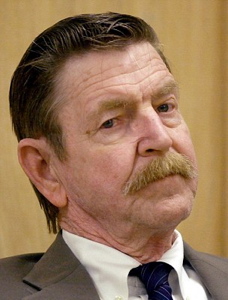
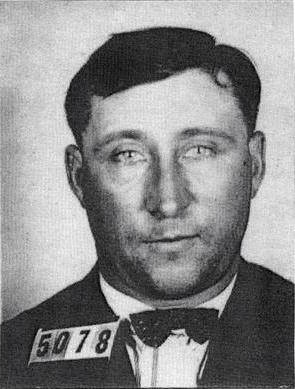
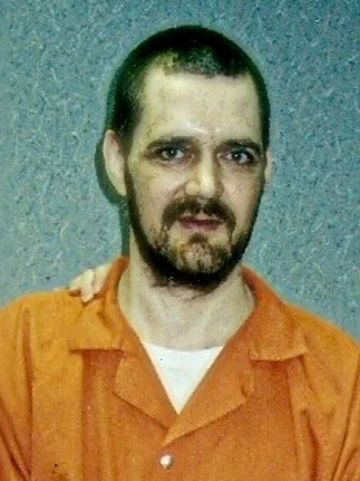
William James “Flip” Williams Jr.
Overview
William James “Flip” Williams Jr., also known as Willie Williams, was a violent Ohio criminal who was convicted of four aggravated murders committed in Youngstown, Ohio, in September 1991. Although he is sometimes described as a suspected serial killer because investigators believed he may have been connected to other killings, his confirmed convictions were for a single quadruple murder connected to control of the local drug trade. The murders took place in Mahoning County, Ohio, and centered on Williams’s attempt to regain dominance in the drug market around the Kimmelbrooks housing project in east Youngstown.
Williams was born on November 9, 1956, in Youngstown, Ohio. By the time of the 1991 murders, he had a long criminal history and had spent time away from the area. When he returned to Youngstown, he found that several people had taken over parts of the drug trade he had once controlled. Prosecutors later argued that this was the motive behind the killings: Williams wanted to rob and eliminate rivals so he could reassert power.
Victims
- Alfonda R. Madison Sr. — Died September 2, 1991, in Youngstown, Mahoning County, Ohio. Madison was one of the men Williams believed had taken over drug activity in the Kimmelbrooks housing project area. The murders began at Madison’s home, where he was bound, gagged, and later killed.
- William L. Dent — Died September 2, 1991, in Youngstown, Mahoning County, Ohio. Dent was lured to Madison’s home during the crime. Prosecutors described him as one of the men Williams targeted because of the drug trade dispute.
- Eric Howard — Died September 2, 1991, in Youngstown, Mahoning County, Ohio. Howard arrived at Madison’s home with William Dent and was ambushed along with him. He was also one of the men connected to the local drug trade that Williams wanted to control.
- Theodore Wynn Jr. — Died September 2, 1991, in Youngstown, Mahoning County, Ohio. Wynn was a recently discharged Air Force sergeant who came to Madison’s home looking for Madison and Howard. He was not the original target of the plan, but Williams believed Wynn could identify those involved, so he was held and killed with the others.
Planning the Murders
Before the killings, Williams recruited three juvenile accomplices: Jessica M. Cherry, Dominic M. Cherry, and Broderick Boone. Jessica Cherry was Williams’s sixteen-year-old girlfriend. Dominic Cherry was Jessica’s brother, and Broderick Boone was described as Dominic’s close friend or “cousin.” Williams gave the juveniles weapons and used them as part of a planned invasion of Madison’s home.
The plan was calculated rather than spontaneous. Williams bought walkie-talkies, batteries, and duct tape in advance. He also drew diagrams of Madison’s house and explained the plan to the others. The group tested the walkie-talkies before the crime. These details later became important evidence because they showed preparation, coordination, and intent.
The Night of September 1–2, 1991
On September 1, 1991, Jessica Cherry went to Madison’s home and discussed a drug deal. Later that night, Williams and the three juvenile accomplices arrived at the house. Williams initially stayed outside with a walkie-talkie while the juveniles entered the home armed with guns. Once they had Madison under control, they signaled Williams, who entered carrying items including handcuffs, duct tape, and gloves.
Inside the home, Madison was restrained. He was handcuffed, bound, and had tape placed over his mouth. Williams’s plan expanded when Theodore Wynn Jr. arrived at the door. Wynn was looking for Madison and Eric Howard. Jessica Cherry first told Wynn that Madison was not home and that Howard was asleep, but as Wynn began to leave, Williams ordered Jessica to call him back inside because Wynn could identify them. Wynn was then held at gunpoint and handcuffed.
Williams next used Jessica Cherry to lure William Dent to the house by telephone. Dent arrived with Eric Howard. Both men were ambushed by Williams and the others, then forced into the bathroom. With all four victims now trapped inside the home, Williams escalated the crime from robbery and intimidation to murder.
The Killings
Williams strangled Alfonda Madison and Theodore Wynn Jr. He then told Jessica Cherry to turn up the stereo, apparently to mask the sound of the shootings. Williams moved through the house and shot each of the four victims in the head using a gun that belonged to Madison. After the murders, the group left the home, but Williams reportedly went back inside to make sure all four victims were dead.
The killings were cold and organized. Madison, Dent, and Howard were targeted because Williams viewed them as rivals in the drug trade. Wynn appears to have been killed because he arrived unexpectedly and could identify the people involved. The crime was not only a quadruple murder but also a coordinated kidnapping and home invasion, with each victim restrained or controlled before being killed.
Aftermath and Flight
On September 2, 1991, the day the victims died, Williams and Jessica Cherry were involved in a separate incident when another car rammed their vehicle in Youngstown and people in the other car fired shots at them. Williams and Jessica fled the scene. They were later questioned by police about the traffic incident and then released.
After the murders, Williams, Jessica Cherry, Dominic Cherry, and Broderick Boone fled to Pennsylvania before returning to the Youngstown area. The case began to break open later that month. On September 24, 1991, Dominic Cherry turned himself in and gave a statement about the murders. Jessica Cherry and Broderick Boone were also arrested, and the juvenile accomplices became key witnesses against Williams.
Escape and Attempt to Silence Witnesses
Williams was arrested in connection with the murders but escaped from jail on October 15, 1991. While he was still a fugitive, he was indicted on four counts of aggravated murder, four counts of kidnapping, and one count of aggravated burglary.
On January 12, 1992, Williams carried out another serious crime connected to the murder case. He and two accomplices entered the Mahoning County Juvenile Justice Center, where Jessica Cherry, Dominic Cherry, and Broderick Boone were being held. Williams used deception to get inside, then held a receptionist and a deputy sheriff hostage. He demanded access to the juvenile witnesses. Testimony later indicated that Williams intended to kill the three juveniles because they had given statements to police and were expected to testify against him.
Trial and Conviction
The case was moved from Mahoning County to Summit County because of concerns about publicity and fairness. Williams was reindicted on twelve counts of aggravated murder, four counts of kidnapping, and one count of aggravated burglary. The aggravated murder counts were later merged into four murder convictions, one for each victim.
Jessica Cherry, Dominic Cherry, and Broderick Boone all entered plea agreements and testified against Williams. Their testimony described the planning, the use of weapons and walkie-talkies, the restraint of the victims, and Williams’s direct role in the killings. A jury convicted Williams on all counts. He was sentenced to death for the murders of Alfonda R. Madison Sr., William L. Dent, Eric Howard, and Theodore Wynn Jr.
Suspected Additional Crimes
Williams had previously been acquitted of a 1981 murder, and investigators believed he may have been responsible for other killings during his criminal career. Some reports indicate that police suspected him in as many as ten additional deaths. However, the available confirmed victim information connected to his conviction consists of the four people murdered in Youngstown on September 2, 1991.
Because of these suspicions, Williams is sometimes labeled a suspected serial killer. Strictly speaking, his confirmed conviction was for a quadruple murder committed during one criminal episode. The suspected additional killings remain separate from the proven record unless more specific, verified victim details are available.
Execution
William James Williams Jr. was executed by lethal injection on October 25, 2005, at the Southern Ohio Correctional Facility in Lucasville, Ohio. He was forty-eight years old. His execution followed years of appeals after his conviction for the 1991 murders. The State of Ohio carried out the sentence for the aggravated murders of Alfonda Madison, William Dent, Eric Howard, and Theodore Wynn Jr.
Legacy of the Case
The William James Williams case remains one of Youngstown’s most violent drug-trade murder cases of the early 1990s. The crime stood out because of its planning, the use of teenage accomplices, the restraint and execution-style killing of four victims, and Williams’s later attempt to reach and possibly kill the young witnesses against him. The victims died inside a home in Mahoning County because Williams wanted power, control, and revenge in the local drug trade.