Reginald Haley: The Los Angeles Murder Suspect and Violent Crime Spree
Background
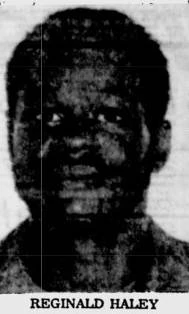
Reginald Haley was born in Memphis, Tennessee, in 1960 and moved with his family to Los Angeles while he was still a child. During the early 1980s, Reginald and his younger brother, Kevin Bernard Haley, became involved in an extraordinary series of burglaries, robberies, sexual assaults, and other violent crimes in the Los Angeles area. Police eventually investigated the brothers in connection with a group of murders committed during the same period. For this reason, Reginald has frequently been described as a suspected serial killer. It is important, however, to distinguish suspicion from conviction: Reginald was convicted of numerous violent crimes, but the murder convictions associated with the brothers' crime spree were obtained against Kevin Haley.
The Haley brothers generally preyed on people in and around residential neighborhoods of Los Angeles. Many of their victims were women, including elderly women living alone. Investigators believed that burglaries were a major part of their criminal activity and that some encounters escalated into sexual assault and extreme violence. Police also said that drug use, particularly cocaine addiction, was an important motive behind the brothers' repeated thefts. By late 1984, detectives were examining whether the Haleys might be responsible for a much larger number of crimes than those for which they could immediately gather enough evidence to prosecute.
The Murder Investigation
In 1984, Los Angeles investigators began connecting a number of violent deaths with burglaries and attacks occurring in neighborhoods where the Haley brothers were active. Police publicly identified the brothers as suspects in a series that included elderly women murdered inside their homes and a teenage girl shot on a Los Angeles street. Some victims had been beaten or strangled, and several of the elderly victims were attacked during apparent residential burglaries. Authorities considered the pattern sufficiently serious that investigators examined numerous additional unsolved homicides for possible connections.
Reginald's role in the suspected murder series was never established in court to the same extent as Kevin's. Contemporary police reporting specifically identified Reginald as a suspect in the killing of an elderly woman named Isabel Buxton, while Kevin was linked much more directly to several other killings. Kevin eventually confessed to killing Dolores Clement, and forensic evidence established his involvement in the murders of Clement and Laverne Stolzy. Those facts are important because accounts that simply describe all of the victims as people murdered personally by Reginald overstate what was proved.
Victims Connected to the Investigation
- Jodie Samuels — May 17, 1984 — West 23rd Street, Los Angeles: Samuels was a 15-year-old girl who was outside near 23rd Street and Longwood in Los Angeles early in the morning. At approximately 6:45 a.m., a nearby resident heard her screaming. Samuels was shot during what investigators described as an attempted robbery. Police later investigated Kevin Haley in connection with her death. Court records establish May 17, 1984, as the date of the shooting, correcting later secondary accounts that have sometimes given May 12.
- Laverne Stolzy — June 25, 1984 — Los Angeles: Stolzy was 56 years old and was killed inside her home. Her body was discovered by a coworker on the morning of June 26. She had suffered severe head injuries from repeated blows with a piece of wood, and evidence indicated that she had also been sexually assaulted. Later proceedings identified June 25, 1984, as the date of her killing, although court descriptions often refer to June 26 because that was the morning her body was discovered. DNA evidence eventually became crucial in proving Kevin Haley's responsibility for Stolzy's murder.
- Dolores Clement — September 27, 1984 — Los Angeles: Clement, 55, was attacked inside her residence during a burglary. Kevin Haley later admitted that he entered intending to steal money and hid when Clement appeared. A struggle followed. Clement was sexually assaulted and manually strangled, suffering extensive injuries to her neck. Her death was determined to have resulted from asphyxia caused by strangulation. Fingerprints recovered from her home connected Kevin to the crime, and his subsequent confession became a central part of the murder case against him.
Other Suspected Victims
Investigators also associated the Haley investigation with the deaths of several elderly women, including Isabel Buxton, D. Robinoff, Elizabeth Burns, Elizabeth Karp, and a woman identified in reports as T. Okauchi. The historical record concerning exact dates, spellings, ages, and the individual responsibility of each brother is inconsistent in surviving secondary accounts. Because the precise death dates for these victims cannot be verified with the same confidence as those listed above, they are not presented here with exact dates. Contemporary reporting did specifically describe Reginald Haley as a suspect in Buxton's killing, but suspicion did not result in a murder conviction against him.
Arrest and the Case Against the Brothers
The investigation accelerated during the fall of 1984. Kevin Haley had been arrested in connection with burglaries before detectives obtained a major break in the Clement investigation. Fingerprints collected from Kevin were compared with prints recovered from Clement's residence and produced a match. Police arrested Kevin again on October 9, 1984. Reginald was also arrested that day while authorities investigated the brothers' broader criminal activities.
Detectives believed the brothers were involved in an enormous number of residential burglaries and assaults. Investigators examined hundreds of burglaries and dozens of violent attacks on women as they attempted to reconstruct the brothers' movements. Kevin eventually admitted involvement in numerous burglaries and sexual assaults. Police also examined dozens of unsolved murders to determine whether the brothers could be responsible for additional deaths, although suspicion in such cases did not necessarily result in criminal charges.
Reginald Haley's Convictions
Reginald was prosecuted for a long list of violent offenses separate from the murder charges ultimately proved against Kevin. His case included accusations involving robbery, burglary, kidnapping, rape, sodomy, sexual assault, and related offenses. In 1987, Reginald was convicted of multiple serious crimes arising from the brothers' violent crime spree. He received a life prison sentence with the possibility of parole after serving the required minimum term.
Kevin Haley faced the homicide prosecutions. He was convicted of the murder of Dolores Clement and, following later proceedings supported by DNA evidence, of the murder of Laverne Stolzy. He received death sentences for the killings. The distinction between the brothers is significant: although investigators suspected Reginald of participating in a series that included multiple murders, the available judicial record does not support describing the Clement and Stolzy killings as murders personally proved against Reginald.
Legacy of the Case
The Haley investigation became notable because of the scale of the criminal activity attributed to the brothers and the vulnerability of many of their victims. Residential burglaries placed victims in danger inside their own homes, while several attacks involved sexual violence and severe physical injury. The murders investigated alongside these offenses intensified fears among older residents of Los Angeles, particularly women living alone.
Reginald Haley therefore occupies an unusual place in accounts of American serial crime. He is often listed as a suspected serial killer because police believed that he and his brother were connected to a larger series of homicides, but the historical evidence requires careful wording. Reginald was unquestionably a convicted violent offender responsible for serious crimes against numerous victims. The murders most conclusively established through confession, fingerprints, DNA evidence, and murder convictions were committed by his brother Kevin. Separating those proven facts from the wider suspicions surrounding the brothers provides a more accurate account of the disturbing Los Angeles crime spree of the early 1980s.