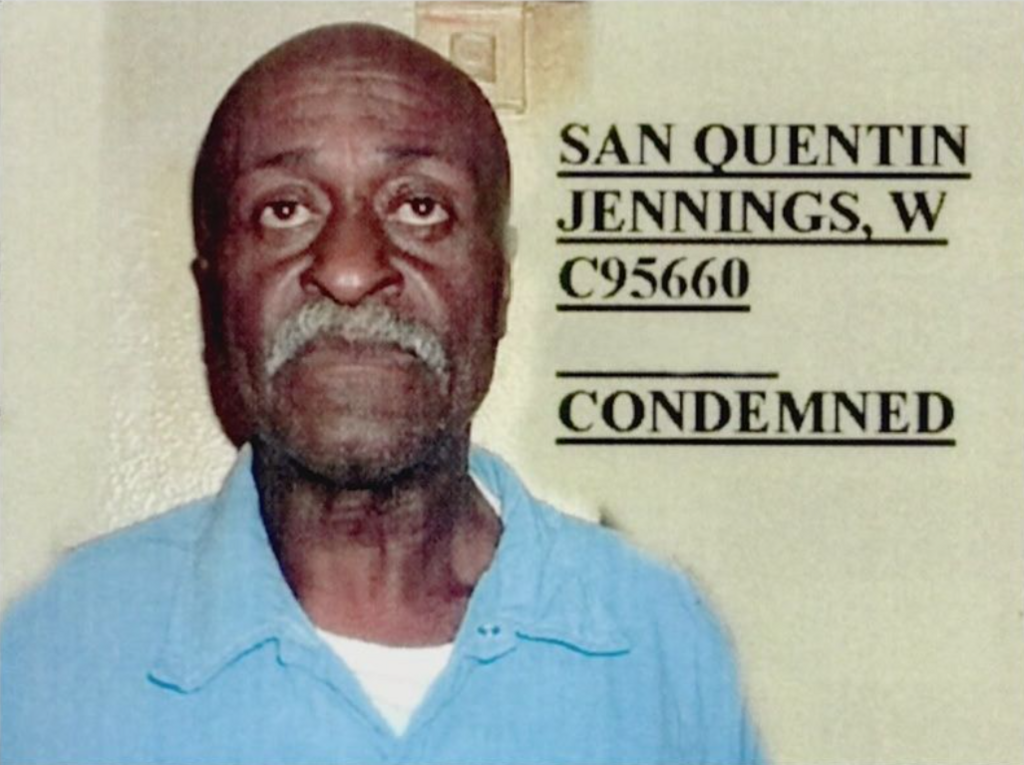
Wilbur Lee Jennings: The Ditchbank Murderer
Background and Early Life
Wilbur Lee Jennings was an American serial killer and repeat sexual offender whose crimes took place primarily in Fresno County, California. Born on February 28, 1940, in Shreveport, Louisiana, Jennings moved to California with his family while he was still young and eventually settled in the Fresno County community of Selma. During the 1980s, he became known as the “Ditchbank Murderer” because several women linked to him were found in irrigation canals, ponds, or roadside ditches in rural areas.
Jennings was convicted of murdering four women between 1983 and 1984. Decades later, DNA evidence connected him to two additional killings committed in 1981 and 1983. He was formally charged in connection with those cold cases but died before either prosecution could be completed. His known criminal history also included rapes, attempted sexual assaults, robberies, kidnappings, arson, and attacks on women extending back more than two decades before the murders for which he received a death sentence.
A History of Sexual Violence
Jennings displayed violent and sexually predatory behavior long before the first murder publicly associated with him. At his murder trial’s penalty phase, women described attacks dating to the early 1960s. One woman testified that Jennings carried her to a toolshed and raped her. She said that he later forced her into a car, drove her to a barn, beat her, and raped her again. Another victim, an eighth-grade student, testified that Jennings offered to drive her to school in 1962 but instead took her to a vineyard, where he beat and raped her. Jennings later pleaded guilty to rape in that case.
In 1966, Jennings encountered Dale Drake and Mary Richardson near the Kings River. Armed with a rifle, he demanded money, prevented the couple from leaving, and struck Drake in the head with the rifle. Drake suffered serious head injuries and a broken wrist, while her damaged bathing suit indicated an attempted sexual assault. Jennings later pleaded guilty to assault with a deadly weapon and attempted rape.
Other violent episodes occurred during the 1970s. In 1977, he attacked Chun Smith inside her automobile, choking and knocking her unconscious. When she regained consciousness, the car was moving, and she either jumped or was pushed from it at approximately 40 miles per hour. During another confrontation that year, Jennings held a butcher knife to Betty Burrell’s neck after she attempted to end their relationship. He later entered a neighboring home with a shotgun and threatened to kill Burrell.
The Fresno Murder Pattern
By the early 1980s, Jennings frequently associated with women working along G Street in Fresno. According to trial testimony, he purchased food and drinks for some of the women and presented himself as a friend or romantic companion. His behavior could abruptly become possessive and violent, particularly when a woman rejected him, refused a sexual demand, disputed money with him, or attempted to leave.
The four murders resulting in his conviction shared important characteristics. The victims had been seen with Jennings or had known him before their deaths. Their bodies were left in isolated rural locations, usually in or near water. Several had been beaten, sexually assaulted, robbed, or partially undressed. Beer cans, bottles, or cartons associated with the brand Jennings commonly drank were also discovered near multiple victims.
Known and Alleged Victims
- Debra Chandler, 17 — exact date of death unknown; body discovered July 15, 1981 — Sacramento County, California: Chandler was last seen at her family’s home on July 4, 1981. Her beaten body was later observed by a passerby beside a water-filled roadside ditch approximately 15 miles from her Sacramento-area home. Biological evidence preserved from the case was matched to Jennings through DNA testing many years later. Jennings was charged with Chandler’s murder and was being held in Sacramento County for trial when he died in 2014. Because the prosecution was never completed, he was not convicted of her killing.
- Clarice Reinke, 76 — June 23, 1983 — near Easton, Fresno County, California: Reinke was attacked inside her rural home on East American Avenue. Her brother-in-law found her on her bed after she had been sexually assaulted and strangled. Biological evidence recovered during her autopsy was preserved for decades. Later DNA testing linked the evidence to both Jennings and convicted killer Alvin Johnson. Murder charges were filed, but Jennings died before he could be tried in Reinke’s case.
- Karen Robinson, 21 — approximately August 22 or August 23, 1983 — near Easton, Fresno County, California: Robinson was last seen entering a vehicle resembling one driven by Jennings. Her partially undressed body was found in a pond the following day. She had been beaten around the face and head before being drowned. Investigators also found evidence of sexual contact and an empty beer carton near bloodstains at the scene. Jennings was convicted of second-degree murder for Robinson’s death.
- Jacqueline Frazier, 26 — exact date of death unknown; last seen July 21 and found July 24, 1984 — canal near Caruthers, Fresno County, California: Frazier was observed sitting with Jennings in a Ford Pinto outside Hunt’s Club shortly before she disappeared. Her body was discovered three days later in a canal. She had been beaten around the head and neck with a blunt object and then drowned. Several rings she normally wore were missing, and two of those rings were subsequently found in Jennings’s jewelry box. Jennings was convicted of her first-degree murder.
- Olga Cannon, 23 — exact date of death unknown; disappeared August 15 and found December 8, 1984 — irrigation ditch outside Fresno, California: Cannon, who was also known as Wendy or Nene, had been seen leaving with Jennings shortly before she was reported missing. Witnesses testified that Jennings had previously threatened to rape, rob, beat, and kill her. Her badly decomposed body was found months later in an irrigation ditch. Her jaw had been broken, but decomposition prevented authorities from determining an official cause of death. A purse belonging to Cannon had previously been found in Jennings’s vehicle. Jennings was convicted of her first-degree murder.
- Linda Johnson, 28 — September 13, 1984 — canal outside Fresno, California: Johnson had returned to Selma from Long Beach on September 12 to visit her hospitalized mother. Her seminud body was discovered in a canal the following day. She had suffered 18 blows to the head from a heavy blunt object with a sharply angled edge. Evidence indicated that she had also been sexually assaulted. Her family home and the Cadillac she had been driving were deliberately burned in apparent attempts to destroy evidence. Jennings was convicted of Johnson’s first-degree murder.
The Murder of Karen Robinson
Karen Robinson knew Jennings and had been seen with him on several occasions. On August 21, 1983, a friend observed Robinson speaking with Jennings while he sat inside a Ford LTD. The following day, another witness saw Robinson enter a similar vehicle while wearing red shorts, a red blouse, and tennis shoes. Her body was found in a pond the next day.
Robinson’s red blouse had been pulled down around her ankles, and the rest of her clothing was missing. An autopsy determined that she had been beaten around the face and head before being drowned. Investigators also recovered biological evidence indicating sexual activity. Bloodstains and an empty Budweiser carton were found near the pond.
Robinson’s young daughter remembered frightening encounters between her mother and Jennings. She described incidents in which Jennings fought with Robinson, choked her, and threatened to kill her. Jennings denied killing Robinson, but the jury ultimately convicted him of second-degree murder.
The Murder of Jacqueline Frazier
Jacqueline Frazier was last seen alive on the night of July 21, 1984. Her brother saw her at Hunt’s Club at approximately 9:30 p.m. Later that night, another witness saw her sitting in a Ford Pinto with Jennings outside the club. Three days later, her body was found in a canal near Caruthers.
Frazier had been beaten around her head and neck with a blunt instrument, but drowning was determined to be the immediate cause of death. Semen was detected during the autopsy. Near the body, investigators found women’s underwear, a broken beer bottle, and an empty beer carton. Tire impressions at the scene were similar to those made by the Pinto Jennings had been driving, although investigators could not establish a conclusive match.
Frazier commonly wore eight rings. On the day she disappeared, she wore seven because she had misplaced one earlier. When her body was recovered, three of those seven rings were gone. Two of the missing rings were found inside Jennings’s jewelry box, providing significant physical evidence connecting him to the victim.
The Disappearance and Death of Olga Cannon
Olga Cannon had a complicated association with Jennings. He sometimes introduced her to others as his girlfriend or wife, yet witnesses heard him express anger toward her. Jennings complained about the amounts Cannon charged different customers and reportedly threatened to rape, rob, and kill her. On August 14, 1984, a witness saw Cannon leave in Jennings’s van after Jennings stated that he would kill her if she did not behave.
Cannon was reported missing on August 15. Soon afterward, a woman living with Jennings found a brown purse in his automobile. Jennings initially took the purse away and removed papers from it before returning it. The purse was later identified as Cannon’s property.
Her nude and badly decomposed body was discovered in an irrigation ditch on December 8, 1984. Because of the body’s condition, a medical examiner could not determine precisely when or how she died. Her jaw had been broken, indicating a violent assault. An empty Budweiser can was located only a few feet from her remains. A jailhouse witness later testified that Jennings described beating Cannon to death with a crowbar and leaving her body in the countryside.
The Murder of Linda Johnson
Linda Johnson lived next door to Jennings’s family before moving to Long Beach. Jennings repeatedly asked her relatives when she would return and made statements suggesting that he considered himself entitled to a relationship with her. Johnson came back to Selma on September 12, 1984, driving her boyfriend’s blue Cadillac.
Early the next morning, Johnson’s family home was destroyed by a deliberately set fire. Johnson and the Cadillac were missing. Later that day, her body was found in a canal outside Fresno. She had been struck in the head 18 times, causing extensive fractures and hemorrhaging. Evidence recovered during the autopsy indicated a sexual assault.
The Cadillac was later found burning, and investigators determined that gasoline had been used to ignite it. Witnesses testified that Jennings had threatened Johnson and had spoken about obtaining her Cadillac. His half brother told investigators that Jennings admitted raping and killing Johnson, dumping her body, and setting the house on fire to conceal evidence. Jennings’s arrest followed soon after the discovery of the body.
Women Who Survived
The prosecution also presented evidence concerning women who survived violent encounters with Jennings. One woman testified that he drove her to an isolated orchard, retrieved a pipe and bottle from his trunk, struck her, and announced that he intended to kill her. She survived by attempting to calm him and complying with his demands out of fear.
Another woman described being driven to a rural orchard, where Jennings began strangling her after she asked to return to town. He stopped, apologized for losing control, and continued to sexually assault her. She eventually escaped from his car and reported the rape.
A third survivor testified that Jennings knocked her unconscious after attempting to rob her. When she awoke in his automobile, he pressed a screwdriver beneath her eyes and threatened to blind her if she refused his demands. He had broken her jaw and repeatedly struck her during the assault. She escaped only when an approaching truck caused Jennings to flee.
Arrest and Evidence
Jennings was arrested in September 1984 as investigators focused on the murder of Linda Johnson. The case against him was built from physical evidence, witness observations, property belonging to victims, testimony about his threats, and statements he allegedly made to relatives, acquaintances, assault survivors, and a jailhouse informant.
Police recovered objects that could have been used as weapons, including a shortened baseball bat and a length of metal pipe. Victims’ belongings were connected to Jennings, most notably Jacqueline Frazier’s rings and Olga Cannon’s purse. Witnesses also described seeing victims with Jennings immediately before their disappearances.
Jennings testified in his own defense and denied killing the women. He also denied making incriminating statements and challenged the accounts of the surviving victims. The jury rejected his denials.
Convictions and Death Sentence
In 1986, Jennings was convicted of the first-degree murders of Linda Johnson, Olga Cannon, and Jacqueline Frazier. He was convicted of second-degree murder in the death of Karen Robinson. The jury also found him guilty of numerous additional felonies, including rape, robbery, arson, sexual assault, and kidnapping for robbery.
Special circumstances were found in several of the murders, including killings committed during rape or robbery. A Fresno County jury recommended the death penalty, and Jennings was formally sentenced to death on November 20, 1986. He was transferred to San Quentin State Prison and remained on California’s death row for more than 27 years.
DNA and the Cold Cases
Advances in DNA technology eventually connected Jennings to the deaths of Debra Chandler and Clarice Reinke. Evidence preserved from both crime scenes was retested years after the killings. Authorities said the resulting profiles linked Jennings to both women.
The Reinke investigation was unusual because testing reportedly identified biological evidence from two men. The second DNA profile was linked to Alvin Johnson, a convicted murderer and sexual offender imprisoned in Utah. Prosecutors alleged that Jennings and Johnson participated in Reinke’s assault and murder. Both men faced new charges, although Jennings continued to deny knowing Johnson or participating in the crime.
Jennings was also charged with murdering Debra Chandler in Sacramento County. Her body had been left near a water-filled roadside ditch, closely resembling the disposal locations associated with the Fresno killings. The Chandler prosecution remained pending for years as Jennings experienced serious health problems.
Death in Custody
Jennings suffered from prostate cancer, diabetes, and other medical complications during his later years. He was transferred from San Quentin to the Sacramento County Main Jail while awaiting trial for Debra Chandler’s murder.
On February 11, 2014, Jennings died of natural causes at the age of 73. His death ended the Chandler prosecution and prevented Fresno County authorities from trying him for the murder of Clarice Reinke. Although he died under a sentence of death for four murders, he was never convicted in the two cases connected to him through later DNA testing.
Legacy of the Case
Wilbur Lee Jennings’s crimes demonstrated a prolonged pattern of sexual aggression, possessiveness, robbery, and lethal violence. Several victims were particularly vulnerable because they worked in prostitution and were accustomed to entering customers’ vehicles. Jennings used isolated roads, orchards, canals, and irrigation ditches to separate women from potential witnesses and to conceal their bodies.
The investigation also showed the importance of preserving biological evidence from unsolved crimes. Evidence collected in 1981 and 1983 remained available long enough for modern DNA testing to identify suspects decades later. Although Jennings’s death prevented final courtroom resolutions in the Chandler and Reinke cases, the testing gave investigators and the victims’ families a much clearer understanding of what had happened.
Jennings was conclusively convicted of four murders and was linked through DNA evidence to two more. His known violence spanned more than 20 years, beginning with rapes and assaults during the 1960s and culminating in a series of murders during the early 1980s. The rural waterways where his victims were abandoned gave him his notorious nickname and became a lasting symbol of one of Fresno County’s most disturbing serial murder cases.