Faye Della Copeland: The Missouri Farm Murders
Background
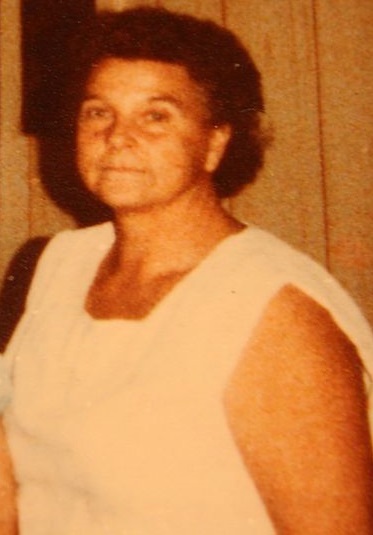
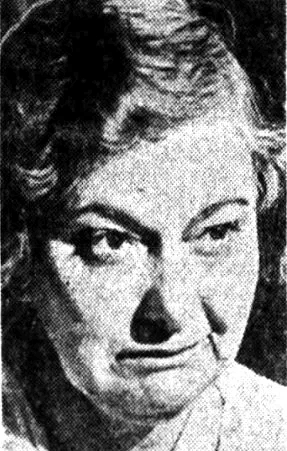
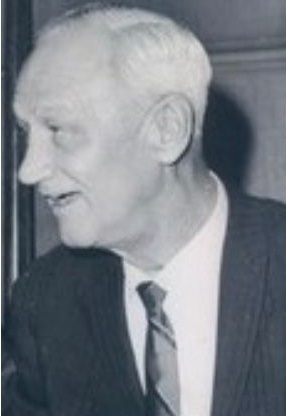
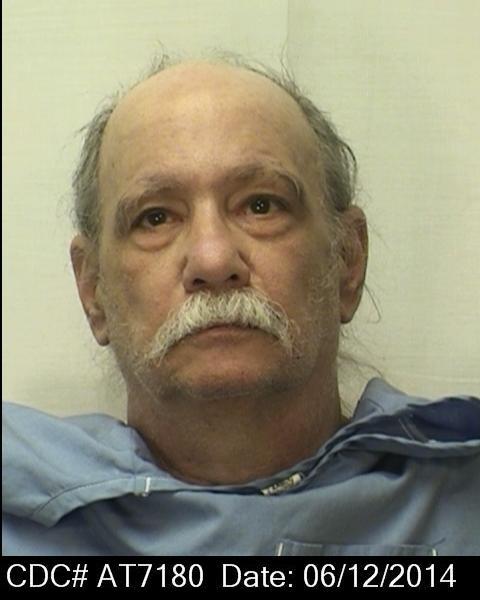
Faye Della Copeland was an American serial killer convicted for her role in the murders of five men in rural northwestern Missouri between 1986 and 1989. Born Faye Della Wilson on August 4, 1921, in Harrison, Arkansas, she married Raymond "Ray" Copeland and eventually settled with him on a farm near Mooresville, Missouri. By the time their crimes were uncovered, the Copelands appeared to outsiders to be an unremarkable elderly farm couple. Behind that appearance, however, prosecutors established that the couple were operating a fraudulent cattle-buying scheme that repeatedly ended with the disappearance and murder of the men they recruited.
Faye's precise physical role in the killings was a major issue at her trial. Evidence established Ray as the person principally responsible for recruiting the men, and the prosecution's case against Faye was based on her complicity in the larger criminal operation and murders. The Missouri Supreme Court later upheld her convictions, finding sufficient evidence that she knowingly participated in the scheme and aided Ray. Five victims were ultimately connected to the Copelands, all of whom had been shot in the head.
The Cattle Fraud Scheme
Ray Copeland had a history of fraud involving livestock and bad checks. During the 1980s, the operation became increasingly elaborate. Men with few local connections were recruited under the promise of farm work. Some were located at homeless shelters or missions and brought to the Copelands' farm near Mooresville.
The men were instructed to obtain post-office boxes and establish checking accounts using money supplied by the Copelands. They then accompanied Ray to livestock auctions and purchased cattle using checks drawn on accounts that contained insufficient funds. The cattle could then be quickly resold before the original checks were returned unpaid. By placing the checking accounts and purchases in the workers' names, the Copelands created distance between themselves and the fraudulent transactions.
The greatest danger to the scheme was the recruited worker himself. Once fraudulent checks began attracting attention, the man whose name appeared on the account could lead investigators directly back to the Copelands. Prosecutors argued that murder became the final stage of the operation: after the worker had served his purpose, he was killed so that he could not explain who had actually organized the transactions.
The Confirmed Victims
- Dennis K. Murphy - October 17, 1986 - Livingston County area, Missouri: Murphy, who was associated with Normal, Illinois, was one of the earliest confirmed victims. Evidence discovered during the investigation included paperwork connecting Murphy to the Copelands' operation. His body was eventually recovered from a well on a farm near Ludlow, Missouri. The remains had been weighted with a roughly forty-pound concrete block. An autopsy determined that Murphy had been shot in the head.
- Wayne Warner - November 1986 - Livingston County area, Missouri: Warner was another transient worker connected to the cattle-buying operation. Contemporary reporting at the time of the Copelands' indictment established his death as occurring in November 1986. His remains were eventually discovered in a shallow grave on a farm where Ray had previously worked. The grave was concealed beneath a large quantity of hay bales. Warner had also been killed by a gunshot to the head.
- Jimmie Dale Harvey - October 25, 1988 - near Ludlow, Missouri: Harvey was 27 years old and was identified as being from Springfield, Missouri. His remains were among those discovered in shallow graves during the widening investigation of properties connected with the Copelands. Harvey's name was especially important to the case against Faye because it appeared on a handwritten list found inside the Copeland residence. An "X" appeared beside the names of men on the list who were subsequently identified as murder victims.
- John W. Freeman - December 8, 1988 - near Ludlow, Missouri: Freeman was 27 years old. He participated in the type of banking and livestock transactions central to the Copelands' fraud. Investigators discovered that Freeman had opened a bank account and purchased cattle at livestock sale barns. Checks from his account were later returned for insufficient funds. After the bank closed Freeman's account, correspondence for him was sent to the Copeland residence. Faye initially signed for a certified letter addressed to Freeman before returning it and claiming she did not know him. Freeman's body was later recovered from a shallow grave. He had been shot in the head.
- Paul J. Cowart - May 1, 1989 - near Ludlow, Missouri: Cowart, reported at the time as 21 years old and from Dardanelle, Arkansas, was the last of the five confirmed victims to die. Like Freeman, Cowart opened a bank account and participated in cattle purchases connected to the fraudulent operation. Contemporary reporting quoting Missouri authorities at the time of the indictment placed his death on May 1, 1989. His remains were eventually discovered during the investigation of properties associated with Ray Copeland. Cowart had been shot in the head.
The Evidence Against Faye Copeland
Faye did not fit the conventional image investigators expected to encounter in a multiple-murder case. By the time she was arrested she was an elderly wife, mother, and grandmother. Her defense maintained that Ray dominated the marriage and that she did not know he was murdering the workers. Prosecutors, however, assembled documentary and circumstantial evidence that convinced a jury she was not merely an uninformed spouse.
One of the most significant discoveries was a small handwritten list found inside a Polaroid camera case. The writing was identified as Faye's. It contained the names of men associated with the Copeland operation, and several entries were accompanied by either the notation "back" or an "X." The names of murder victims Cowart, Freeman, and Harvey appeared with an "X." Prosecutors argued that the markings demonstrated Faye was keeping track of the men and knew what had happened to those who disappeared.
Investigators also found pasture rental agreements in Faye's handwriting involving Dennis Murphy and Wayne Warner. Other papers contained financial and banking information for men used in the operation. When Faye's purse was searched, investigators found signed blank checks connected to other workers. The evidence showed that she was familiar with important details of the financial transactions rather than being completely removed from Ray's activities.
There was also physical evidence inside the Copeland home. The guest-bedroom closet contained clothing in numerous sizes, and some items were identified as property belonging to men who had been killed. Luggage belonging to one of the victims was also discovered. Prosecutors argued that the accumulation of the missing men's possessions inside Faye's home made her claim of complete ignorance increasingly difficult to accept.
The Investigation Begins
The Copelands' operation began to unravel because one potential victim survived. In 1989, a worker named Jack McCormick became involved with Ray and was instructed to participate in the same type of banking and cattle transactions that had preceded the deaths of other workers. McCormick later reported seeing what appeared to be human bones while working around property associated with the Copelands.
McCormick contacted authorities and provided information about the cattle operation and his disturbing discovery. His account eventually prompted a serious investigation. On October 9, 1989, law-enforcement officers arrived at the Copeland residence with a search warrant. The investigation expanded beyond the home as officers followed information concerning other farms and barns where Ray had worked.
Searchers began finding shallow graves. Three victims were recovered from graves in or around a barn near Ludlow. Investigators later located Wayne Warner buried beneath hay bales. Dennis Murphy's remains were eventually recovered from the bottom of a well, attached to a heavy concrete block. The recovery of five bodies transformed what had begun as an investigation of fraudulent cattle transactions into one of Missouri's most notorious serial-murder investigations.
The Murder Weapon
Autopsies showed that each of the five men had died from gunshot wounds to the head. Investigators recovered a .22-caliber rifle from the Copeland residence. Ballistics evidence connected at least one recovered bullet directly to the weapon, strengthening the prosecution's contention that the killings were part of a single continuing criminal scheme.
The method served a practical purpose within the cattle fraud. The victims were not random targets selected solely for violence. They were men who had become useful to the Copelands financially and then dangerous because their identities were attached to fraudulent purchases. The prosecution portrayed their deaths as calculated acts intended both to preserve the proceeds of the fraud and eliminate witnesses capable of identifying Ray and Faye.
Arrest and Murder Charges
Ray and Faye Copeland were taken into custody during the investigation in October 1989. In December 1989, a Livingston County grand jury indicted the couple on five counts of first-degree murder. Authorities publicly identified the victims as Dennis K. Murphy, Wayne Warner, Jimmie Dale Harvey, John W. Freeman, and Paul J. Cowart.
The cases against husband and wife were handled separately. Although the evidence strongly portrayed Ray as the person who recruited the workers and physically carried out the killings, Missouri law allowed Faye to be convicted if prosecutors proved that she knowingly aided the murders and participated in the common criminal purpose.
Faye Copeland's Trial
Faye went on trial in Livingston County in November 1990. Her defense portrayed her as a woman who had lived for decades under the domination of an abusive husband and argued that Ray conducted the killings without her knowledge. The prosecution countered with the handwritten documents, victims' possessions, banking material, Faye's statements to investigators, and her conduct surrounding the disappearing workers.
Particularly damaging was the evidence involving John Freeman. After Freeman's fraudulent checking account was closed, a certified letter connected with the remaining money in the account was sent to the Copeland address. Faye initially accepted the correspondence but later returned it and denied knowing Freeman. Prosecutors portrayed the incident as an effort to sever any documented connection between the household and a man who had already disappeared.
The handwritten list became another centerpiece of the state's argument. Prosecutors maintained that the "X" markings beside the names of dead workers reflected knowledge of their fate. The Missouri Supreme Court later concluded that the jury was entitled to infer from the evidence that the markings represented men who had been killed.
Conviction and Death Sentence
On November 10, 1990, the jury found Faye Copeland guilty of five counts of first-degree murder. During the penalty phase, jurors recommended death sentences for four of the murders and life imprisonment without the possibility of parole for the fifth. On April 27, 1991, the court formally sentenced her to death for the murders of Paul Cowart, John Freeman, Jimmie Harvey, and Wayne Warner. She received life imprisonment without parole for the murder of Dennis Murphy.
Faye's convictions were based on complicity rather than a finding that she personally fired every fatal shot. The distinction is important to understanding the case. The prosecution proved to the jury's satisfaction that the killings were part of a criminal enterprise in which Faye knowingly participated and that her actions helped promote or further the murders.
Ray Copeland's Conviction
Ray Copeland was separately tried and convicted of murdering the same five men. He was also sentenced to death. Together, Ray and Faye became nationally known because of their advanced ages when they received their death sentences. Ray was in his seventies and Faye was 69 when the cases reached their sentencing stages.
Ray never faced execution. He died of natural causes in prison in October 1993. His death left Faye to continue pursuing legal challenges to her convictions and sentence.
Appeals and Commutation
Faye challenged her convictions and death sentences through the courts. Among the issues raised by her attorneys were claims concerning evidence of abuse by Ray and whether her defense had adequately presented the effects of that abuse. In 1996, the Supreme Court of Missouri upheld her convictions, concluding that the evidence was sufficient for a reasonable jury to find that she knowingly participated in the criminal plan.
Faye's death sentences were eventually commuted in 1999, leaving her to serve life imprisonment. After suffering a severe stroke in 2002, she was granted medical parole and transferred to a nursing facility. She died of natural causes in December 2003 at the age of 82.
Possible Additional Victims
The five men whose bodies were recovered remain the confirmed victims for whom Faye Copeland was convicted. Investigators, however, examined the possibility that other men associated with the Copelands may also have disappeared. The handwritten records found in the house contained additional names, and testimony at Faye's trial referred to other missing men fitting the same pattern. No additional bodies were recovered and no additional murder convictions resulted, so those cases should not be treated as confirmed Copeland victims.
Legacy of the Copeland Case
The Copeland murders remain unusual because the killings were intertwined with a comparatively mundane financial crime. The victims were not simply murdered during robberies or spontaneous acts of violence. Prosecutors demonstrated an organized system in which vulnerable men were recruited, given temporary identities within fraudulent banking transactions, used to acquire livestock, and then eliminated when their continued presence threatened to expose the scheme.
Faye Copeland's case was equally significant because prosecutors did not have to prove that she personally pulled the trigger. Her conviction rested on evidence that she participated in the fraudulent operation, maintained records concerning the workers, possessed documents and checks connected to them, retained property belonging to murdered men, and attempted to distance herself from victims after they disappeared. The Missouri Supreme Court concluded that these facts permitted the jury to find that she knowingly acted with Ray in furtherance of the murders.
The confirmed death toll was five: Dennis K. Murphy, Wayne Warner, Jimmie Dale Harvey, John W. Freeman, and Paul J. Cowart. Their deaths between October 1986 and May 1989 transformed a livestock fraud conducted by an elderly Missouri couple into a serial-murder case that attracted national attention and ultimately sent both Ray and Faye Copeland to death row.