Dennis K. Murphy, a 27-year-old white man, was last seen in the orbit of a rural farm outside Mooresville, Missouri, drawn in by the promise of work and a fresh start. On October 17, 1986, he was killed, becoming the first known victim in a string of quiet disappearances that would haunt the countryside for years—men who drifted in looking for a paycheck and simply stopped showing up anywhere that counted.
The people at the center of his death were Ray and Faye Copeland, an aging farm couple whose livelihood depended not just on cattle, but on deception. According to later court findings, Ray would recruit transients from shelters, bring them to the Copelands’ farm near Mooresville, and use them as disposable fronts in a check-and-cattle scheme: new bank accounts, new checks, cattle bought on money that wasn’t there, cattle sold fast, and then—before any bank could trace the fraud back through a living person—the worker would be eliminated. The aim was to keep the Copelands’ names out of the transactions and bury the human evidence along with the financial trail.
For a long time, the plan held because the victims were men society didn’t reliably track. That started to change in 1989, when a would-be victim named Jack McCormick later described how the Copelands tried to fold him into the same routine—post office box, checking account, cattle auctions—and how he began to sense the trap tightening. In the court record, McCormick’s story turns on small, chilling details: bones glimpsed behind the barn, sudden anger at anyone wandering “back there,” and a moment in which Ray allegedly lured him into a barn while armed with a. 22-caliber rifle, with a shovel and plastic already staged nearby like props waiting for their cue. McCormick lived, got away, and ultimately tipped authorities, the kind of break that collapses a careful predator’s timing.
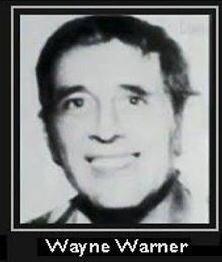
When police finally moved in with a search warrant, the Copelands’ world began to open like a bad wall hiding rot. Investigators found clothing of varying sizes packed away, luggage tied to victims, and handwritten notes tracking bank transactions—paperwork that suggested the fraud wasn’t a one-man improvisation but a household operation. They also found a list of names in Faye Copeland’s handwriting marked with ominous notations, along with pasture rental agreements written by her that linked at least two victims—Wayne Warner and Dennis Murphy—to Ray Copeland’s dealings. Tips from locals led police outward to other properties where Ray had done work, and graves began to surface. Then came the discovery that made Dennis Murphy’s fate unmistakable: his body was found at the bottom of a well, chained to a forty-pound concrete block, as if even in death he’d been weighted down to keep him from ever coming back up into the light. Autopsies determined the victims died from gunshot wounds to the head, and at least one recovered bullet was matched to a. 22-caliber rifle found in the Copelands’ home.
Arrests followed, and prosecutors framed the case as five murders tied to the same fraud. The Copelands were arraigned on five counts of first-degree murder and pleaded not guilty, with authorities alleging the bodies had been hidden in shallow graves and in a well—exactly the kind of concealment that had allowed the killings to stretch across years. In Faye Copeland’s case, Missouri’s highest court later summarized the outcome bluntly: she was convicted for complicity in the first-degree murders of all five men and received death sentences for four of them, while receiving life imprisonment without the possibility of parole for the murder of Dennis Murphy. The Missouri Supreme Court affirmed those judgments in 1996.
Ray Copeland was also convicted of five counts of murder and sentenced to death, cementing the couple’s notoriety as a lethal partnership operating behind the ordinary mask of farm life. Years later, Faye Copeland’s death sentence was commuted while her convictions remained in place, closing the legal arc without changing the essential story: Dennis Murphy did not simply vanish in Missouri in 1986—he was taken, killed, and hidden as part of a deliberate system, one that treated human beings as tools to be used up and disposed of when they became inconvenient.