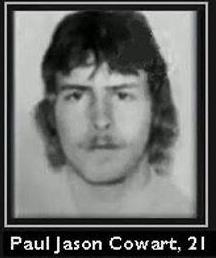
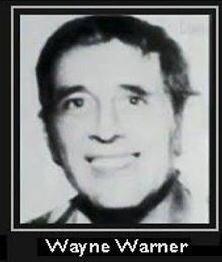
Paul Jason Cowart, a White 21-year-old man, vanished into the backroads and barn lots of northwestern Missouri at the tail end of a scheme that was already turning deadly. By the time his name surfaced publicly, it wasn’t in a help-wanted ad or a paycheck stub—it was tied to a grim pattern investigators would come to understand as a string of killings connected to Ray and Faye Copeland, an elderly farm couple operating in and around the Mooresville/Chillicothe area.
The story that emerged in court and later reporting painted the Copelands’ world as one where drifters and hard-luck workers could be pulled in with the promise of farm work, then swallowed up by the couple’s livestock hustle. Men who crossed paths with the operation were described as transient farmhands or workers drawn into a bad-check cattle scam—exactly the kind of arrangement that could leave someone stranded, broke, and dependent on the next meal or ride. And in that vulnerability, prosecutors argued, was opportunity: people could disappear without much noise, and questions could be delayed until the silence became too heavy to ignore.
When authorities finally cracked the case, it came not as a neat confession but as a digging, searching kind of discovery—bone by bone, grave by grave. Investigators ultimately found five bodies connected to the Copelands’ circle, with reports describing victims shot at close range—often characterized as shots to the back of the head—and left in makeshift burials in barns, shallow graves, or even disposed of in a well on rural properties where Ray Copeland had worked; at least one account emphasized that bodies were found off the couple’s own farm rather than neatly gathered in one place. Cowart was among those recovered and identified in that late-1989 grim inventory.
Arrests followed in October 1989, and the case moved quickly into formal charges: a Livingston County grand jury indictment came in December, and early the next year both Ray and Faye Copeland faced arraignment on five counts of first-degree murder, pleading not guilty as the scope of what investigators believed had happened hardened into a prosecution timeline.
At trial, the state’s story wasn’t built on a single clue but on a pileup of details that, together, looked like intent. Reporting and case summaries pointed to a. 22-caliber Marlin rifle tied to the murders by ballistics, and to a register of farmworkers’ names—an accounting that investigators said helped identify victims and that was described as being marked with crude “X” notations. One of the most notorious pieces of evidence attributed to Faye Copeland was a handmade quilt made from victims’ clothing—something later writers would describe as both chilling and difficult for jurors to forget. Faye’s case went first: she was convicted of five counts of first-degree murder and sentenced to death, with her conviction later reviewed and upheld on appeal by Missouri’s high court.
Ray Copeland was convicted as well and sentenced to death, becoming part of what multiple accounts described as the oldest couple in the United States to receive death sentences. He died in prison in 1993. Faye Copeland’s death sentence was later commuted to life imprisonment while her convictions remained in place; she was eventually released on medical parole and died in 2003. In the official version preserved through the courts and the long paper trail that followed, Cowart’s death was not treated as an isolated mystery with a rotating cast of suspects—it was treated as one link in a fixed chain, with Ray Copeland cast as the central killer and Faye Copeland as a knowing participant convicted alongside him.