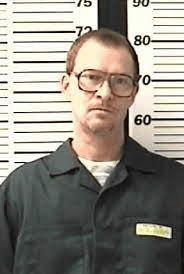
Bruce Alan Davis
Early Life and Background
Bruce Alan Davis was born on September 3, 1948, in Toledo, Ohio. His family later moved to rural Fayette County, West Virginia, where he spent much of his childhood. As a young man, Davis developed an intense interest in music and hoped to become a professional singer. He eventually left West Virginia for New York City and settled in Manhattan, where he attempted to establish himself in the entertainment business. Although his ambitions as a singer were unsuccessful, he later completed his high-school education through night school in 1968.
Davis drifted between cities and jobs during the late 1960s and early 1970s. He survived through temporary employment, low-paying work and, at times, theft. His movements during these years later became important to investigators because they placed him in or near several cities where he claimed to have committed murders. After his final arrest, Davis described a period of violence that he said had taken him across much of the United States.
The Beginning of the Known Crimes
Although Davis eventually claimed that his killing began as early as 1969, the majority of those claims were never conclusively established. One of the earliest publicly identified deaths later connected to him was the May 1970 killing of New York City voice teacher Eric Tcherkezian. Tcherkezian, 27, was found strangled with a belt in his room at the Ansonia in Manhattan. Davis was never prosecuted for Tcherkezian's death, but New York investigators later said that Davis supplied information about the killing that had not been publicly released.
Davis's first firmly documented murder conviction involved Reverend Carlo Barlassina, a Roman Catholic Barnabite priest. Barlassina was traveling across the country in June 1971 and stopped for a day at Chicago's Sherman Hotel. On June 29, 1971, he was found strangled in his hotel room. He had been robbed of money and checks reportedly totaling about $1,000. Barlassina was traveling toward San Diego, California, where he was to begin a new church assignment.
Evidence connecting Davis with Barlassina emerged after Davis came to the attention of authorities in connection with another killing. Property belonging to the priest was reportedly traced to places where Davis had stayed. Illinois authorities eventually prosecuted Davis for Barlassina's murder. In December 1972, Davis was convicted after pleading guilty and received a lengthy prison sentence.
The Death of James Earl Hammer
In February 1972, Davis was arrested in Washington, D.C., in connection with the death of James Earl Hammer, a local businessman who was acquainted with him. Davis originally faced a murder accusation, but the case ultimately resulted in a conviction for involuntary manslaughter. The defense successfully challenged the contention that the killing had been premeditated.
Davis received a sentence of five to fifteen years for Hammer's death. Public accounts consistently place Hammer's death in February 1972, although an exact day of death is not consistently established in the surviving publicly accessible accounts. The Hammer case was nevertheless crucial because Davis's arrest brought him under much greater scrutiny and helped investigators in other jurisdictions examine his movements.
Imprisonment
After the Washington case and his subsequent Illinois conviction for the murder of Reverend Barlassina, Davis faced decades behind bars. His Illinois sentence was imposed consecutively to his existing sentence. He spent years in federal custody, including time at the federal penitentiary in Terre Haute, Indiana, before being transferred to the Illinois prison system.
In 1979, Davis was transferred to Menard Correctional Center in southern Illinois. Despite the seriousness of his crimes, Davis developed a reputation as a relatively well-behaved prisoner. He participated in institutional programs and was eventually permitted to work in a lower-security prison farm area. That increased freedom created the opportunity for the crime that would bring him national attention.
The Murder of Joseph J. Cushman and Escape
On October 24, 1982, Davis escaped from the Menard prison complex. During the escape, 52-year-old corrections employee Joseph J. Cushman was killed at the prison farm annex. Cushman had worked for the Illinois Department of Corrections for approximately nineteen years.
Davis attacked Cushman with an axe, inflicting fatal injuries, and then stole Cushman's vehicle as part of his escape. The killing transformed what might otherwise have been treated as a prison escape into a major interstate manhunt. Cushman's vehicle was recovered after the escape, but Davis continued traveling eastward.
One week later, on October 31, 1982, authorities captured Davis in Smithers, West Virginia, after he was caught attempting to steal another automobile. His return to custody produced an unexpected development. Rather than limiting his statements to the Cushman murder and prison escape, Davis began talking about killings he claimed to have committed more than a decade earlier.
Confessions to Dozens of Murders
During questioning after his 1982 arrest, Davis claimed responsibility for an extraordinary number of homicides. Depending on how the statements were counted, he claimed as many as 33 victims, with roughly 30 killings beyond the deaths for which he had already been held responsible. He said most of these earlier crimes occurred between 1969 and 1971.
Davis described killings in Washington, D.C.; New York City; Arlington County, Virginia; Baltimore; Boston; Fort Lauderdale; Reno; Las Vegas; Los Angeles; San Francisco; New Orleans; San Juan, Puerto Rico; and several other locations. His transient lifestyle made some of these claims difficult to disprove, but it also made them difficult to confirm.
According to Davis, many of his victims were gay men whom he encountered in bars or neighborhoods where gay men socialized. He described gaining access to victims through conversation and social or sexual encounters before robbing and killing them. Davis also claimed that some victims were attacked in secluded locations rather than inside their homes.
He further claimed that he shot, stabbed or poisoned various victims and said that a number of Washington-area victims had been disposed of near waterways or other isolated locations. Investigators found portions of his accounts disturbingly detailed. Other statements, however, could not be matched to any known crime. This created lasting uncertainty over how much of his confession represented genuine admissions and how much may have been exaggeration.
New York Investigations
New York detectives took Davis's statements especially seriously. He claimed five murders in New York City, and investigators reported that he knew details concerning several crimes that had not been released publicly. The identities of most of the victims associated with those admissions were not publicly disclosed.
The best-known New York case associated with Davis is that of Eric Tcherkezian. Tcherkezian was a 27-year-old voice teacher killed in May 1970 at the Ansonia in Manhattan. He had been strangled with a belt. More than twelve years later, detectives reviewing Davis's confession concluded that his knowledge of the crime was significant enough to regard him as responsible, although he was never brought to trial for Tcherkezian's murder.
Known and Publicly Linked Victims
- Eric Tcherkezian - Age 27. Killed in May 1970 at the Ansonia in Manhattan, New York City. Tcherkezian, a voice teacher, was strangled with a belt. Davis was not prosecuted for the killing, but New York investigators publicly linked him to the case after his 1982 confessions. The exact day of death has not been reliably established in the publicly available accounts reviewed.
- Reverend Carlo Barlassina - Killed June 29, 1971, at the Sherman Hotel in Chicago, Illinois. Barlassina was a Barnabite Roman Catholic priest traveling to San Diego for a new church assignment. He was strangled and robbed in his hotel room. Davis pleaded guilty to Barlassina's murder and received a lengthy Illinois prison sentence.
- James Earl Hammer - Killed in February 1972 in Washington, D.C. Hammer was a local businessman and an acquaintance of Davis. Davis was originally charged with murder but was convicted of involuntary manslaughter and sentenced to five to fifteen years in prison. Available public accounts establish the month and year but do not consistently provide a verified exact day of death.
- Joseph J. Cushman - Age 52. Killed October 24, 1982, at the Menard Correctional Center farm annex near Chester, Illinois. Cushman was a longtime Illinois Department of Corrections employee. Davis killed him with an axe while escaping from prison and then stole his vehicle. Davis was later convicted of Cushman's murder and sentenced to life imprisonment.
Unidentified and Unconfirmed Victims
Davis claimed that the publicly named victims represented only a small portion of the people he had killed. He told investigators that he was responsible for numerous murders in the Washington metropolitan area, including crimes in the District of Columbia and Arlington County, Virginia. He also described victims in New York and numerous other cities.
Investigators were able to find similarities between portions of Davis's accounts and actual unsolved homicides. Some detectives believed his knowledge demonstrated involvement in additional murders. Other claims could not be reconciled with police records. In several instances, investigators could not locate any murder matching the time, place and circumstances Davis described.
Consequently, the frequently reported figure of 33 victims represents Davis's claimed total rather than 33 judicially established murders. Only a small number of victims can be publicly identified with confidence, and Davis was never prosecuted for the overwhelming majority of the deaths he confessed to committing.
Victim Selection and Motive
Davis told investigators that many of his earlier victims were gay men. He described meeting men socially, persuading them to take him home or accompanying them to secluded locations, and then robbing them. He sometimes portrayed the killings as motivated by financial gain and at other times described intense hostility toward gay men.
Davis claimed that this hostility developed after he was sexually assaulted by an older male when he was approximately thirteen years old. That account came from Davis himself and cannot excuse or fully explain his later behavior. His own descriptions indicate that robbery, opportunity, resentment and a willingness to use lethal violence all played roles in his crimes.
The variety of killing methods he claimed also complicates attempts to construct a single pattern. His known crimes included strangulation and a fatal axe attack, while his later confessions included claims of shootings, stabbings and poisonings. Investigators therefore had to compare each statement against individual unsolved cases rather than relying upon one consistent method.
Trial for the Cushman Murder
After Davis was returned to Illinois, authorities concentrated first on the murder of Joseph Cushman because the evidence in that case was immediate and overwhelming. Davis's numerous confessions raised the possibility of prosecutions in several other jurisdictions, but pursuing dozens of old cases across state lines would have required extensive investigation and coordination.
In 1983, Davis faced proceedings for Cushman's murder. Questions concerning his mental condition became part of the case, but evaluators concluded that his psychiatric problems did not prevent him from understanding the criminal nature of his actions. Davis was ultimately convicted and received a life sentence.
Questions Surrounding the Confessions
The greatest unresolved question in the Bruce Alan Davis case is the true number of people he killed. His confessions were unusually broad, extending across the country and covering years in which his precise movements were not always documented. Some investigators considered significant portions of the admissions credible because Davis demonstrated knowledge of crime scenes and investigative details.
At the same time, law enforcement officials encountered inconsistencies. Certain murders Davis described could not be found in local records, while other accounts contained details that investigators could not verify. The lack of modern computerized homicide databases in the early 1980s also made comparing decades-old cases across numerous states significantly more difficult than it would be today.
Because of these problems, Davis remains a serial killer whose minimum known victim count is far lower than his claimed total. The deaths of Barlassina, Hammer and Cushman formed the core of the criminal cases against him. Tcherkezian and several unnamed New York victims were later linked to him through his confessions and investigators' assessments, but they did not lead to additional trials.
Death
Following his conviction, Davis remained incarcerated in Illinois and was eventually confined at Chester Mental Health Center, a maximum-security psychiatric institution. His mental condition reportedly deteriorated during his years in custody.
On December 12, 1988, Bruce Alan Davis was found dead at the Chester Mental Health Center. He had died by suicide at the age of 40. His death eliminated any possibility of further prosecutions and left investigators with numerous unresolved confessions that could never be tested in court.
Legacy of the Case
Bruce Alan Davis occupies an unusual place among American serial killers because of the enormous difference between his established crimes and the number of murders he claimed. He was criminally held responsible for the deaths of James Earl Hammer, Reverend Carlo Barlassina and Joseph J. Cushman, while investigators also publicly connected him to Eric Tcherkezian and believed that at least some of his other confessions were genuine.
The possibility that Davis committed additional murders remains credible, but the often-repeated figure of 33 victims should be treated as a confession-based estimate rather than an established body count. The names of most of the people he claimed to have killed have never been publicly connected to him, and some of the alleged murders remain impossible to verify.
His case demonstrates the difficulties investigators face when a transient offender confesses years later to crimes committed across numerous jurisdictions. Records can disappear, witnesses can die, evidence can deteriorate and individual police departments may have recorded similar crimes differently. In Davis's case, those obstacles left a large gap between what could be proven and what he claimed had occurred.
What is certain is that Davis committed lethal violence over a period spanning at least the early 1970s through 1982. His confirmed crimes took him from Washington, D.C., to Chicago and eventually to an Illinois prison farm, while his own account suggested a much wider trail of victims across the United States. His suicide in 1988 ensured that many of the unanswered questions surrounding those alleged victims would remain unresolved.