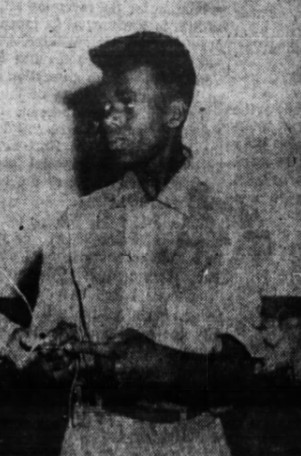
Kevin Gavin: The Brownsville Handyman Killer
Overview
For six years, a predator walked the halls of the Carter G. Woodson Houses, a senior housing complex in the Brownsville neighborhood of Brooklyn. Kevin Gavin, a handyman who lived in the same building, used his friendly demeanor and offers of help to gain the trust of his elderly neighbors. He ran errands and performed odd jobs, making himself a familiar face. But behind this facade was a ruthless killer who, between 2015 and 2021, brutally murdered three women inside their own homes. Gavin exploited the trust he had carefully built, turning arguments over small sums of money into fatal encounters. His crimes instilled fear in the vulnerable community until his arrest in January 2021 finally brought his reign of terror to an end.
Early Life and Background
Kevin Gavin was born on August 19, 1954, in Brooklyn, New York. Little is publicly known about his upbringing and early life, but records show he had a criminal history with prior arrests, mostly for drug-related charges. By the 2010s, Gavin was living in the New York City Housing Authority's (NYCHA) Carter G. Woodson Houses on Powell Street, a building designated for senior citizens. Despite not being a senior himself, he resided in the complex and became a known figure to many residents. He established himself as an unofficial handyman, offering his services for small repairs and running errands for elderly tenants, which gave him access to their apartments and their lives.
The Murder of Myrtle McKinney
The series of killings began on November 9, 2015. Myrtle McKinney, an 82-year-old resident of the building, was found dead in her apartment by her home health aide. At first, authorities believed she had died of natural causes, a plausible assumption given her age and health issues. The New York Police Department officers who responded to the scene did not initially suspect foul play, and no autopsy was ordered.
The truth was only discovered when an undertaker preparing McKinney's body for burial found a stab wound in her neck. The case was immediately reclassified as a homicide. Investigators determined she had been stabbed with a steak knife. Despite this discovery, the investigation yielded few leads, and the case went cold for years, leaving the residents of the Woodson Houses unaware that a killer was living among them.
The Murder of Jacolia James
On April 30, 2019, tragedy struck the housing complex again. Jacolia James, 83, a popular and beloved great-grandmother, was found dead in her apartment by her grandson. He had seen her alive earlier that day and was planning to spend the night at her home. He discovered her lying face down with suspicious injuries to her face and neck.
Unlike in the McKinney case, detectives immediately treated James's death as a homicide. The investigation uncovered forensic evidence that pointed to Kevin Gavin as a suspect. However, there was not enough evidence to charge him at the time. During his later confession, Gavin would admit to choking James and stomping on her neck three times. The community was left frightened, demanding better security in the building, but the connection between the two murders was not yet clear to the public or, seemingly, to investigators.
The Murder of Juanita Caballero
The final murder, which would ultimately lead to Gavin's capture, occurred nearly two years later. On January 15, 2021, Juanita Caballero, 78, was found dead inside her apartment. Her son, Steven, made the horrific discovery when he arrived to spend the weekend with her. He found his mother on the floor with a telephone cord wrapped around her neck.
The brutality of the crime sent a shockwave of fear through the Carter G. Woodson Houses. For the third time in six years, an elderly woman had been killed in the building. This time, however, the investigation moved quickly. Detectives investigating Caballero's murder found what Brooklyn District Attorney Eric Gonzalez would later call a "definitive link" to Kevin Gavin, who was already a suspect in the 2019 killing of Jacolia James.
The Victims
- Myrtle McKinney, 82 — Died on November 8, 2015, in her Brooklyn apartment. She was a vulnerable, elderly resident who initially was thought to have died from natural causes before the truth of her murder was uncovered.
- Jacolia "Jackie" James, 83 — Died on April 30, 2019, in her home. A beloved mother, grandmother, and great-grandmother, she was a popular resident of the housing complex.
- Juanita Caballero, 78 — Died on January 15, 2021, in her apartment. Her son described her as having been "brutally murdered" and was heartbroken by the violent end to her life.
Investigation and Capture
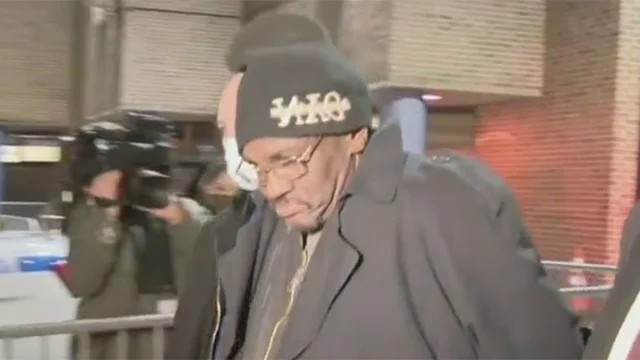
The murder of Juanita Caballero provided the crucial evidence that had been missing. Investigators discovered that Caballero's credit card was being used after her death. Reviewing surveillance footage, police identified the person using the card as Kevin Gavin.
With this evidence, along with the forensic link to the James murder scene, detectives arrested Gavin. He was taken into custody and, after being read his Miranda rights, he waived them and began to talk. Gavin confessed to killing all three women: McKinney, James, and Caballero. He told investigators that the murders were not random acts of violence but were the result of disputes over money. He claimed the women owed him for the handyman work he had performed, and when arguments erupted, he turned violent. He admitted to stabbing McKinney, stomping on James, and strangling Caballero with a phone cord.
Trial and Sentence
On January 21, 2021, Kevin Gavin, then 66, was arraigned on three counts of second-degree murder and ordered held without bail. In March 2021, a grand jury indicted him on one count of first-degree murder and three counts of second-degree murder. Brooklyn District Attorney Eric Gonzalez stated, "This defendant is an alleged serial killer who murdered three of his elderly neighbors who trusted him and welcomed him into their homes only to have that trust violated in the worst way imaginable."
After delays, partly due to the COVID-19 pandemic, the case moved forward. On April 24, 2026, Gavin, then 71, pleaded guilty to all charges in a deal that promised a sentence of 30 years to life in prison. The families of his victims were present in the courtroom as he admitted to the brutal killings.
On May 20, 2026, Brooklyn Supreme Court Justice Dineen Ann Riviezzo formally sentenced Kevin Gavin to 30 years to life in prison. During the sentencing, D.A. Gonzalez remarked, "These were acts of shocking depravity and cruelty against three elderly women who should have been safe inside their own homes... this defendant exploited their trust, entered their homes, and took their lives with brutal violence." The sentence ensures that Gavin will likely spend the rest of his life behind bars.
Aftermath and Legacy
The murders committed by Kevin Gavin exposed significant vulnerabilities within the NYCHA senior housing system. Residents and victims' families voiced outrage over the lack of security in the building, including the absence of sufficient surveillance cameras that might have deterred Gavin or helped solve the earlier murders sooner. The case highlighted the dangers faced by elderly residents who rely on informal help from neighbors and acquaintances, illustrating how easily trust can be exploited.
The arrest and conviction brought a measure of relief to the terrified residents of the Carter G. Woodson Houses, but the loss for the families of Myrtle McKinney, Jacolia James, and Juanita Caballero remains immeasurable. Their deaths served as a tragic reminder of the need for greater protection and vigilance for the most vulnerable members of the community.